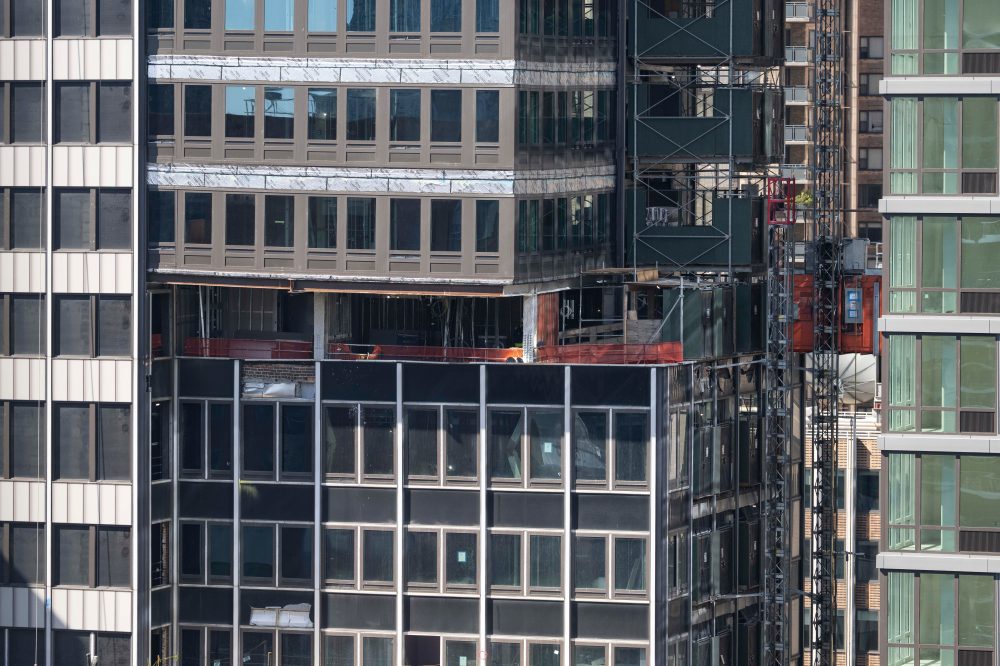

Workers labored through the night to reinforce a towering apartment building under construction in Manhattan after support columns gave way and floors began to droop, setting off a wave of evacuations and road closures amid fears the structure could collapse.
City officials say the building — once home to the headquarters of pharmaceutical giant Pfizer — has been brought to a stable condition. However, as of Wednesday, several neighboring buildings remained under evacuation orders and a number of normally busy midtown streets were still off-limits while crews continued their work at the scene.
Ahmed Tigani, commissioner of the city’s Department of Buildings, addressed the situation late Tuesday. “The two most important things right now is making it stable and safe for the people who are working inside, for the people who are nearby,” he said.
Emergency responders were called to the building early Tuesday and found two badly damaged support beams along with sagging floors on the 21st level. The building itself and a large section of the surrounding neighborhood — located near the Grand Central transit hub and the Chrysler Building — were cleared of people and closed to foot traffic.
After city officials conducted a floor-by-floor inspection of the structure, contractors working on-site were eventually permitted back inside to carry out emergency repairs. No one other than those workers was inside the building at the time.
The renovation project is being promoted as the largest conversion of office space into residential housing in the city’s history, with plans to create roughly 1,600 housing units. The project involves transforming two office towers — adding more than a dozen new stories to one of them and redesigning the other.
MetroLoft, the developer behind the project, has stated the building is not in danger of collapsing and that no debris fell from the structure. Still, the firm’s founder, Nathan Berman, acknowledged that the additional weight placed on the building from expanding the upper 15 or so floors likely caused the structural damage.