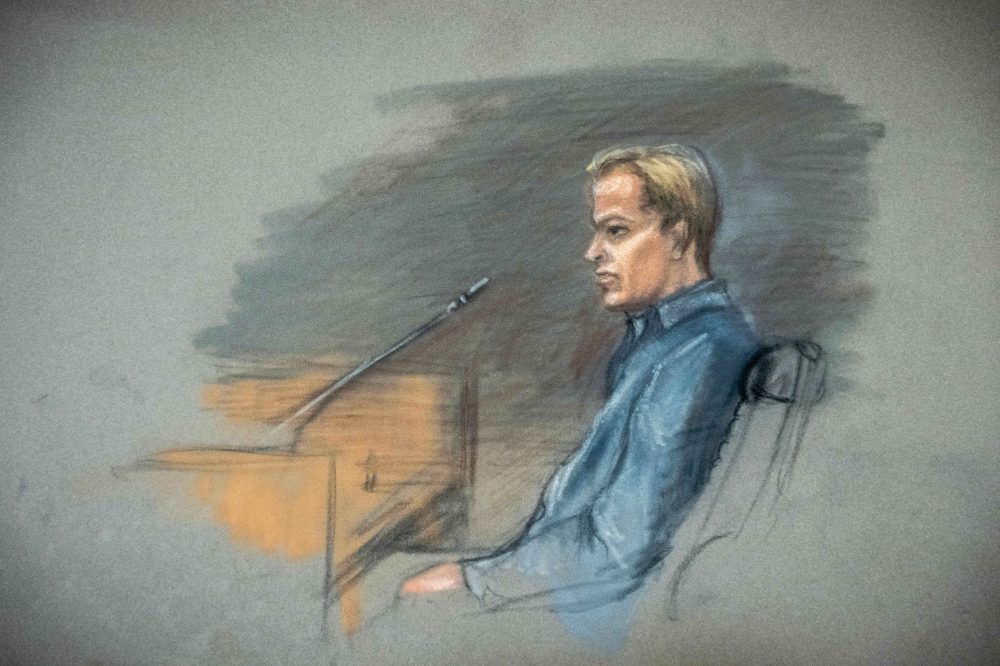

The high-profile rape trial of the Norwegian Crown Princess’s eldest son concluded Thursday with defense attorneys requesting his complete acquittal, wrapping up six weeks of court proceedings that have brought unwanted attention to Norway’s royal family.
Earlier this week, prosecutors requested a prison term of seven years and seven months for 29-year-old Marius Borg Høiby, who has denied all rape charges. The court’s decision will be announced at a future date.
Borg Høiby, who is Crown Princess Mette-Marit’s son from an earlier relationship and stepson to Crown Prince Haakon, faces a total of 40 criminal charges. Among these are four rape counts allegedly committed between 2018 and 2024, with prosecutors claiming the victims could not provide consent due to being unconscious or otherwise unable to resist.
His defense team, representing the man who holds no royal titles or formal responsibilities, argued that no evidence exists to support any of the rape accusations.
The proceedings at Oslo District Court have generated significant media attention both domestically and internationally, casting an uncomfortable spotlight on the royal family and revealing aspects of Norway’s upper-class social environment rarely seen publicly.
Adding to the royal family’s troubles, Crown Princess Mette-Marit has recently faced questions about her past associations with deceased sex offender Jeffrey Epstein, though she faces no criminal allegations herself.
The trial featured testimony from approximately 70 witnesses, with prosecutors presenting hundreds of text messages and digital evidence pieces, including photographs and videos retrieved from Borg Høiby’s mobile device.
Throughout the proceedings, Borg Høiby has maintained his innocence regarding sexual activity with unconscious women, insisting all encounters were mutually agreed upon. However, he has acknowledged guilt on several minor charges, including drug possession, transporting 3.5 kilograms of cannabis in 2020, traffic infractions, and violating restraining orders against a former girlfriend. He has also partially accepted responsibility for violence and threat-related charges while disputing crucial elements, particularly regarding his intentions.
His legal team contended that Borg Høiby has endured exceptional media scrutiny because of his royal family ties, which they claim has influenced both public opinion and the case’s circumstances.
During testimony, Borg Høiby described how the intense public attention had “erased him as a person,” explaining that he had been rejected by most of his friends and was battling depression.
“My whole life is common property,” he testified. “I am no longer Marius, I’m a monster.”
Defense attorney Petar Sekulic stated Thursday that media attention “bordered on the insane, but almost exceeded anything one could have feared beforehand.”
The investigation into Borg Høiby’s activities began in 2024 when authorities responded to reports of a violent incident at an apartment in Oslo’s affluent Frogner district. Following his initial arrest and release, the case grew as additional women stepped forward with accusations.
The four rape charges form the core of the trial, with each allegedly occurring following consensual sexual activity. The key legal questions focus on whether the women were able to resist and whether Borg Høiby recognized their condition.
Prosecutor Sturla Henriksbø argued Wednesday that Borg Høiby should be evaluated “not for who he is, but for what he has done,” describing what he characterized as consistent behavioral patterns throughout the charges. He highlighted repeated rule violations and boundary crossings, including police interactions, restraining order breaches, and what he termed disregard for women’s consent to sexual activity or being recorded.
“The rules are designed so that one cannot evade guilt by getting high or drunk,” Henriksbø argued, urging the court to evaluate the case from the perspective of how a sober individual would have interpreted the circumstances.
“Rape and abuse in close relationships are among the most serious acts one can expose others to, and that must be reflected in the punishment,” Henriksbø told the court.
In Thursday’s defense closing arguments, Sekulic maintained that no evidence substantiated the rape allegations and that none of the images or videos presented during trial demonstrated criminal activity. He challenged the alleged victims’ reliability.
While Sekulic admitted that certain aspects of Borg Høiby’s conduct had been “unsympathetic,” he argued this should not influence the court’s decision.
“What can be described as bad behavior, bad morals, which cannot be punished under the criminal law, should be disregarded,” he told the court. “It is irrelevant.”