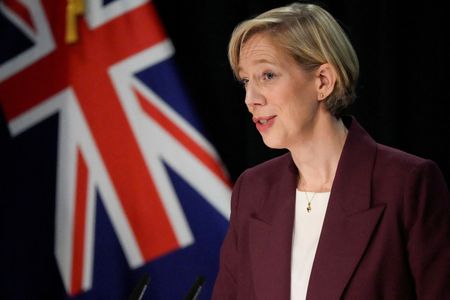

WELLINGTON, New Zealand – The Reserve Bank of New Zealand’s newly appointed governor conducted her first monetary policy meeting Wednesday, emphasizing clear communication and avoiding the communication challenges that plagued her predecessor.
Anna Breman, a 49-year-old economist from Sweden, made history as New Zealand’s first female central bank governor when she took office in September. Her appointment came after an extensive global recruitment process that considered 300 potential candidates.
Breman stepped into the role after Adrian Orr’s unexpected departure in March of last year, which occurred amid growing criticism regarding the bank’s economic management strategies.
During her maiden policy announcement, the central bank maintained the official cash rate at current levels, meeting market expectations. However, Breman dampened speculation about potential rate increases, emphasizing that the country’s delicate economic recovery requires continued accommodative monetary policy.
Her first post-meeting press briefing drew significant attention from financial markets. Breman delivered a comprehensive slide presentation spanning approximately 10 minutes, representing a more detailed and visual approach compared to Orr’s typically brief opening remarks.
“New Governor, Anna Breman, made her mark with an exceptionally simple, well delivered, statement and OCR track. Something which in the past, as recently as November, has not been well executed,” commented Jarrod Kerr, Kiwibank’s chief economist.
The previous administration faced substantial criticism from lawmakers and economic analysts for contributing to inflationary pressures through extensive pandemic-era stimulus measures totaling billions of dollars. The bank subsequently had to implement aggressive interest rate increases to combat rising prices, ultimately triggering an economic downturn.
Breman acknowledged that while New Zealand’s economy shows early signs of improvement, many families have yet to experience tangible benefits from this recovery.
“We want to keep the OCR on hold to support the recovery while ensuring that inflation falls back to target,” Breman stated. “We’re not planning on hiking the OCR until we see more inflationary pressures and a stronger economy.”
In response to previous criticism about unclear policy communication during extended summer recesses, Breman announced the bank would increase its annual monetary policy meetings from seven to eight next year.
Her tenure begins during a period of mounting global political pressure on central bank independence. Last month, New Zealand’s foreign minister publicly criticized Breman for endorsing a statement supporting Federal Reserve Chair Jerome Powell, who faces potential criminal charges from the Trump administration.
The Reserve Bank subsequently defended Breman’s action, stating she signed the statement due to her strong commitment to central bank independence principles.
During Wednesday’s presentation, Breman subtly addressed these concerns, identifying threats to central bank independence as part of broader global risks.
“In the medium-and-longer-term unsustainable fiscal dynamics in some countries and pressure on central bank independence could also be a cause for concern,” she noted.
Breman’s communication style also differed from her predecessor’s approach to indigenous culture. Unlike Orr, who regularly incorporated Maori language and cultural elements into official communications, Breman did not include Maori phrases in her Wednesday remarks.
Under Orr’s leadership, the central bank significantly elevated Maori heritage and language within its operations, implementing substantial changes to institutional branding, policy approaches, and public communications.
During her initial New Zealand media appearance in September, Breman expressed enthusiasm about learning more about Maori economic perspectives and the country’s broader cultural landscape.
Before joining the Reserve Bank of New Zealand, Breman served on Sweden’s central bank executive board starting in 2019, where she participated in monetary policy decisions, financial stability measures, and national payment system oversight. She was promoted to First Deputy Governor in 2022.
Breman relocated to New Zealand with her family, including two teenage daughters, and has expressed genuine appreciation for her new home country, even joking about New Zealanders’ passionate rugby culture.
“I’m here with my family now and we’re really happy to be here,” Breman said. “We think it is a lovely place to live. People are really friendly.”