
NEW YORK — One of horse racing’s most storied venues is about to go dark. Aqueduct Racetrack in Queens, New York City’s last remaining horse racing track, will hold its final live races this weekend after more than 130 years of operation.
The closing event is scheduled for Sunday at 5:44 p.m., with the final race carrying the fitting name “It Was a Good Run.” While live racing will end, the track will continue to host betting on televised races — known as simulcasting — through September 7.
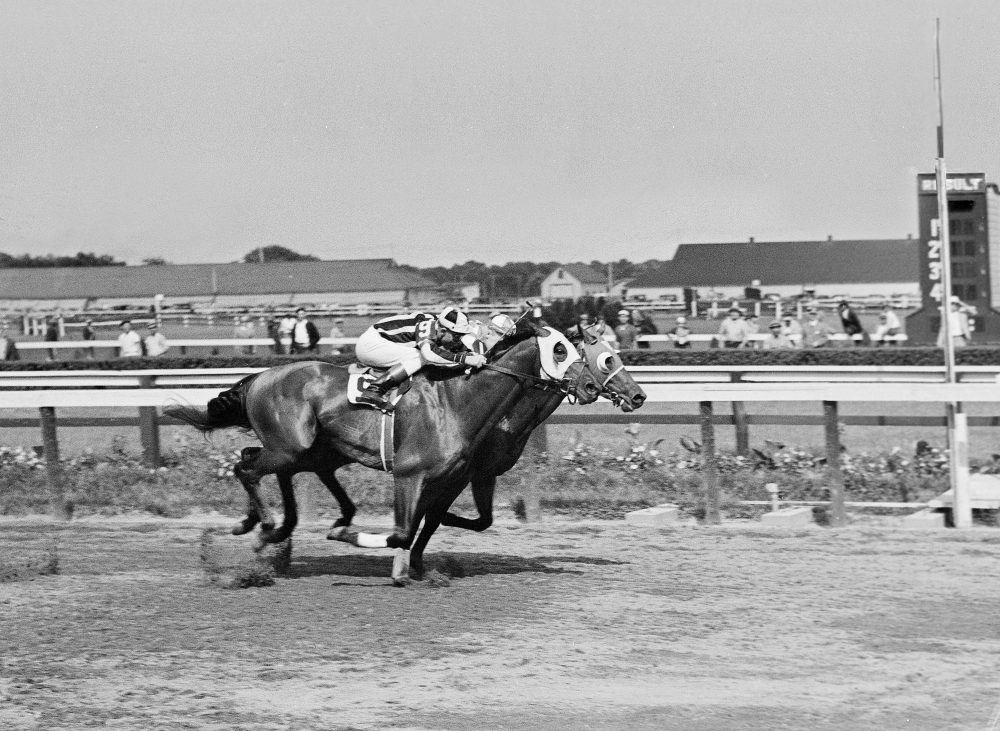
The “Big A,” as it’s affectionately known, sits adjacent to John F. Kennedy International Airport and has witnessed some of the greatest moments in thoroughbred racing history. Legendary horses including Seabiscuit, Man O’ War, and Secretariat all competed there during the sport’s golden era.
“There’s a lot of history here. Just so many good horses,” said David Donk, a veteran horse trainer, speaking between races at Aqueduct earlier this month. “It’s had its use. But, you know, times change. Everything changes in life.”
The track’s closure reflects a broader trend in the horse racing industry, which has faced mounting pressure from competing forms of gambling. Slot parlors, casinos, state lotteries, and the more recent rise of legalized online and sports betting have all chipped away at the sport’s once-dominant appeal.
According to the National Thoroughbred Racing Association, an industry trade group, there are now roughly 75 thoroughbred tracks operating across the country — a dramatic drop from the more than 300 facilities that offered some form of horse racing during the sport’s peak in the late 1800s. Other major tracks that have shut down in recent years include Arlington Park in Illinois, which was purchased by the NFL’s Chicago Bears for a potential new stadium, and Golden Gate Fields in the San Francisco Bay Area.
“For over 100 years, thoroughbred racing was one of very few sports outlets you could legally bet on,” said Tom Rooney, the association’s president. “With the expansion of sports gambling, our sport will naturally condense and coalesce around a more pragmatic number of marquee tracks and locations, similar to other sports.”
A significant portion of Aqueduct’s sprawling property has already been converted into a Resorts World casino. The gambling venue, which earlier this year began offering live table games such as blackjack, poker, and craps after receiving a state license to operate a Las Vegas-style resort, has plans for a massive multibillion-dollar expansion. The site also holds a notable place in religious history — in 1995, a crowd of 75,000 gathered there to celebrate Mass with Pope John Paul II.
About 9 miles east, just beyond the New York City limits on Long Island, the renowned Belmont Park racetrack — home to the Belmont Stakes, the third leg of horse racing’s Triple Crown — is scheduled to reopen in September following a roughly $550 million renovation. State funding for that project came with a condition: the New York Racing Association, which manages the tracks, had to return Aqueduct’s more than 100 acres to the state for future redevelopment and shift all thoroughbred racing to Belmont and Saratoga Race Course upstate.
“We couldn’t have gotten the money to rebuild Belmont and continue to race at Aqueduct. You have to make these choices,” said Andy Serling, the track’s longtime television analyst and race handicapper. “I don’t think you’ll find anybody here that’s not gonna tell you they’re gonna miss Aqueduct, but we’re also incredibly excited to be opening this beautiful new building at Belmont.”
Aqueduct first opened in 1894, taking its name from an old aqueduct that once carried fresh water from Long Island into New York City. The facility remained a modest operation until a major overhaul in 1959 that brought a dedicated subway stop, air-conditioned restaurants and lounges, and a grandstand seating roughly 35,000 fans — complete with escalators, elevators, and other modern amenities. The Associated Press at the time called the revamped venue “the world’s most modern and luxurious horse plant.”
The track has been home to some of racing’s most memorable milestones. Triple Crown champion Secretariat won the very first race of his career at Aqueduct in 1972, then returned the following year for a farewell appearance. Seattle Slew used a strong 1977 Aqueduct performance as his final tune-up before sweeping the Triple Crown later that year. And in 1994, Cigar launched a historic 16-race winning streak at the track.
Hall of Fame jockey John Velazquez, 54, reflected on what Aqueduct meant to his career during a recent Friday afternoon at the track. The Puerto Rico native said it took weeks of competing against some of the sport’s top riders before he finally claimed his first career win there. He has since recorded more than 6,700 victories and holds the record for the most purse earnings of any jockey in North America.
“This is where I developed my craft, where I learned everything that I know,” Velazquez said after winning his first race of that afternoon. “The years that I spent here made me the jockey that I am today.”
Inside the massive grandstand, longtime bettor Roy Brown, a 68-year-old retiree from Queens, shared a fond memory of his biggest score at the track. Originally from Jamaica, Brown said he won around $60,000 on a “pick-six” bet in the late 1980s — a challenging wager that requires correctly picking the winner of six consecutive races. Flush with winnings and enthusiasm, he used some of the money to purchase two horses. But his brief foray into horse ownership didn’t pan out for him or the animals.
“It’s best to bet on them, not own them,” Brown said with a laugh. “If you’re really passionate about it, it’s your best two minutes. Nothing’s sweeter than seeing your horse coming down the stretch or coming from behind and at the wire, knowing you got it.”