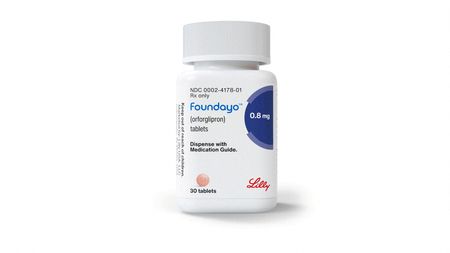

A breakthrough study reveals that individuals transitioning from injectable weight-loss medications to Eli Lilly’s new oral drug Foundayo successfully maintained most of their weight reduction over a 12-month period.
The pharmaceutical giant announced Tuesday that clinical trial participants who had used GLP-1 injection therapies for more than a year experienced minimal weight regain when switching to the pill form. Results shared at an obesity medical conference showed those moving from Novo Nordisk’s Wegovy injection to Lilly’s oral Foundayo gained back just 2 pounds on average after one year. Meanwhile, participants transitioning from Lilly’s stronger injectable Zepbound saw an average weight increase of 11 pounds.
The Indianapolis-based company launched Foundayo in the United States during early April as direct competition to Danish manufacturer Novo’s oral Wegovy option. This launch represents Lilly’s continued investment in the lucrative obesity and diabetes treatment market, specifically targeting the GLP-1 medication category.
Industry experts project that weight-loss drug sales could exceed $100 billion annually within the coming decade.
Research findings presented at the European Congress on Obesity in Istanbul demonstrated that patients can successfully transition between treatments while preserving their weight reduction achievements – addressing a major worry associated with discontinuing GLP-1 injections.
“If you’re a patient on Wegovy, you can switch from a GLP-1 injectable to a GLP-1 pill and basically keep all the weight off,” stated Kenneth Custer, Eli Lilly’s president of cardiometabolic health, during a recent interview. “Patients now have options.”
The research examined individuals transitioning to Foundayo (scientifically called orforglipron) following 72 weeks of weight reduction using either Lilly’s tirzepatide medications (marketed as Zepbound and Mounjaro) or injectable semaglutide products (Novo’s Wegovy and Ozempic).
Detailed trial results showed that after 52 weeks post-transition, former tirzepatide users retained 74.7% of their original weight loss while taking orforglipron, compared to just 49.2% among those receiving inactive placebo treatments.
Participants who previously used semaglutide maintained 79.3% of their weight reduction with orforglipron, significantly higher than the placebo group’s 37.6% retention rate.
Novo introduced injectable Wegovy in 2021, followed by the pill version earlier this year. Oral medications are anticipated to attract new patient populations, particularly those uncomfortable with needle-based treatments.
When questioned about weight regain among patients switching from Zepbound to Foundayo, Custer explained this outcome was predictable considering the substantial weight loss achieved with Lilly’s injectable option. Clinical trials have demonstrated that Zepbound can produce weight reductions of 20% or greater.
Additional late-stage trial data revealed that participants maintaining maximum Zepbound dosages continued losing weight after an additional year of treatment, while those reducing to 5-milligram doses experienced approximately 12 pounds of weight regain.
“The study showed us two things. If you want to maintain every ounce of weight you lost on a drug like Zepbound, you should probably stay on that dose of Zepbound,” Custer explained.
“But if you want to consider reducing your dose, you can do that. You’ll regain a little bit of weight, but you’ll still maintain most of your weight loss,” he added.