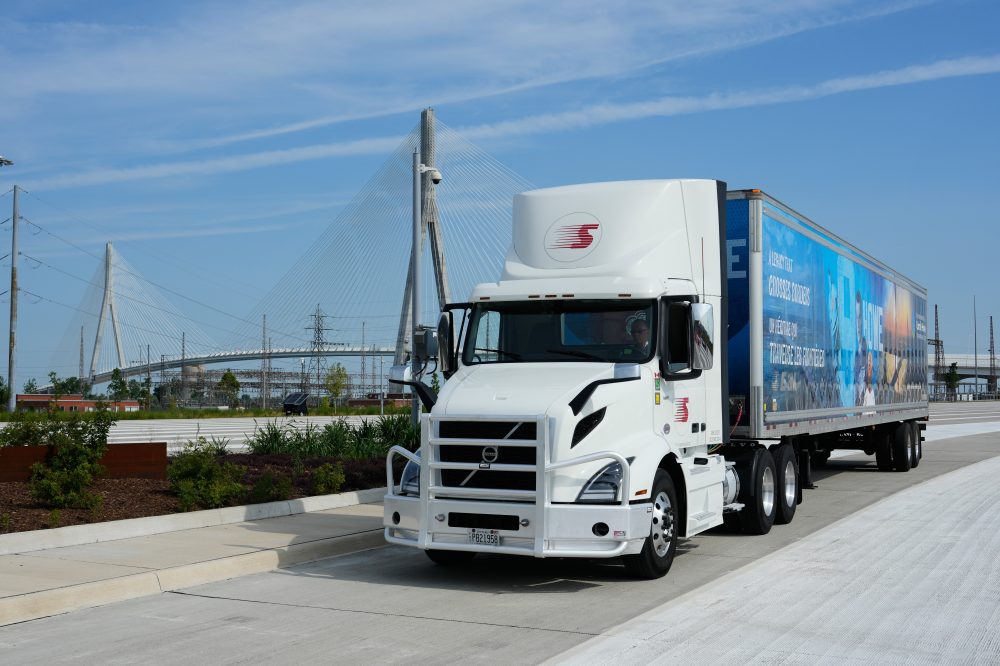

A brand-new bridge spanning the Detroit River is scheduled to open to vehicle traffic on Monday, establishing a vital new connection between the United States and Canada for commerce, employment, and tourism.
Canada marked the completion of the Gordie Howe International Bridge with a ribbon-cutting ceremony in Windsor, Ontario, last week, celebrating the finish of the multibillion-dollar, years-long construction effort.
However, U.S. and Michigan officials were not invited to Friday’s event after President Donald Trump abruptly announced 50% tariffs on Canadian goods entering the United States.
The bridge takes its name from a beloved Canadian hockey legend known as “Mr. Hockey,” who wore jersey No. 9 while playing for the NHL’s Detroit Red Wings on the American side of the Detroit River. He passed away in 2016.
The Detroit crossing carries enormous economic weight — the U.S. Department of Transportation identifies Detroit as the top port for truck traffic along the entire U.S.-Canada border. More than 70% of Canada’s exports are destined for the American market, making the U.S. Canada’s largest trading partner.
For close to a century, the privately-owned Ambassador Bridge has been the sole option for large commercial trucks crossing between the two countries at Detroit. Business operators say the new six-lane bridge will offer faster crossings at lower costs.
The span stretches 1.5 miles (2.4 kilometers) in length and reaches a peak height of 151 feet (46 meters) above the river. Within a few weeks, pedestrians and cyclists with proper identification will be allowed to cross at no charge.
Construction on the bridge got underway in 2018 but stretched on for several additional years, in part due to delays caused by the global COVID-19 pandemic.
Canada funded the entire construction project at an estimated price tag of $6.4 billion. Under a recent agreement, Canada will share a portion of toll revenue with the U.S. federal government over a 15-year period.
President Trump touted his administration’s role in securing that arrangement in a social media post made while the Ontario ceremony was still taking place. “We changed the terms,” he wrote.
Michigan is also set to receive a share of toll revenue, though that won’t happen until Canada has recouped its construction costs — a timeline that could stretch decades into the future.