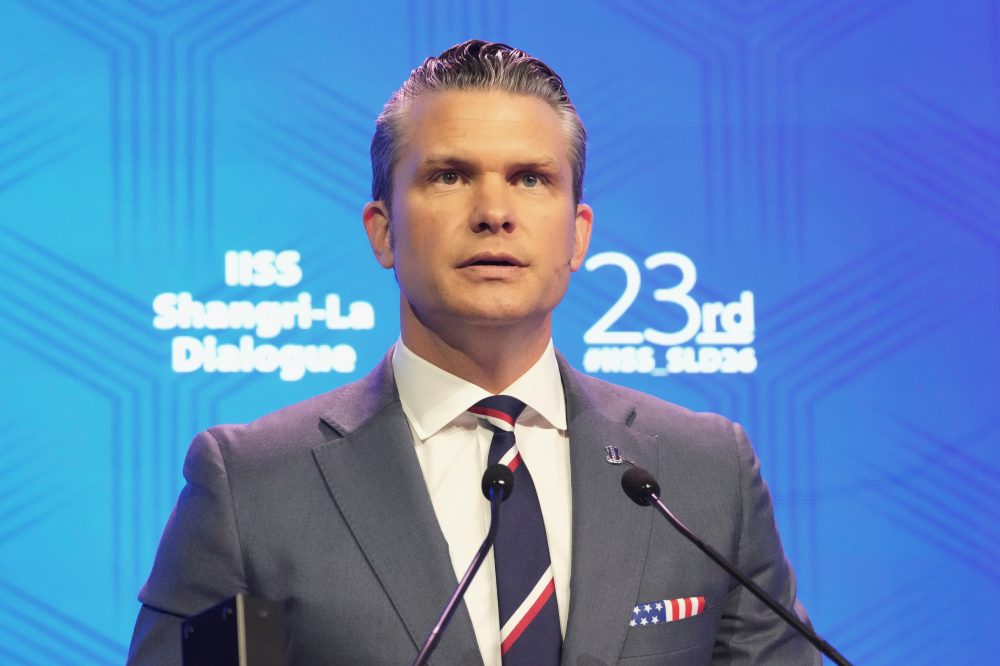

Female Navy officers are expressing concern about their career prospects after Defense Secretary Pete Hegseth removed all women from a recent promotion list to admiral rank.
The Navy had originally selected 31 sailors to advance from captain to one-star admiral, but Hegseth stepped in to remove nine individuals from that list, including three women and two Black men, according to a defense official who requested anonymity due to restrictions on publicly discussing the information.
This intervention means no women will receive promotion to one-star admiral this year, despite women representing approximately 25% of all Navy officers and nearly one-third of mid-level positions, based on 2024 military statistics.
The Associated Press interviewed eight female Navy officers across different ranks and experience levels following Hegseth’s decision, which The New York Times first reported. All requested anonymity due to concerns about potential retaliation from leadership.
Junior officers described viewing this development as evidence their careers could become politically influenced if they advance too high, with some expressing they now perceive limits on their promotion potential. Several said the action made them feel undervalued within the military structure and questioned whether this was intentional.
Defense officials have provided no explanation for removing the women or the other six individuals from the promotion roster.
Pentagon spokesperson Sean Parnell stated on social media this week that “military promotions are given to those who have earned them” and emphasized the Pentagon “will never consider the color of a service member’s skin or their gender as a factor in promotions.” The Pentagon did not respond immediately to requests for additional comment.
The Navy’s selection process for one-star promotions has maintained consistency and transparency historically. The service assembles a promotion board of officers who review eligible candidates’ records and select the most qualified individuals.
The board that chose the original 31 officers operated under direction from then-Navy Secretary John Phelan, a President Donald Trump appointee, to “recommend for promotion the best qualified officers within their respective competitive category.”
Phelan’s directive, issued before his sudden departure in April, instructed the board to evaluate officers based on performance, competence, character, and other qualifications.
The order also specified that given China’s significance in the Trump administration’s National Defense Strategy, “special consideration shall be given to officers who have excelled in their knowledge of the political military affairs and U.S. strategic interests in the Indo-Pacific region, and operational contingency planning for Indo-Pacific war plans.”
Hegseth has consistently argued, without providing supporting evidence, that women in military service receive preferential treatment and lack suitability for combat positions.
“For too long, we’ve promoted too many uniformed leaders for the wrong reasons based on their race, based on gender quotas, based on historic so-called firsts,” Hegseth addressed hundreds of military leaders in September.
He claimed this approach rendered the Pentagon “less capable and less lethal.”
Phelan’s guidance explicitly stated the Navy cannot discriminate based on factors like race and gender, specifically noting “this guidance shall not be interpreted as requiring or permitting preferential treatment of any officer or group of officers on the grounds of race, religion, color, sex.”
The complete roster of 31 promotion candidates received approval from Phelan, other Navy leadership, and Joint Chiefs of Staff chairman Gen. Dan Caine before reaching Hegseth, who decided to modify the list, the defense official explained.
Although Hegseth possesses authority to alter such lists, “it’s just not the norm,” according to Katherine Kuzminski, a researcher focused on military recruiting and retention at the Center for New American Security think tank.
Kuzminski observed that “this is a decision that’s not being made by the U.S. Navy — it’s being made by the secretary of defense” and noted Hegseth’s increasing involvement in operational military matters like promotions creates “tension” regarding future expectations of “normal” procedures.
Senior Navy officers who spoke with the AP voiced worries about the message this sends to younger sailors entering the service.
Beyond blocking the recent promotions of three women to admiral, Hegseth dismissed Adm. Lisa Franchetti shortly after assuming office. Franchetti served as the service’s top officer and was the first woman in that role. He offered no explanation for her removal.
Subsequently, he has also terminated two other female three-star admirals without providing reasons.
Officers interviewed by the AP said that while they continue encouraging female sailors to remain with the Navy, they recognize this message comes during challenging circumstances.
Kuzminski explained that rhetoric and actions concerning women in military service “affects individual service member decision-making and it also affects family unit decision-making,” including whether people pursue military careers.
Following the extended hold on military promotions by Sen. Tommy Tuberville, R-Ala., during the Biden administration, surveys indicated that partisan politics entering troops’ daily lives influenced their decision-making, Kuzminski noted.
One officer indicated this impact extends beyond women alone.
In discussions with fellow sailors in her unit, she reported that male service members expressed reluctance to navigate what appears to be increasing politicization of simply executing orders from previous administrations.