
Elon Musk is preparing to take SpaceX public with a corporate structure that will grant him nearly unlimited executive control while significantly reducing traditional shareholder protections, according to documents reviewed by Reuters.
The rocket manufacturer has implemented policies that combine multiple control mechanisms – including supervoting shares, forced arbitration requirements, tighter restrictions on shareholder proposals, and incorporation under Texas law – to ensure Musk and company insiders maintain broad authority over business decisions.
Under this arrangement, Musk becomes the only individual with the power to remove himself from his leadership position, as he will control a majority stake through special voting shares.
“It closes the voting door, the courthouse door and the proposal door simultaneously. It’s unprecedented in terms of creating a total lack of accountability,” said Bruce Herbert, CEO of Seattle-based sustainability-focused wealth management firm Newground Social Investment, which challenged Musk at his electric-vehicle company, Tesla, with a shareholder proposal that won 49% of the vote in November.
Despite Musk’s controversial public persona, many investors view him as an innovative leader capable of achieving extraordinary results. Tesla’s board recently approved a decade-long compensation package for him valued at nearly $1 trillion, stating the company would suffer substantial losses “without Elon.” His SpaceX compensation is linked to ambitious goals like establishing massive orbital data centers and Mars colonization.
SpaceX declined to provide comment on the governance structure.
The restrictive policies may not deter investment interest in what is anticipated to become the largest initial public offering in market history. SpaceX is targeting up to $75 billion in proceeds with a potential $1.75 trillion company valuation.
Many investors view accepting reduced rights as an acceptable trade-off for participating in the historic offering, particularly given Musk’s track record with Tesla. The electric vehicle manufacturer’s stock price has climbed to approximately $389 from its 2012 debut price of $17.
“SpaceX is going to be such a huge part of the market that for most portfolio managers it’s very difficult not to buy, because it’s going to be driving the price of everything,” said Ann Lipton, a professor of law at the University of Colorado Law School. “And if SpaceX soars, and you don’t have a piece of it, then you’re going to look like you’re underperforming the market by comparison.”
Corporate governance specialists believe Musk is designing SpaceX’s structure to shield the company from the type of shareholder challenges Tesla has faced. Tesla investors have previously contested various decisions, including Musk’s compensation arrangements and the acquisition of his solar energy business, SolarCity.
Experts warn that Musk’s approach could establish a template for other prominent founder-led companies planning public offerings, including artificial intelligence firms Anthropic and OpenAI.
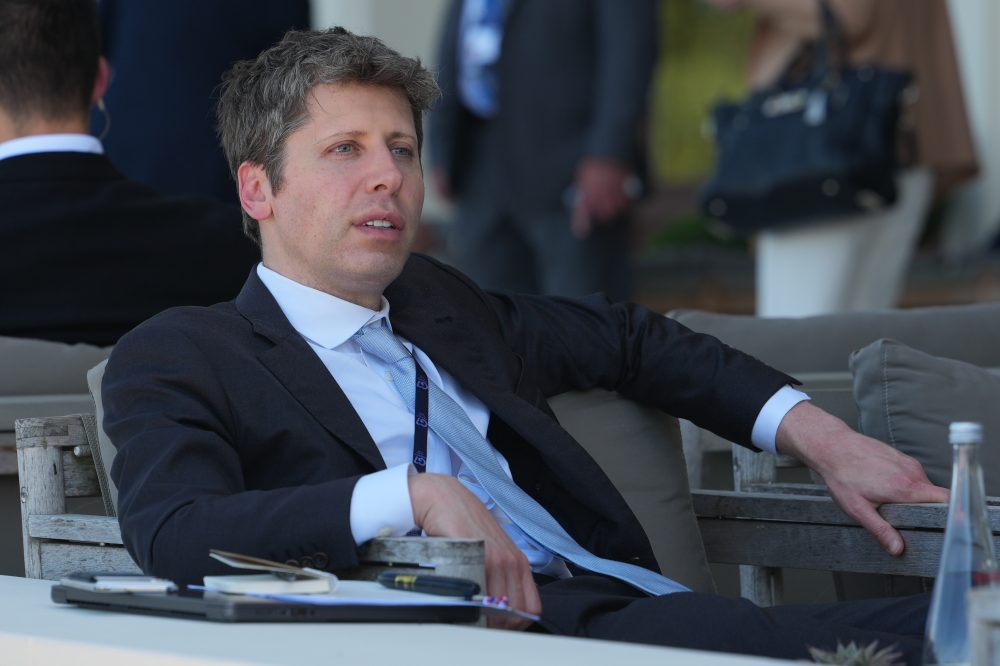
“They are all complicated, potentially controversial figures that are also creating history in real time,” Dishmi Capital co-founder Shang Chou said of Musk, OpenAI founder Sam Altman and other founders. “You focus less on valuation and more on the fact that you’ve been offered a seat on a rocket ship.”
When SpaceX begins public trading later this year, Musk will continue serving as CEO, chief technical officer and chairman of the company’s nine-person board. According to a May 4 regulatory filing, he currently holds 42.5% of company equity and controls 83.8% of voting power.
The company plans to implement a dual-class share system where Class B shareholders receive 10 votes per share compared to one vote for Class A shares available to public investors. This structure concentrates decision-making authority with Musk and select insiders who possess the special voting shares.
Musk’s Class B holdings, which will remain unavailable to public purchasers, will maintain his majority voting control after the public offering. This arrangement grants him and other insiders the authority to select most board members and gives Musk the ability to “elect, remove or fill any vacancy” among directors.
The voting control also extends to other matters requiring shareholder approval, including merger and acquisition decisions, potentially facilitating a future combination with Tesla if desired.
When supervoting shares are sold, they automatically convert to regular Class A shares, further concentrating power among remaining Class B holders. While the company retains the option to issue additional Class B shares, only Musk, his family members and “certain entities” are eligible to receive them.
Musk’s voting dominance will classify SpaceX as a “controlled company” under securities regulations. This designation, also used by founder-led companies like Mark Zuckerberg’s Meta Platforms and Rupert Murdoch’s News Corp, allows companies to bypass certain governance requirements for faster decision-making.
Unlike typical public companies that must have independent directors comprise a majority of their nominating and compensation committees, controlled companies face no such requirement, and SpaceX has indicated it will not voluntarily comply.
“You will not have the same protections afforded to shareholders of companies that are subject to all of the corporate governance requirements,” the company warned in a list of potential risk factors for investors.
SpaceX has also severely restricted shareholders’ litigation rights. Company bylaws require anyone owning shares to “irrevocably and unconditionally” surrender all rights to jury trials. Shareholders are also banned from filing class action lawsuits against the company, its leadership, controlling shareholders or investment banks involved in the public offering.
Instead, disputes will be handled through mandatory arbitration – private proceedings overseen by arbitrators. This practice was previously prohibited in the United States until the Securities and Exchange Commission reversed its position in September, permitting companies to adopt mandatory arbitration policies.
SpaceX is maximizing benefits from its 2024 decision to reincorporate from Delaware to business-friendly Texas and its largely untested governance laws. Texas adopted amendments to its Business Organizations Code last year that substantially reduce investor protections. Musk moved away from Delaware after a judge there invalidated his 2018 Tesla compensation package worth $56 billion, though that ruling was later overturned.
The Texas incorporation provides additional defenses against activist investors and hostile takeover attempts. State securities laws also create higher barriers for challengers attempting unsolicited tender offers, proxy contests or management removal.
Shareholder proposal requirements are also more stringent. Under new Texas rules, shareholders must own at least $1 million in stock or 3% of the company to force a vote on proposals.
“It’s definitely one of the most restrictive IPOs. He (Musk) is taking advantage of this ownership structure and the Texas provisions,” University of Pennsylvania law professor Jill Fisch said.
However, some investors support the restrictive approach. Joel Shulman, founder and chief investment officer of ERShares, which manages the $993 million Private/Public Crossover ETF, expressed no concerns about the limitations as a SpaceX investor.
“I would rather have him making these decisions and be in control,” he said. “He may be controversial and polarizing and he does some crazy, bizarre things sometimes, but he’s a brilliant guy when it comes to building something completely new and building wealth” for himself and shareholders.