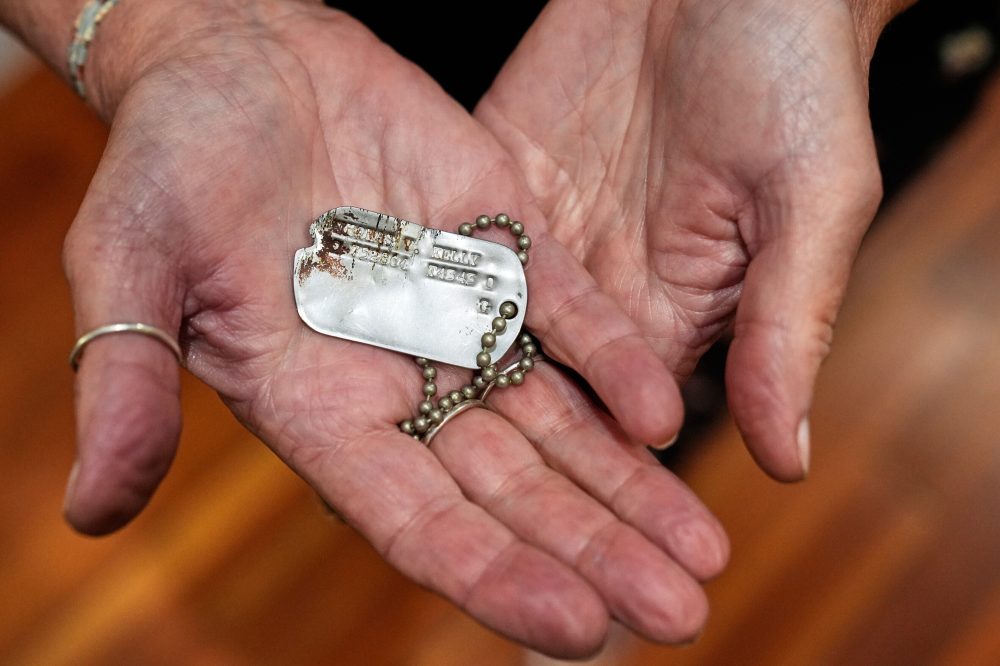

Grieving relatives clutch them tightly, as though they were still holding their deceased loved one’s hand. Fellow service members have been moved to tears when reading the information etched on them.
More than 100 years have passed since a military chaplain in the U.S. Army advocated for “dog tags” to be issued to all service personnel, yet these identification pieces continue to serve as one of the most meaningful connections between mourning military families and their departed relatives.
“What they’re searching for is connection,” said Air Force Chaplain and Maj, Benjamin Quintanilla Jr. at Dover Air Force Base, where U.S. casualties from the wars in Afghanistan and now Iran have been repatriated. “So these dog tags become just a sacred symbol.”
Throughout major conflicts from both World Wars through Vietnam and Middle Eastern operations, these military identification pieces have represented the ultimate sacrifice made by Americans in international warfare.
The Pentagon notes that the origin of the nickname for these small metallic rounded rectangles — suspended from ball chains and containing name, rank, unit and additional details based on the time period — remains a mystery.
The American Civil War highlighted the urgent necessity to identify battlefield casualties, as enormous numbers of soldiers received burials marked as “unknown” — including 75% of the 17,000 Union forces interred at Vicksburg National Cemetery, per National Park Service records.
Following the Spanish-American War, the 1898 military engagement that established the United States as a global force, Chaplain Charles C. Pierce, who oversaw morgue operations in the Philippines, initially proposed that Army personnel receive identification tags.
When the U.S. entered World War I, all combat personnel were mandated to wear these tags. They became an official uniform component during World War II.
Currently, developments in forensic science have reduced the tags’ importance for identification purposes. However, the religious designation listed on them continues to help battlefield chaplains offer suitable prayers for wounded or deceased troops, Quintanilla explained.
The symbolic meaning of connection makes these tags irreplaceable. Bereaved families cherish both the dog tags their relatives wore and the fresh ones ceremonially placed on coffins during formal transfer services — some continue wearing them or even get them permanently inked on their bodies.
For military personnel, these tags represent the most basic indication of membership.
“I can trust somebody who is wearing the same identification as me,” said Quintanilla, who first joined the Air Force as a dental technician. “It means that I was a part of something greater than myself.”