
Military conflict in the Middle East has created what experts are calling the most severe global energy crisis ever recorded, forcing nations worldwide to implement drastic conservation measures while consumers face dramatically higher fuel costs.
Since U.S. and Israeli military operations against Iran commenced on February 28, the strategic Strait of Hormuz waterway has been effectively blocked, halting the flow of approximately 20% of global oil and natural gas shipments through the Iranian coastal passage.
Continued military exchanges between Iranian and Israeli forces have also struck critical energy facilities throughout the region, inflicting damage to natural gas fields, petroleum refineries, and shipping terminals that energy sector experts estimate will require years to fully restore.
The International Energy Agency has declared this disruption surpasses even the 1973 Arab oil embargo in severity, which previously held the record for causing the most widespread economic harm from fuel shortages.
“You’re not going to conserve your way around this. What it’s going to translate to is price rises high enough that people stop consuming,” explained Dan Pickering, chief investment officer for Pickering Energy Partners.
The crisis has already eliminated approximately 400 million barrels from global markets – equivalent to four days of worldwide supply – driving price increases of roughly 50%.
Energy products derived from oil and gas serve essential functions across modern society, powering transportation systems, heating buildings, operating industrial facilities, and manufacturing everything from plastic goods to agricultural fertilizers.
“The breadth of what is at risk here in fuels, chemicals, LNG and fertilizer inputs is what makes this moment qualitatively different from previous episodes of Gulf tension,” noted Aditya Saraswat, senior vice president at consultancy Rystad Energy.
Rising energy costs typically drive broader inflation, creating financial strain for both consumers and businesses. This economic pressure has become a significant political challenge for U.S. President Donald Trump as he works to maintain public support for the military campaign.
Trump has criticized NATO member nations for insufficient backing of the U.S.-Israeli military action against Iran, publicly labeling the traditional American allies “cowards.”
International benchmark crude oil prices have climbed more than 50% to exceed $110 per barrel since hostilities began. Middle Eastern oil varieties, which Asian economies rely on heavily, have reached record highs near $164 per barrel.
These increases have resulted in steep transportation fuel price hikes worldwide, prompting governments to take emergency steps to preserve available supplies.
Thailand has directed government employees to reduce energy use by canceling international travel and taking stairs rather than elevators, while Bangladesh has shuttered its universities.
Sri Lanka has implemented fuel rationing systems, China has prohibited refined fuel exports, and the United Kingdom’s emergency energy plan includes lowered speed limits to reduce fuel consumption.
The International Energy Agency released additional demand reduction recommendations on Friday, including remote work arrangements and limiting air travel, which has already faced severe disruptions after the conflict forced major Middle Eastern aviation hubs to close.
Earlier this month, the IEA authorized the release of a record 400 million barrels from emergency oil reserves. However, analysts consider this measure insufficient since 400 million barrels would only offset approximately 20 days of war-related supply losses.
JP Morgan analyst Natasha Kaneva emphasized that demand reduction represents the only viable solution when supply shortages occur.
“The market is facing an acute shortage of products (…) that cannot be consumed simply because they are not available,” she stated.
Prices continue climbing for all remaining available products.
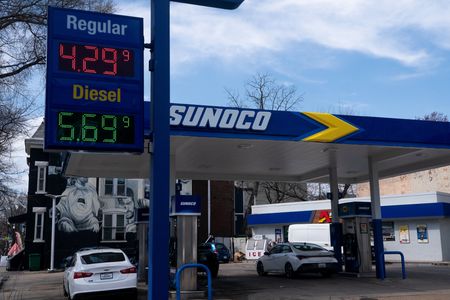
European jet fuel prices have reached record levels around $220 per barrel – costs that airlines will likely pass directly to passengers through higher ticket prices. In the United States, which imports minimal Middle Eastern oil, retail gasoline prices have increased more than one dollar per gallon since February 28 to approximately $4 per gallon.
Natural gas prices across Europe and Asia are climbing after recent Israeli-Iranian strikes targeted Gulf region gas facilities. Consumer electricity costs could also rise substantially.
Israeli forces attacked Iran’s South Pars gas field on Wednesday, while Iranian forces struck Qatar’s massive Ras Laffan LNG complex the following day. QatarEnergy CEO Saad al-Kaabi informed Reuters that Iranian attacks will eliminate 12.8 million tons annually of LNG production – roughly 3% of global supply – for three to five years.
The situation poses critical risks since oil and gas products are essential for manufacturing pharmaceuticals, plastics, and fertilizers, according to Menelaos Ydreos, secretary general of the International Gas Union representing worldwide gas producers.
“We, again, call for an immediate stop to the targeting of energy facilities and for the resumption of cargo traffic through the Strait of Hormuz as fertilisers, petrochemicals for the pharmaceutical industry, oil, grain, and gas are all critical to our existence,” he stated.
The military conflict also threatens global food security by severely disrupting fertilizer markets, since approximately one-third of international fertilizer trade normally passes through the Strait of Hormuz and is currently blocked.
Nitrogen-based fertilizer products like urea, considered the most crucial fertilizer type, have seen price increases of 30% to 40% since fighting began. American farmers are already reporting empty store shelves as spring planting season approaches.
Fertilizer manufacturing facilities in India, Bangladesh and Malaysia are suspending orders, reducing production, or completely shutting down operations due to lack of raw materials.
If the conflict continues for just a few more weeks, global food supplies will face significant disruption, warned Maximo Torero, chief economist with the UN’s Food and Agriculture Organization.
“This will affect planting. … There will be a lower supply of commodities in the world – of staple cereals, of feed, and therefore of dairy and meat,” he explained.
Approximately half of the world’s food production depends on fertilizers, which in some nations account for up to half the cost of grain production.