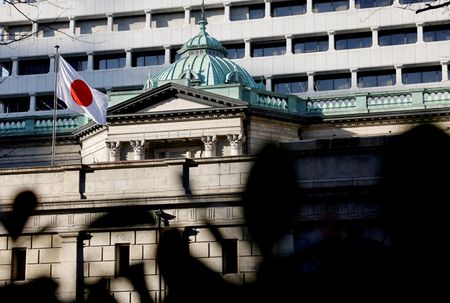

The Middle East conflict could accelerate Japan’s central bank toward more aggressive interest rate increases by amplifying inflation concerns, according to four sources with knowledge of the institution’s deliberations.
The less-than-two-week-old war has created worldwide economic turbulence, leaving global financial policymakers uncertain whether to implement restrictive or supportive monetary measures.
For Japan’s central bank, this increased focus on price pressures represents a shift from its traditional approach of protecting economic growth through low interest rates, reflecting evolving inflation patterns.
However, the sources acknowledge equal possibilities that the conflict might spark a worldwide recession affecting Japan’s delicate economic recovery, potentially forcing the Bank of Japan to revise optimistic forecasts and rate increase strategies.
The Iranian conflict might also provide additional justification for government officials to oppose early rate increases, with dovish Premier Sanae Takaichi reportedly already expressing concerns about further borrowing cost increases.
Nevertheless, climbing crude oil costs are expected primarily to drive inflation upward before dampening growth, meaning Japan will likely experience an initial wave of price pressures that could influence public inflation expectations.
“The conflict comes at a time underlying inflation is already close to 2%,” one source explained, emphasizing policymakers must remain alert to higher inflation risks. Three additional sources shared this perspective.
A fourth source indicated that while the conflict has increased economic uncertainty, this alone wouldn’t prevent the Bank of Japan from implementing necessary rate increases. All sources requested anonymity as they lacked authorization for public statements.
The Middle East situation hasn’t significantly reduced market expectations for near-term rate increases, with April action priced at approximately 60%, suggesting investors also increasingly focus on inflation upside risks.
Historically, Japan’s central bank would have overlooked oil price impacts on inflation, concentrating instead on supporting a struggling economy where consumers and businesses, accustomed to decades of modest price and wage increases, restricted spending.
This approach led to gradual, cautious withdrawal of extensive monetary support. The bank required two years following Russia’s Ukraine invasion to end decade-long stimulus in March 2024, despite rising raw material costs pushing inflation beyond its 2% target.
Though the central bank has since increased rates to 0.75%, the slow progression has drawn criticism for elevating import costs and broader inflation by maintaining yen weakness.
This time, the Bank of Japan may lack that luxury of extended timing.
Conflict-driven fuel increases compound rising import costs from a weakened yen that has prompted numerous companies to raise prices, keeping inflation above the bank’s target for nearly four years.
Rising prices have elevated inflation expectations. Companies anticipate inflation averaging 2.4% five years ahead, while households project 9.8% inflation for the same timeframe, recent Bank of Japan surveys indicate.
After maintaining stagnant wage growth for decades, chronic labor shortages have encouraged companies to increase wages, including last year’s agreement to the largest pay increase in 34 years.
Growing price pressures have generated increasing demands within the Bank of Japan board for consistent rate increases to avoid falling behind in controlling excessive inflation risks.
“Medium- and long-term inflation expectations are heightening, and price increases now have a greater tendency to generate second-round effects,” hawkish board member Hajime Takata stated on February 26, advocating for steady rate increases.
Speaking days following the February 28 U.S. attack against Iran, Governor Kazuo Ueda acknowledged the conflict could damage the economy by worsening Japan’s trade terms, while also warning it might elevate underlying inflation.
Prior to the U.S.-Israel attack on Iran, Japan’s economy had advanced toward meeting conditions for another rate increase, with wage improvements supporting consumer spending, sources reported.
While the Bank of Japan is expected to maintain current interest rates at next week’s policy meeting, Ueda will likely reiterate the institution’s commitment to continued rate increases and preserve options for near-term action during his post-meeting briefing, sources indicate.
Highlighting its renewed inflation focus, the Bank of Japan released an academic paper on February 4 arguing that intensifying supply constraints created “persistent impact” on prices through actual increases and heightened inflation expectations.
Ayako Fujita, JPMorgan’s chief Japan economist, anticipates next week’s Bank of Japan message will emphasize maintaining “the normalization path” and “assess uncertainties related to the Iran war.”
“This would not pre‑commit to an April move while keeping the option open if conditions stabilise,” Fujita explained.
While conflict-driven market volatility will likely keep the Bank of Japan inactive until June or July, it must closely monitor mounting price pressures, said former top central bank economist Seisaku Kameda.
“The BOJ is already behind the curve in addressing mounting inflationary pressure,” he stated. “The risk of being too late could heighten further with rising oil prices and the weak yen.”