
PORTLAND, Maine — Federal aviation investigators have revealed that a private aircraft that went down in Maine this past January, claiming the lives of all six occupants, remained on the tarmac following de-icing procedures for nearly double the recommended timeframe, according to a preliminary investigation released Friday by the National Transportation Safety Board.
Federal Aviation Administration protocols dictate that aircraft should depart within nine minutes of beginning de-icing treatment. However, the NTSB’s findings indicate that 17 minutes elapsed before the jet attempted takeoff.
According to the investigation report, the aircraft’s captain stated it was “standard” to allow 14 to 18 minutes, noting they would only return for additional de-icing if the delay exceeded 30 minutes. The co-pilot agreed with this assessment, the document reveals.
The preliminary findings do not establish a definitive cause for the tragedy, which investigators expect to determine in their comprehensive report. The NTSB’s complete investigation findings typically require more than a year to publish.
An NTSB representative refused to provide additional commentary beyond the written report.
“There were multiple airport CCTV cameras that captured the airplane during the takeoff,” the report states. “Several of these cameras showed the airplane impact the ground followed by multiple explosions as the impact sequence progressed.”
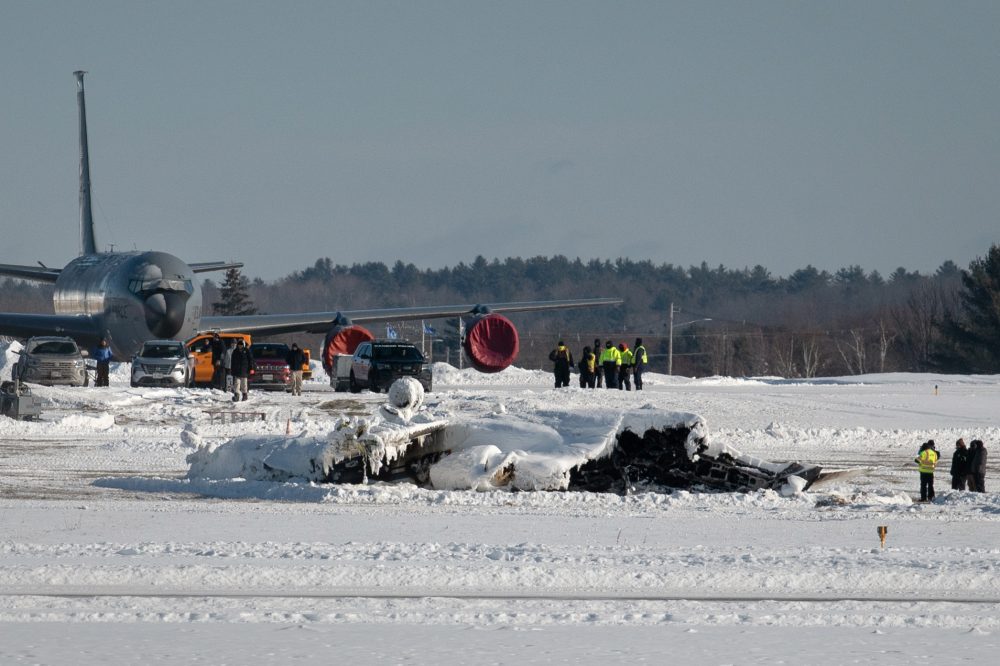
The aircraft came to rest inverted on the runway and erupted in flames. Airport operations were suspended for multiple days following the incident.
The high-end aircraft, registered to a Texas legal practice, had made a refueling stop in Bangor while traveling to Paris during light snowfall, gentle winds, and temperatures near freezing as a significant weather system approached the Bangor area. Just prior to the crash, another aircraft had canceled its departure, informing air traffic control that poor visibility conditions and the need for additional de-icing treatment prompted their decision to abort.
While snowfall would eventually reach approximately 9.5 inches, the precipitation was just beginning when the accident occurred. Recovery teams, initially hindered by severe weather conditions, successfully retrieved both the voice recorder and flight data recorder for examination.
The Bombardier Challenger 600 had undergone routine de-icing procedures before moving to the departure runway, according to airport officials. Aviation regulations require pilots to return for additional treatment if the calculated protection time from de-icing expires.
The six victims, including four passengers and two crew members, had stopped in Bangor for fuel while traveling from Houston to France on January 25. Among those killed was Houston attorney Tara Arnold, 46, along with three employees from her high-end travel business.
The additional fatalities included Houston event coordinator Shawna Collins, 53; culinary expert Nick Mastrascusa, 43, and wine specialist Shelby Kuyawa, 34, both from Hawaii; along with pilots Jacob Hosmer, 47, from Pearland, Texas, and Jorden Reidel, 33, also from Texas.
Bangor International Airport, located roughly 235 miles north of Boston and 130 miles north of Portland, serves as one of America’s nearest airports to Europe and frequently accommodates private aircraft requiring fuel for transatlantic flights. The Bombardier was bound for France’s Champagne region when the fatal crash occurred.