
London’s eighth annual climate week delivered an unintended but powerful message this week when an event specifically designed to address the dangers of extreme heat was shut down — because the building hosting it was simply too hot.
The gathering had been scheduled to take place at the London School of Economics, in a building nearly a century old that relies on natural airflow and fans rather than air conditioning. Organizers pulled the plug, citing concerns about public health risks.
Chris Anderson, a climate expert with the non-profit organization Practical Action, said the cancellation drove home just how far-reaching the effects of a warming planet can be. “There’s a real irony that an event designed to help vulnerable people adapt to extreme heat in a temperate, wealthy country had to be cancelled,” Anderson said.
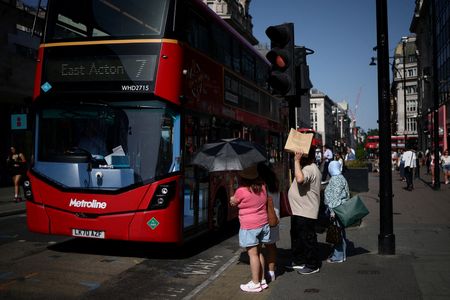
The disruption unfolded as British temperatures climbed to a provisional record high for the month of June. Helen Clarkson, CEO of Climate Group, said the heatwave demonstrated that “science has come to life, and reality is clearly showing there is more of this to come.” The government issued an extreme heat warning, and some schools were forced to close their doors.
Despite the heat, the broader climate week drew more than 75,000 participants from governments, corporations, financial institutions, and civil society groups. They took part in more than 1,300 events focused on speeding up climate action, ahead of the COP31 climate talks scheduled in Turkey in November.
A major theme throughout the week was building resilience against extreme weather — including heat, drought, flooding, and storms — particularly in developing nations that are least equipped to handle such events.
United Nations Secretary-General Antonio Guterres called on capital markets to treat climate resilience as a valuable asset and urged governments to increase funding for adaptation projects. He also pushed for taxes on the windfall profits earned by fossil fuel producers.
The urgency behind these calls is backed by sobering data. A report published in October by The Lancet found that global deaths linked to heat have climbed 23% since the 1990s, now averaging around 546,000 fatalities each year, with developing countries bearing the heaviest burden.
The UK’s Climate Change Committee, an independent advisory body, has labeled the country’s current preparations “inadequate” and estimates that roughly £11 billion in annual investment would be needed to adequately address the problem. The committee has also warned that heat-related deaths in the UK could exceed 10,000 per year by 2050.
The sweltering conditions were referenced by multiple speakers throughout the week, including Guterres, British minister Ed Miliband, and the leader of the Pacific nation of Palau, all of whom pressed attendees to accelerate efforts to curb global warming.
Executives from food company Danone and consumer goods firm Unilever told an LSEG event that their companies are investing in reducing carbon emissions and water consumption in agriculture, among other initiatives.
Bertrand Millot, head of sustainability at Canadian pension fund La Caisse, noted that Asian countries are among those facing the greatest risks and must adapt quickly. “It’s a question of survival … and companies need to prepare,” he said.