
Artificial intelligence holds the potential to grow Sub-Saharan Africa’s economy by approximately 4% over the coming decade — but that growth depends heavily on improvements to the region’s power grid, internet infrastructure, and digital workforce training, according to a new paper released Tuesday by the International Monetary Fund.
As nations and corporations worldwide scramble to harness the economic advantages of AI, investment in data centers, energy systems, and digital networks is accelerating globally. However, Sub-Saharan Africa — which sits at the very bottom of the IMF’s AI Preparedness Index — could miss out on most of those gains if critical infrastructure gaps are not addressed, the paper warns.
Martin Schindler, Deputy Division Chief and Mission Chief in the Fund’s African Department and the paper’s lead author, stressed that government action will be decisive. “Policy changes will be key to whether further growth can be unlocked from AI,” he said. Without bold steps, many countries in the region could see productivity and growth gains of just 0.2% over the next decade. “Frankly, that’s a rounding error,” he told Reuters.
Africa continues to lag behind in the global AI surge. Sub-Saharan Africa has one of the lowest AI adoption rates of any region on Earth, trailing every part of the world except South Asia. The IMF attributes this gap to weak digital infrastructure, a shortage of technical expertise, and limited regulatory capacity — factors that not only slow AI adoption but also leave the region more exposed to labor market disruption.
“For Sub-Saharan Africa, the central concern is not the risk of technological disruption, but whether countries will be able to adopt, adapt, and scale AI quickly enough to capture its benefits and avoid falling further behind,” the paper states.
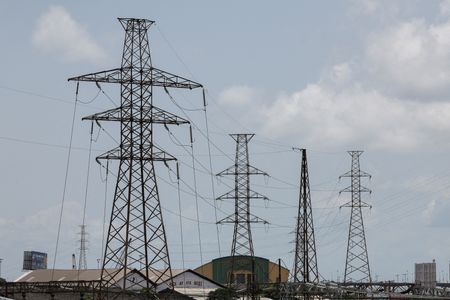
A major obstacle is electricity. About half of the region’s population does not have reliable access to power. The report suggests that focused investments in electrical grids and smaller-scale mini-grids — particularly around schools, clinics, and other community facilities — could help establish local digital hubs. Co-author Andrew Tiffin put it plainly: “It’s hard to have anything without electricity.” He noted that the rise of AI has added a new dimension to Africa’s longstanding energy challenges, since data centers could become financially viable projects that actually help speed up electrification efforts.
Internet access is also a significant barrier. Only 38% of people in Africa used the internet in 2024, compared to 68% globally. The IMF paper calls for greater investment in fiber-optic networks and open-access systems to bring down costs and widen connectivity.
Some private investors are already moving in. Microsoft and G42 have announced a $1 billion, 100-megawatt geothermal-powered data center campus in Kenya. Separately, Cassava Technologies and NVIDIA have reached a $700 million agreement to deploy 12,000 graphics processing units across South Africa, Nigeria, Kenya, Egypt, and Morocco.
Despite this activity, Africa is home to only about 160 data centers — roughly 5.5% of the world’s total — with nearly half of those concentrated in just three countries: South Africa, Nigeria, and Kenya. The IMF paper warns that this concentration raises the risk that AI investment could actually deepen economic inequality across the broader region.