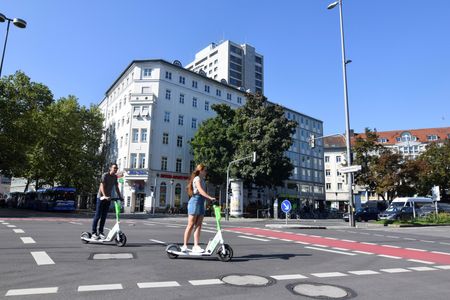

DUBLIN — The Irish government announced Monday it is tightening the rules around electric scooters, stopping short of an outright ban but putting new restrictions in place after a troubling surge in serious accidents — particularly involving children.
Under the new measures, riders must be at least 18 years old, up from the previous minimum age of 16. They will also be required to hold a license and wear a helmet. Additionally, high-visibility jackets will be mandatory, and the sale of e-scooters capable of exceeding the legal speed cap of 20 kilometres per hour — roughly 12.4 miles per hour — will be prohibited.
The crackdown comes as Ireland joins several other European nations and cities that have moved to rein in the growing popularity of e-scooters amid rising injury rates. According to Children’s Health Ireland, which oversees all national pediatric services in the country, hospital admissions of children and young people for traumatic brain injuries linked to e-scooter accidents have jumped 50% over the past year. The organization estimates that between one and two children are showing up in emergency rooms every day this summer with e-scooter-related injuries.
Ireland’s Prime Minister had told lawmakers last week that he was leaning toward an outright ban on the devices. The head of the Irish police force voiced strong support for that idea, noting that e-scooters were also being used to assist drug dealing and, in his words, “terrorise” local communities.
While Monday’s announcement fell short of a total ban, the government made clear that option has not been ruled out. Officials said the situation will continue to be monitored.
A consultant in intensive care medicine at one of Dublin’s major children’s hospitals weighed in on the new rules, saying enforcement would be the deciding factor in whether they work. “I would certainly like to see that it would be reviewed after a period of months and if we still don’t have a fall off in injuries, I think some consideration is going to have to be given to an outright ban,” she told national broadcaster RTE.