
Iran’s Islamic Revolutionary Guard Corps has intensified military operations against Kurdish opposition forces, launching a series of drone and missile strikes on their bases in northern Iraq this week.
The attacks come as five Kurdish political organizations have united to form an armed coalition challenging Iran’s government. On Tuesday afternoon, the Revolutionary Guard carried out fresh assaults on Kurdish opposition strongholds in response to this growing resistance movement.
The Kurdistan Democratic Party reported Monday that Iranian forces used three unmanned aircraft to attack the Kurdistan Democratic Party of Iran’s facility in Koy Sanjaq, located in the Erbil region of Iraq. Kurdish news organization Rudaw confirmed that missiles also struck the same location, which serves as home to families of party members.
Iran’s Tasnim News Agency announced Tuesday evening that Revolutionary Guard forces had once again attacked Kurdish opposition sites in the Kurdistan Region, alleging these organizations were “planning infiltration and action against the country.”
“Following a targeted intelligence operation,” Tasnim stated that the locations were “powerfully destroyed” through the deployment of 30 unmanned aircraft. The news agency later claimed that Revolutionary Guard ground units joined the offensive, launching numerous drones at what they characterized as a “US base in Erbil” and conducting “several rounds” of attacks that “destroyed the deployment locations” of Kurdish resistance groups in “northern Iraq.”
No other news organizations have verified the alleged strike on an American military installation in Erbil. This development occurs as numerous Revolutionary Guard command facilities, including ground force headquarters, have faced targeting by US and Israeli forces over the past four days.
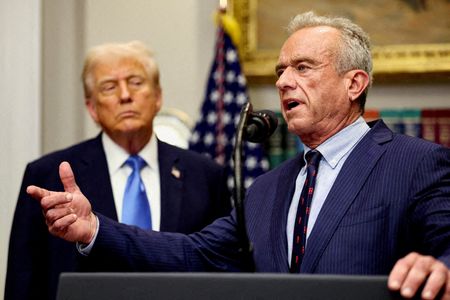
Reports indicate that US President Donald Trump conducted telephone conversations Sunday with Iraq’s primary Kurdish faction leaders, Masoud Barzani of the Kurdistan Democratic Party and Bafel Talabani of the Patriotic Union of Kurdistan, discussing the ongoing US-Israeli conflict with Iran’s government.
Axios reported that these communications followed extensive lobbying efforts by Israeli Prime Minister Benjamin Netanyahu to promote increased American involvement and coordination with Kurdistan Region leadership. The Wall Street Journal has also indicated that the US president is evaluating potential support for Kurdish resistance forces opposing Iran’s regime.
Numerous Iranian Kurdish organizations have maintained relatively strong connections with Israel over many years, and the Kurdistan Free Life Party (PJAK)—among the five Kurdish groups that recently established a unified opposition front against Iran’s government—has openly declared that if Iranian liberation requires Israeli cooperation, such partnership would be welcomed.
Peyman Viyan, serving as one of PJAK’s dual leaders and recognized as the sole female commander among Iran’s Kurdish political movements, stated in one discussion that PJAK presently maintains no connections with America or Israel. However, in remarks cited by Israel’s Channel 12, she indicated that Iranian freedom might be achieved through collaborative efforts between Iranians and Israel.
Additionally, Abdullah Mohtadi, who leads the Komala Party of Iranian Kurdistan as secretary-general, recently conducted meetings with US Congressional representatives during a Washington visit. Kurdish organizations—which maintain substantial armed peshmerga military units—seem to have gained increased significance in American and Israeli policy considerations during this period when both nations are engaged in conflict with Iran’s leadership.
Nearly all Iranian Kurdish political groups advocate for Kurdistan autonomy within Iran alongside broader Iranian freedom. Recently, however, exiled Crown Prince and overseas opposition leader Reza Pahlavi responded harshly to the five-party Kurdish alliance, referencing “suppression by the army,” comments that generated widespread condemnation.
On Tuesday, he released a video statement revising his previous position, expressing support for eliminating discrimination against Iran’s ethnic minorities, including Kurdish populations.
During recent weeks, Kurdish resistance organizations have engaged in repeated confrontations with the Revolutionary Guard, prompting Iran’s government to respond with missile attacks on their facilities. Since Sunday, however, Tehran has significantly escalated missile and drone operations against Iranian Kurdish party bases and settlements in Iraq.
On Monday, Kurdistan Region Prime Minister Masrour Barzani, without specifically identifying the Revolutionary Guard, issued warnings against continued missile and drone attacks, characterizing them as “terrorist attacks,” and urged Iraq’s federal government to take action.