
DUBAI, United Arab Emirates (AP) — The Iranian government has long threatened to unleash widespread missile and drone attacks throughout the Middle East if it perceived an existential threat to its survival.
The Islamic Republic is now making good on those warnings.
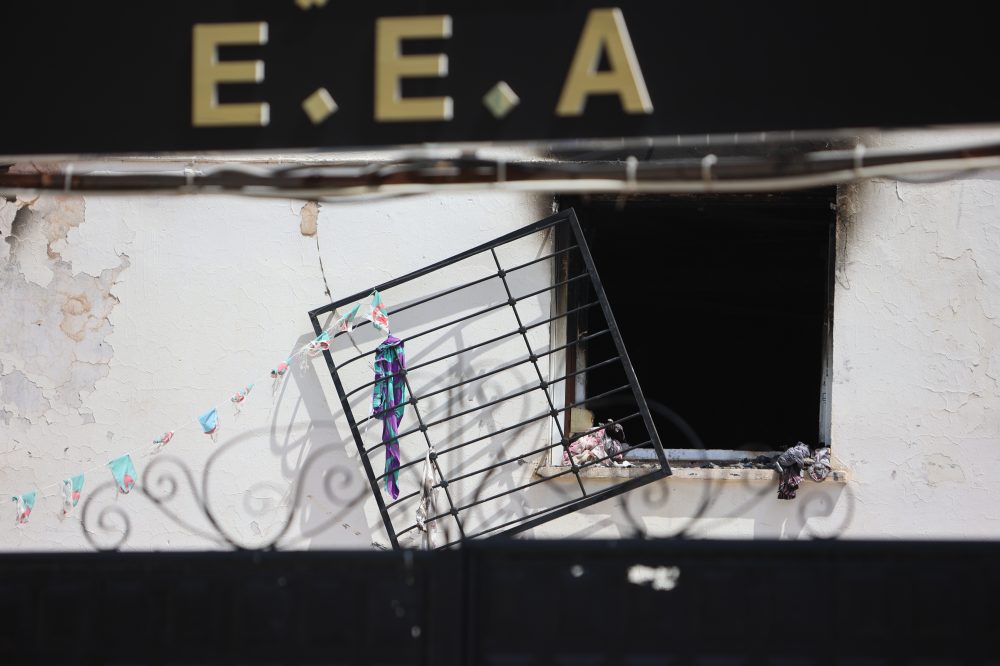
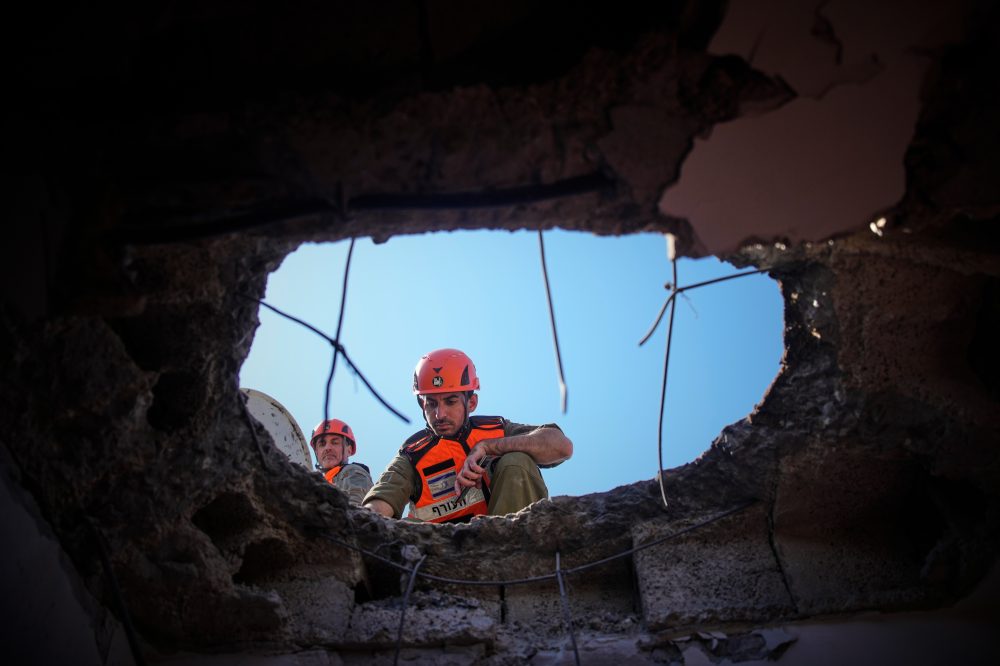
Following Saturday’s U.S.-Israeli military operation that resulted in the death of Iranian Supreme Leader Ayatollah Ali Khamenei, Tehran has deployed thousands of drones and ballistic missiles against Israeli targets, U.S. military installations and diplomatic facilities in the region, plus energy infrastructure throughout the Persian Gulf. Iranian forces have also launched missile strikes against Turkey and sent drones into Azerbaijani territory.
Tehran’s fundamental approach centers on creating fear about an expanding conflict, hoping that Washington’s allies will exert sufficient pressure to stop the military campaign. An extended war with American and Israeli casualties could also benefit Iran’s position.
However, this strategy of attacking neighboring countries could prove counterproductive.
Preserving Iran’s governmental structure through the conflict represents Tehran’s top objective, according to Ellie Geranmayeh, deputy director of the Middle East and North Africa program at the European Council on Foreign Relations.
“Iran is upping the costs for this U.S. military campaign and regionalizing it from the get-go, as they promised they would if America restarts the war again with Iran,” she said. Last June, the United States joined Israel in a 12-day military campaign against nuclear enrichment facilities. While Iran claims its nuclear program serves peaceful purposes, Iranian officials had previously threatened to develop nuclear weapons while enriching uranium to near-weapons-grade concentrations.
Iranian leadership believes that causing casualties and disrupting energy supplies to increase oil and gas costs will prompt America’s partners or domestic opposition to pressure U.S. President Donald Trump into scaling back operations.
“The Iranians are banking on basically out-stomaching him, and exhausting him and his allies to the point where they would basically have a diplomatic off-ramp,” Geranmayeh said. While Trump remains unpredictable, she noted, he currently appears focused on “unconditional surrender to his demands, rather than a negotiated settlement.”
American and Israeli forces have conducted hundreds of air attacks, causing significant damage to Iranian governmental, military and nuclear facilities. Though severely outmatched militarily, Iran continues launching ballistic missiles at Israel, resulting in 11 deaths and disrupting daily life for millions of Israelis. Additional fatalities have occurred in Gulf Arab nations, while the U.S.-Israeli offensive has claimed 1,045 Iranian lives.
Following over two years of conflict in Gaza, Israeli citizens show limited enthusiasm for another extended military engagement. Public opinion surveys indicate Americans are similarly reluctant about prolonged warfare.
The American-Israeli assault followed unsuccessful diplomatic negotiations between the U.S. and Iran regarding Tehran’s nuclear program and Western economic sanctions.
Trump announced Monday that his four goals include eliminating Iran’s missile capacity, destroying its naval forces, preventing nuclear weapons acquisition, and stopping support for allied militant organizations.
Iran’s military response has affected every regional nation, including Oman, which facilitated recent nuclear negotiations and maintained decades of close Iranian relations after helping the late Sultan Qaboos bin Said suppress a 1970s insurgency.
Last week, with U.S. naval forces gathering in the region, Oman’s foreign minister traveled urgently to Washington attempting to preserve nuclear discussions.
Subsequently, Oman became involved in the conflict. Iranian missiles have struck an Omani port and vessels near its coastline. Oman’s Duqm port provided logistical support for the USS Abraham Lincoln aircraft carrier’s deployment preparations.
Saudi Arabia, which established diplomatic détente with Tehran in 2023, also faced attacks this week. Its Ras Tanura oil refinery suffered repeated strikes and drones hit the U.S. Embassy in Riyadh — creating an awkward situation for Crown Prince Mohammed bin Salman, who has cultivated close ties with Trump.
Qatar and the United Arab Emirates, both maintaining strong Trump relationships, have also experienced repeated targeting.
A stark mathematical reality emerges as fighting continues. Iran possesses limited missile and drone inventories, while Gulf Arab states, the U.S. and Israel maintain finite supplies of interceptor missiles capable of stopping incoming attacks.
U.S. Defense Secretary Pete Hegseth reported Wednesday that thousands of Iranian missiles and drones have been “intercepted and vaporized” during the conflict. Israeli military officials claim to have eliminated dozens of missile launch systems.
For American and Israeli forces, destroying missiles and launch platforms remains crucial. Both nations had to intercept Iranian missiles during June’s war and repeatedly throughout the Israel-Hamas conflict.
“In simple terms, we are focused on shooting all the things that can shoot at us,” said U.S. Navy Adm. Brad Cooper, commander of American Central Command.
A senior Western official, speaking anonymously about intelligence information, estimated Iran has several days of ballistic missile supplies at current firing rates, though Tehran may reserve some for extended operations.
Israeli military sources report significantly reduced Iranian launches recently due to airstrikes — despite warning sirens continuously sounding across Israel from Wednesday into Thursday.
Iran’s approach of threatening energy security, creating divisions between Gulf and Western nations, and increasing operational costs is “backfiring,” said Hasan Alhasan, a Middle East specialist with London’s International Institute for Strategic Studies.
“It’s driving and pushing the Gulf states into closer alignment with the United States,” he said.
“The Gulf states can’t simply sit idle and continue absorbing indefinite attacks to their critical infrastructure and to civilians in Gulf cities,” Alhasan said. They likely seek both additional defensive weapons and diplomatic solutions to end the conflict.
Iran’s foreign minister suggested his country’s military units now operate independently without central government oversight, potentially explaining Iran’s increasingly unpredictable attacks.
“They are acting based on instructions — you know, general instructions — given to them in advance,” Abbas Araghchi told Al Jazeera on Sunday.
However, following a Wednesday conversation with Araghchi, Qatar’s prime minister, Sheikh Mohammed bin Abdulrahman Al Thani, “categorically rejected” his claim that Iranian missiles only targeted American interests rather than Qatari territory.