
Maritime workers from India find themselves in a dangerous predicament, trapped for weeks at Iranian ports while military drones and missiles target vessels in surrounding waters. Among them is 26-year-old Ambuj, a sailor who hasn’t seen his family in half a year and desperately wants to return home.
Speaking to Reuters from his stranded vessel, Ambuj represents roughly 23,000 Indian crew members currently working on commercial and offshore ships throughout the Gulf region, an area now experiencing intense warfare involving Iran, the United States, and Israel.
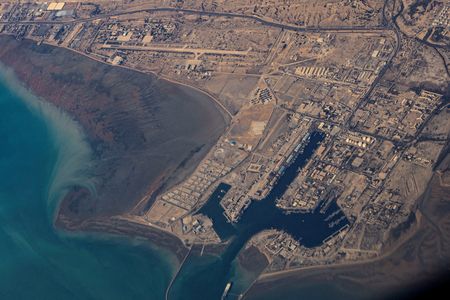
The sailor, who requested his full name be withheld for safety concerns, remains stuck at Bandar Abbas port with 15 fellow crew members, surrounded by more than 50 other vessels awaiting clearance.
Hundreds of commercial tankers and freight ships have been queued up, hoping to navigate through the Strait of Hormuz, where Iranian military actions have resulted in three Indian sailors’ deaths and one person reported missing. The dangerous situation facing Indian maritime workers has become a significant concern in their home country, with New Delhi officials coordinating with various international authorities, including Iranian representatives, to protect their citizens.
“We understand the extreme risks of sailing without naval protection or proper authorization,” Ambuj explained during a phone interview from his ship.
“My employer has officially relieved us from our duties, and we’re currently awaiting secure transit options since flights departing Tehran have been suspended. Once we receive approval to sail toward the Middle East or any nearby safe harbor, we plan to dock and catch the first available flight back to India,” he added.
The crew was originally headed to a Southeast Asian destination when panic struck in early March. Their ship’s captain received a threatening radio transmission from Iran’s Islamic Revolutionary Guard Corps, warning that attempting passage through the Strait would result in serious consequences.
Initially, the crew remained hopeful for sailing permission, but authorization never materialized. Ambuj noted they’re now preparing mentally for the possibility of remaining stranded for additional weeks or even months.
India ranks as the globe’s third-largest source of maritime personnel, with over 300,000 sailors employed across international shipping operations, based on official government statistics.
Another crew member, M. Kanta, serving aboard a vessel bound for India, described witnessing military drones and fighter aircraft overhead, creating fear among his fellow sailors. The situation worsened when Iranian officials mandated the disconnection of their Starlink internet service in early March.
“We’ve heard warning sirens. We witnessed flames on a distant vessel and received threatening radio messages,” Kanta reported.
“Permission to restore our Starlink connection was granted after March 6, allowing us to contact our families and access reliable news updates. Every time we spot or hear approaching drones or military jets, our hearts race with fear,” he continued.
Kanta explained that both his shipping company and government officials from India and Iran have instructed crew members to avoid sharing specific details about their vessel’s identity or current position for security purposes.
A third sailor, who chose to remain anonymous, said his ship was transporting bitumen and crude oil to a South Asian nation. His vessel was positioned just miles from the strait when he witnessed a drone strike on another ship.
“We’ve developed a routine of trying to identify different aircraft, jets, and drones visible from our deck. Getting proper sleep has become extremely difficult due to constant anxiety,” the unnamed crew member shared.
Recent developments show Iran permitted two Indian-flagged liquefied petroleum gas vessels to pass through the Strait of Hormuz on Friday. Mohammad Fathali, Iran’s ambassador to India, has also provided assurances regarding safe passage for Indian commercial ships.