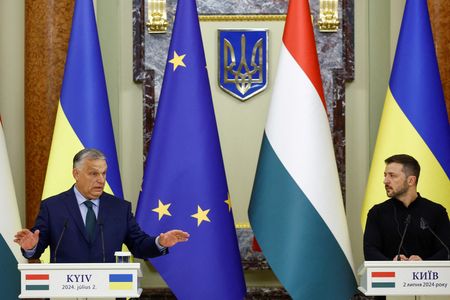

Ukrainian officials are breathing a sigh of relief following Monday’s electoral defeat of Hungarian Prime Minister Viktor Orban, whose opposition had been blocking a critical 90 billion euro ($105 billion) aid package that Ukraine desperately needs to continue its fight against Russia.
Peter Magyar’s center-right Tisza party secured a decisive victory on Sunday, bringing an end to Orban’s 16-year leadership and gaining the supermajority needed to implement constitutional changes.
For years, Orban had been Ukraine’s most vocal opponent within the European Union. The nationalist leader, who cultivated close relationships with Russian President Vladimir Putin, consistently blocked Brussels’ initiatives to assist Ukraine. Most recently, he prevented approval of the two-year EU loan package, claiming Ukraine had intentionally stopped Russian oil shipments through the Druzhba pipeline that crosses Ukrainian territory.
Ukrainian President Volodymyr Zelenskyy maintains that Russian military strikes damaged the Druzhba pipeline in January, with repairs expected to finish this spring. However, he has also encouraged European nations to cease purchasing Russian oil altogether.
Ukrainian lawmaker Oleksiy Honcharenko from the European Solidarity Party offered a measured assessment of the change in leadership. “One should not call Magyar pro-Ukrainian – he isn’t – but he is not anti-Ukrainian, unlike Orban, and that’s already great,” Honcharenko stated. “Putin has lost his main ally in Europe.”
During his inaugural press conference following the election results, Magyar acknowledged Ukraine as the victim in its conflict with Russia and committed to reducing Hungary’s energy dependence on Russia. However, he also indicated that Budapest would continue “pragmatic” relationships with Moscow and tied improved Ukraine relations to addressing concerns about Hungarian minorities living in western Ukraine.
European Union officials and policy experts anticipate that Magyar will eliminate Hungary’s blockade of the aid package and lift opposition to a 20th round of Russian sanctions once he assumes office, likely in mid-May. Magyar appears eager to restore EU funding for Hungary that was frozen due to concerns about democratic deterioration under Orban’s administration.
The timeline remains critical for Ukraine’s financial stability. After four years of warfare, Ukraine depends heavily on Western financial assistance and requires $52 billion this year. Economic analysts warn the country could face a funding crisis as early as next month.
“Hungary’s vetoes on EU financial support for Ukraine will likely cease, improving EU decision-making capacity,” explained Zsuzsanna Vegh, an analyst with the German Marshall Fund think tank. She noted that while Hungary would stop blocking aid, the country itself would not contribute funding, and “Tisza is unlikely to embrace expansive military support.”
In Kyiv, residents responded to Hungary’s election results with measured hope. Yehor Vasylchencko, a 33-year-old technology worker, called the outcome “very positive because it gives us a chance to improve relations with Hungary.” However, noting Magyar’s previous membership in Orban’s nationalist Fidesz party, he added, “I have some doubts about whether Magyar will be an improvement. Time will tell.”
Ukrainian Foreign Minister Andrii Sybiha emphasized that “meticulous, pragmatic, and calm work” would be necessary to establish common ground with Hungary’s incoming leadership.
Volodymyr Fesenko, who directs the Penta think tank, suggested that restarting oil flows through the Druzhba pipeline could serve as a goodwill gesture as Ukraine seeks to rebuild its relationship with Hungary.
Despite the political shift, years of anti-Ukrainian messaging in Hungarian media have left much of the Hungarian population skeptical about closer ties with Kyiv. During Monday’s press conference, Magyar reiterated his opposition to fast-tracking Ukraine’s EU membership application.
Other Central and Eastern European leaders remain Ukraine-skeptical as well. Slovak Prime Minister Robert Fico, who opposes EU sanctions on Russia, and Czech Prime Minister Andrej Babis both publicly supported Orban before Sunday’s vote. In Bulgaria, former President Rumen Radev, who favors improved Moscow relations, leads polling ahead of next Sunday’s parliamentary elections.
Oleksandr Merezhko, who chairs Ukraine’s parliamentary foreign affairs committee, believes Slovakia’s Fico may become more cautious without Orban’s political backing.
However, Yehor Cherniev, a lawmaker from Ukraine’s governing Servant of the People party and deputy chair of the national security committee, cautioned against expecting dramatic changes in European support. “A miracle isn’t going to happen,” Cherniev said.
Policy analysts expect Orban’s departure will reduce the confrontational tone in EU discussions about Ukraine and eliminate Hungary’s obstructionist stance. Budapest will likely stop blocking technical discussions about Ukraine’s EU membership process.
Nevertheless, significant reservations persist in several EU capitals, including Paris and Berlin, that accelerating Ukraine’s membership path might eliminate incentives for implementing promised reforms, particularly anti-corruption measures.
“Magyar will be obviously less hostile than Orban was,” said Orsolya Raczova, an analyst with Eurasia Group. “But, with Magyar as prime minister, Hungary will basically join the mainstream opposition to speedy EU accession for Ukraine.”