
NEW YORK (AP) — If you want to understand the bagel, you have to understand where it came from — and the people who carried it here.
Eastern European Jews fleeing poverty and rising antisemitism brought the bagel with them when they immigrated to America. It first appeared on New York street carts and in neighborhood bakeries. Over time, it worked its way into supermarket freezer sections and onto the breakfast plates of millions of Americans. But like any great food story, it all begins with that first bite.
There’s something almost magical about the experience. The outer crust gives a satisfying crunch, signaling to your brain that something substantial is coming. Then the interior delivers — dense, chewy, and soft all at once. The contrast of those two textures, combined with whatever you’ve piled on top, creates something genuinely satisfying.
The toppings, of course, are part of the fun. A simple spread of cream cheese keeps things classic. A flavored schmear adds a little personality. And then there’s the full build — smoked fish, tomato slices, cucumber, and red onion stacked higher than any reasonable mouth should attempt.
And that’s before you even get to flavor varieties.
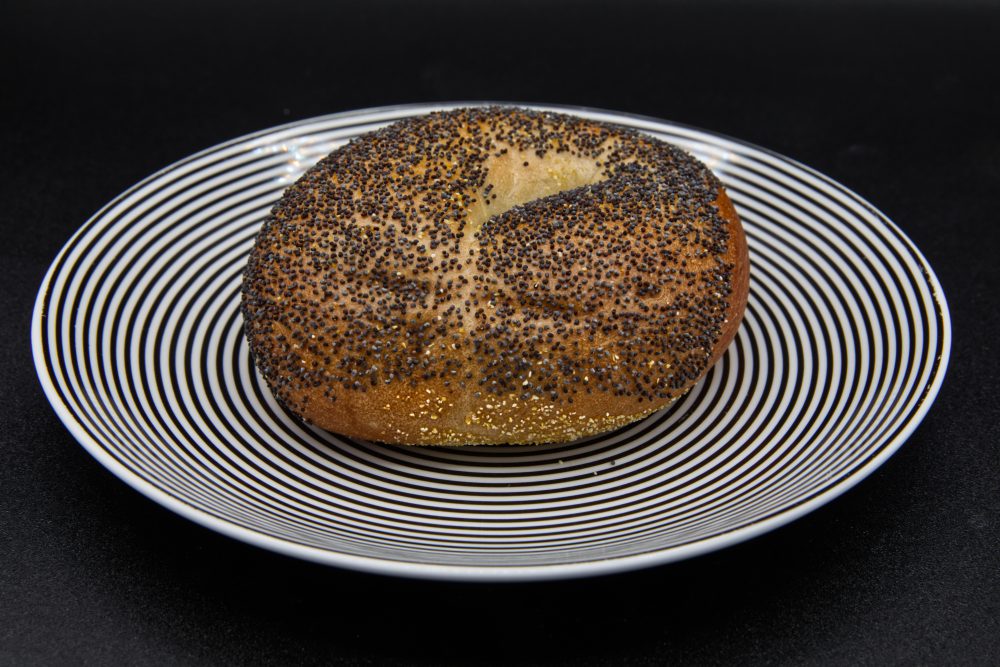
Some people are perfectly content with plain or egg bagels — and there’s nothing wrong with that. Others won’t settle for anything without seeds: poppy, sesame, or both. Shards of dried onion or a generous coating of salt have their devoted fans too. Then there are the everything bagel loyalists, who argue that each bite delivering a different burst of flavor is the only way to go.
Traditionalists may say to keep it simple. But the bagel, much like American culture itself, has room for everyone’s preference.
The bagel’s roots trace back to Jewish communities in Poland. It made the Atlantic crossing with Eastern European Jews who were fleeing intensifying antisemitism in the late 19th and early 20th centuries. One of those immigrants, Harry Lender, arrived from Poland and took a job at a New Jersey bakery, saving money to bring his family over to join him. His sons later expanded the family’s operation from a bakery in New Haven, Connecticut, into a nationwide frozen bagel business that stocked supermarkets across the country.
In that sense, the bagel is a testament to immigrant success in America. The shops selling bagels today are often operated by descendants of those original immigrant families, as well as newer arrivals who have come seeking their own piece of the American dream.
But wherever the bagel travels, it holds a particularly meaningful place in Jewish American life. Across the full arc of Jewish milestones — births, coming-of-age ceremonies, and even death — bagels have been a constant presence, stacked high to mark both celebration and sorrow.
A ritual circumcision for a newborn boy? Once the ceremony wraps up, the bagels come out. A bar mitzvah after thirteen years of preparation? After the big moment, everyone gathers around the bagels. Sitting shiva to mourn a loved one? Condolences are offered, and the bagels are waiting in the next room.
In each of these moments, the bagel offers something beyond food. It provides comfort — the kind that has sustained generations of Jewish Americans, immigrants, and anyone else finding their footing in this country.
This story is part of a recurring series called “American Objects,” produced in recognition of the 250th anniversary of the United States.