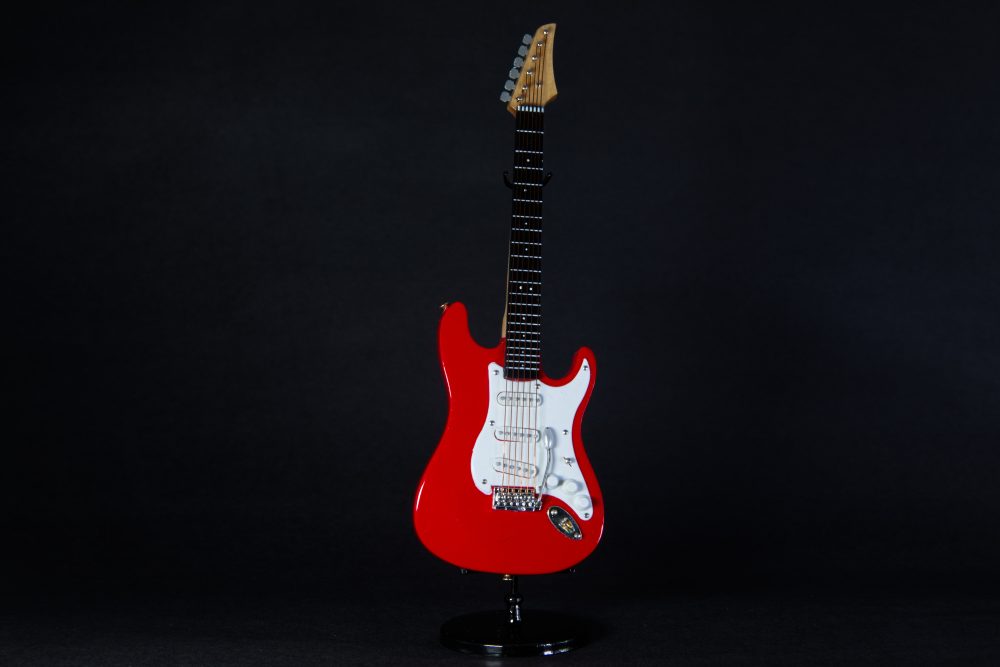

ATLANTA (AP) — Few things capture the American spirit quite like taking an age-old musical instrument and electrifying it with modern technology. This revolutionary creation, the electric guitar, has inspired countless teenagers to chase their rock star ambitions.
The instrument transformed suburban garages into makeshift practice studios for aspiring musicians throughout America. Those unable to play, unwilling to learn, or lacking musical friends could always resort to air guitar performances. (Notably, acoustic air guitars seem remarkably uncommon.)
Almost a century ago, Americans’ passion for innovation, music, and amplifying sound converged when George Beauchamp designed and Adolph Rickenbacker manufactured the first commercially viable electric guitar, known as “the Frying Pan.”
Innovation didn’t stop there. Musician and creator Les Paul attached strings and pickups to a wooden block he dubbed “the Log,” crafting one of the earliest solid-body electric guitars. This marked a turning point in musical history.
Consider Chuck Berry’s “Johnny B. Goode” opening riff without electric guitar amplification. Would this anthem about a guitarist have ever been written? The instrument drives Jimi Hendrix’s interpretation of “All Along the Watchtower” and powers Bruce Springsteen’s “Born to Run.” It gave birth to the guitar hero, the musical virtuoso, and the ultimate expression of American showmanship: the guitar solo.
The sound is bold and amplified. It famously “goes to 11,” after all.
The instrument proved so controversial that Bob Dylan faced accusations of betrayal when he embraced electric performance.
Electric guitars became so fundamental to rock and pop that MTV launched its popular “Unplugged” series, requiring artists to perform with acoustic instruments as a refreshing alternative.
Like many great American innovations, it spread globally, continuing to inspire young dreamers worldwide. They just need access to an electrical outlet.