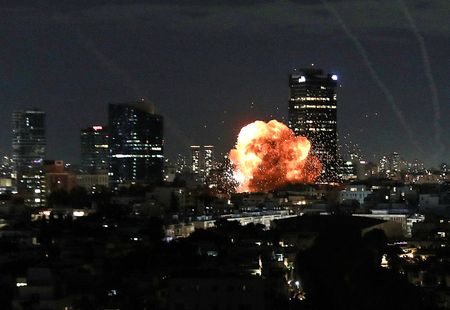

Middle East tensions intensified Saturday when Yemen’s Houthi militants carried out their inaugural strikes against Israel since regional hostilities commenced, coinciding with the arrival of additional American military forces in the area.
Secretary of State Marco Rubio indicated before the assault that the United States anticipated wrapping up combat activities in the coming weeks, though thousands of U.S. Marines began deploying to the region. Houthi leaders declared they would persist with operations until what they termed “aggression” across all battlefronts ceased.
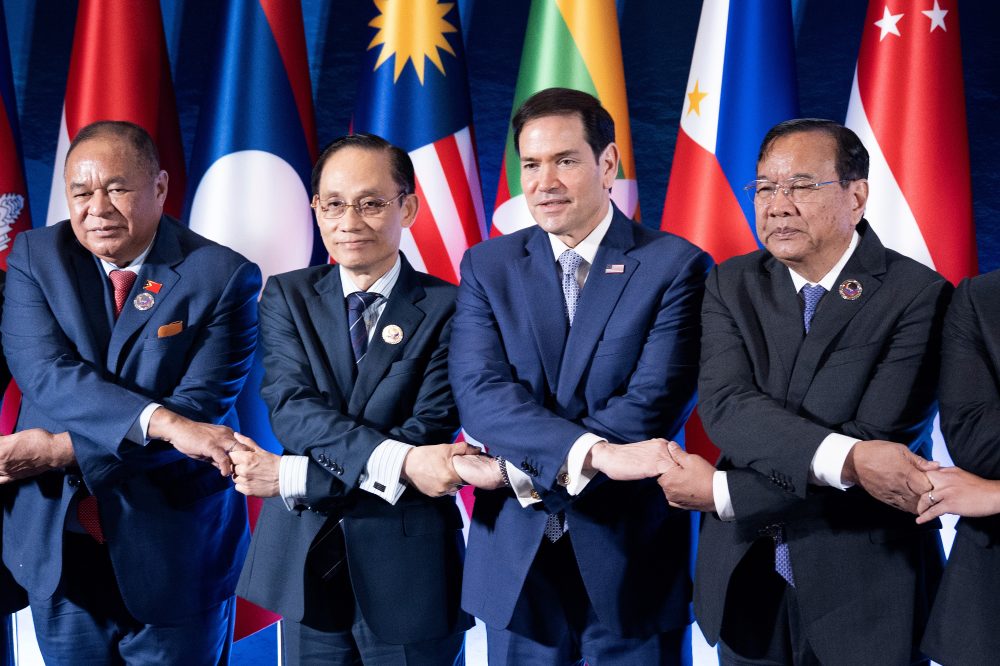
Iranian President Masoud Pezeshkian conducted discussions with Pakistan’s Prime Minister Shehbaz Sharif, whose administration will host diplomatic talks Sunday featuring Turkish and Saudi foreign ministers aimed at reducing regional hostilities.
However, immediate diplomatic progress remains elusive as the conflict, which began with American and Israeli operations against Iran on February 28, has expanded throughout the Middle East, claiming thousands of lives and creating unprecedented disruptions to global energy markets.
The Pentagon confirmed Saturday that the initial wave of Marines reached the region Friday aboard an amphibious assault vessel, representing the first of two major troop contingents being sent to the area.
While Rubio suggested Friday that American objectives could be met without ground forces, he acknowledged deploying personnel to provide President Trump with “maximum” strategic flexibility. Military officials also expect deployment of thousands of soldiers from the 82nd Airborne Division.
MEDIA WORKERS AND FIRST RESPONDERS TARGETED
Israeli forces conducted extensive operations against Tehran Saturday, striking what military officials described as Iranian government infrastructure facilities.
Concurrent attacks in Lebanon resumed hostilities against Iran-supported Hezbollah, resulting in the deaths of three Lebanese media personnel when their vehicle was hit, according to Lebanon’s Al Manar TV, along with one Lebanese soldier. A subsequent strike targeting rescue personnel responding to assist the victims also produced casualties.
Israeli military officials stated they had specifically targeted one journalist, labeling him a “terrorist” and alleging his involvement with Hezbollah intelligence operations, claiming he had disclosed Israeli troop positions.
Iranian forces maintained their offensive against Israel and multiple Gulf nations following Friday’s assault on a Saudi Arabian air installation that injured 12 American military personnel, with two suffering serious wounds in one of the most significant breaches of U.S. air defenses to date.
Early Sunday, defense systems intercepted an unmanned aircraft near the home of Iraqi Kurdish leader Masoud Barzani in Erbil, according to security officials. Saturday reports indicated drone strikes had targeted the residence of Iraq’s Kurdistan Region president.
YEMEN-BASED GROUP DEMONSTRATES LONG-RANGE CAPABILITIES
Israeli authorities, who previously experienced regular Houthi missile attacks before the current war, confirmed a projectile had been launched from Yemen. No injuries or property damage were reported.
The assault highlighted potential new risks to international maritime traffic, already impacted by the effective blockade of the Strait of Hormuz, which handles approximately one-fifth of global petroleum and liquefied natural gas shipments.
Houthi military representative Yahya Saree subsequently announced the organization had executed a second Israeli attack within 24 hours and promised additional strikes.
The militants have demonstrated capabilities to hit distant targets and disrupt shipping corridors around the Arabian Peninsula and Red Sea, as they previously did supporting Hamas during Gaza fighting.
FINANCIAL MARKETS REACT TO EXTENDED CONFLICT PROSPECTS
With U.S. midterm elections scheduled for November, the increasingly unpopular conflict has impacted President Donald Trump’s Republican Party, leading him to appear eager for swift resolution while simultaneously threatening escalation.
Anti-Trump protesters gathered in American cities Saturday during rallies organizers characterized as opposition to Iranian military action.
Financial markets have responded negatively to indications the war may continue indefinitely. Brent crude oil prices have surged over 50% since hostilities began.
Trump has warned of potential strikes against Iranian electrical facilities and energy infrastructure unless Iran reopens the Strait of Hormuz. However, he extended his original deadline for this week, providing Iran an additional 10-day response period.
Iranian warnings about attacking vessels in the waterway have deterred most oil tankers from attempting passage. Several ships have successfully navigated the strait, including Pakistani and Indian-flagged vessels, following Iranian guarantees of safe transit.
Iran has approved 20 additional Pakistani-flagged ships for strait passage, permitting two daily transits, according to Pakistan’s Foreign Minister Ishaq Dar.
Israeli operations have focused on Iranian nuclear facilities, prompting concerns from Russia’s state nuclear corporation Rosatom leadership, which evacuated personnel from the Bushehr coastal nuclear facility, citing threats to atomic safety.
Pezeshkian warned Iran would “retaliate strongly if our infrastructure or economic centers are targeted.”
Iranian attacks occurred across multiple Gulf locations, including Kuwait, the United Arab Emirates and Oman.
An Iranian air assault struck the Israeli community of Eshtaol near Jerusalem. Israel’s emergency medical services reported seven hospitalizations.
Within Iran, media outlets reported at least five fatalities from U.S.-Israeli strikes on residential areas in northwestern Zanjan city and Tehran, where Iran University of Science and Technology sustained damage.