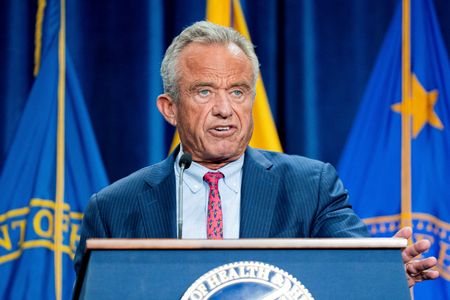

A crucial federal advisory committee responsible for determining which preventive healthcare services Americans receive at no cost has been effectively shut down by Health Secretary Robert F. Kennedy Jr., causing significant delays in updating vital cancer and heart disease screening protocols, according to healthcare professionals.
The U.S. Preventive Services Task Force, consisting of 16 members, has not convened for more than 12 months. Officials have cancelled three scheduled meetings in succession and have failed to appoint replacements for five volunteers whose terms ended in December.
Created in 1984, this committee establishes which medical procedures and treatments—including routine cancer screenings and HIV prevention measures—must be covered without charge by health insurance providers. The panel also has authority to recommend against making certain tests or treatments routine.
Dr. Alex Krist, a family medicine doctor at Virginia Commonwealth University who previously led the preventive care committee, explained the consequences of the panel’s absence: “commercial insurances can choose or not choose to cover these new preventive services.”
The American Cancer Society emphasizes that detecting cancer early both saves lives and reduces costs, though initial expenses can be substantial. Recent research shows that lifetime mammography costs for a typical American woman average approximately $7,000.
The committee typically releases about 22 preliminary and final recommendations each year, but managed only seven in the previous year. No recommendations have been published this year.
Several important guideline updates remain stalled, including recommendations for prostate cancer screening, genetic testing for breast cancer-related mutations, and preventive medications for individuals at elevated breast cancer risk.
Dr. Julie Gralow, chief medical officer for the American Society of Clinical Oncology, stressed the importance of expert oversight: “We have to rely on a trusted group of experts who have really weighed the benefits and risks and are looking at overall population health and doing no harm. Patients do trust these as well.”
Medical organizations, despite occasional disagreements with the panel’s decisions, have appealed to Congress to “protect the integrity” of the task force. Nineteen senators wrote to Kennedy last month, requesting his support for the committee’s mission.
The decision to disable the task force reflects President Donald Trump’s broader initiative to restructure federal health oversight.
Joseph Antos, senior fellow emeritus at the American Enterprise Institute, a conservative research organization, noted: “The current administration would not only like to cut back on regulation, they would definitely like to cut back on required benefits under the Affordable Care Act.”
A 2025 Supreme Court decision regarding HIV prevention insurance coverage confirmed that the Health Secretary maintains control over the preventive care panel.
In 2023, the committee recommended preventive drug treatment for high-risk individuals to prevent HIV infection, but this guidance has not been expanded to include Gilead Sciences’ newer bi-annual injection, Yeztugo.
Consequently, patient expenses for Yeztugo vary by individual insurance plans, UnitedHealthcare, America’s largest health insurer, confirmed via email. The company noted that its commercial policies provide older HIV prevention drugs at no patient cost.
Cervical cancer screening recommendations remain in preliminary status. Following regulatory approval of the first home-based pap smear test last year, a separate federal agency intervened to mandate insurance coverage beginning in 2027.
Additional recommendations awaiting review include screening protocols for problematic alcohol consumption and depression, plus whether vitamin D supplementation prevents fractures and falls in elderly patients.
Heart disease specialists recently recommended that adults with high long-term cardiovascular risk begin cholesterol-reducing therapy at age 30 rather than the current standard of 40.
These guidelines could impact millions of Americans, but without federal task force endorsement, insurers have no obligation to cover expanded testing or treatment options, according to America’s Health Insurance Plans trade association and UnitedHealthcare.
Virginia Commonwealth’s Dr. Krist summarized the uncertainty: “Primary care is kind of struggling with what we should do. The task force is meant to be objective.”