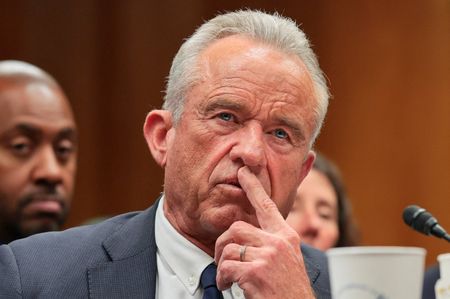

During a Senate budget hearing on Wednesday, Health Secretary Robert F. Kennedy Jr. denied any personal involvement in the Food and Drug Administration’s recent decision to reject a cancer treatment for advanced skin cancer.
Kennedy was appearing before senators to discuss President Donald Trump’s proposed budget for the Department of Health and Human Services for fiscal year 2027 when he addressed the controversial drug decision.
“I had nothing to do with this decision,” Kennedy stated, explaining that the choice rested with FDA Commissioner Dr. Marty Makary.
The FDA rejected Replimune’s experimental treatment called RP1 earlier this month, citing concerns about the company’s research methodology. Federal regulators criticized the pharmaceutical company for conducting a study without a proper control group, demanding evidence from a more rigorous controlled trial to prove the drug’s effectiveness.
Kennedy defended the agency’s position, saying: “This decision comes out of FDA, and we trust the process there. And I’ve been told by Marty Makary that every panel that looked at that drug unanimously voted against it… because it does not appear to work.”
The rejection has devastated Replimune’s market value, with company shares dropping almost 70% since the FDA’s announcement. This marks the second time in two years that federal regulators have turned down the cancer treatment.
However, the stock rebounded 15% on Wednesday after a Wall Street Journal editorial challenged Kennedy’s characterization of the drug’s effectiveness. The opinion piece criticized FDA drug division head Vinay Prasad, who announced his departure from the agency last month.
The editorial quoted cancer specialists involved in the drug trials who argued the treatment showed promise. It also criticized Kennedy for previously stating at a Capitol Hill hearing that Makary “made the correct decision to not approve that drug.”
“Denying patients a life-saving medicine for inexplicable reasons is the wrong kind of change. If Dr. Makary doesn’t understand that, the FDA needs a change in leadership,” the editorial argued.
Following the April 10 rejection, Replimune expressed disagreement with the FDA’s assessment, claiming the agency contradicted positions it had taken during a September meeting about the drug’s approval pathway.
An HHS spokesperson defended the decision, stating that “FDA career scientists and senior office leadership in the Center for Biologics Evaluation and Research unanimously determined that the current evidence for (Replimune’s drug) does not meet the evidentiary standards required for regulatory approval.”
Replimune did not respond to requests for comment about the ongoing controversy.