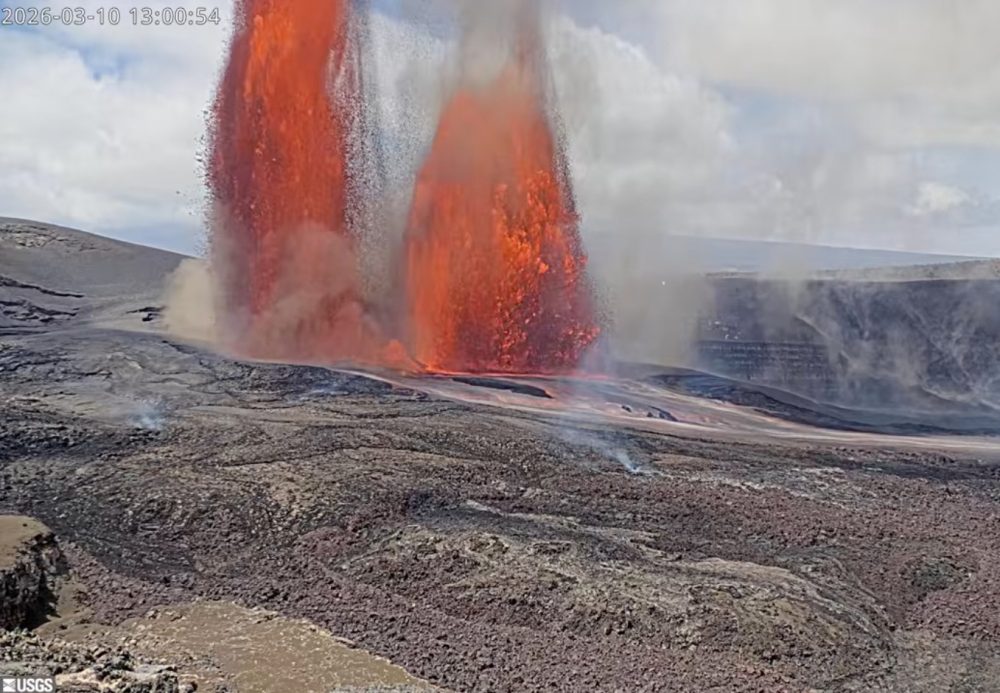

HONOLULU (AP) — Spectacular eruptions at Hawaii’s Kilauea volcano sent molten lava shooting 1,000 feet into the air on Tuesday, forcing officials to temporarily shut down sections of a national park and a major highway due to dangerous volcanic debris raining down on the area.
Located on Hawaii’s Big Island, Kilauea has been putting on a stunning display for residents and tourists for over a year through an intermittent eruption that regularly launches dramatic lava fountains skyward.
Tuesday morning’s volcanic activity represents the 43rd episode of eruptions since they started in December 2024. Live video footage captured two brilliant red lava fountains accompanied by billowing smoke. Officials cannot predict how long this latest episode will continue, as previous eruptions have varied from several hours to multiple days.
As with previous episodes, the molten lava remained contained within Kilauea’s summit crater located inside Hawaii Volcanoes National Park, posing no danger to residential areas or structures.
However, the towering lava fountains created significant problems for surrounding communities and transportation routes as volcanic debris and ash, scientifically called tephra, began falling across the region. This hazardous material forced officials to temporarily close sections of the national park near the summit and shut down portions of Highway 11, a crucial transportation corridor circling the island, on both sides of the park.
Hawaii County authorities established an emergency shelter at a local district gymnasium to assist residents and visitors affected by the road closures or falling volcanic debris. County spokesperson Tom Callis reported that no individuals had used the shelter shortly after it opened.
The National Weather Service issued an official ashfall advisory for the area.
County officials warn that volcanic tephra can cause irritation to eyes, skin and breathing passages. The debris can also create blockages and other complications for water collection systems that many Big Island residents rely on, according to authorities.
Previous eruption episodes produced such heavy ashfall that some communities required assistance from county emergency response teams to remove volcanic debris that covered their properties, Callis explained.
Kilauea ranks among the planet’s most active volcanic systems.