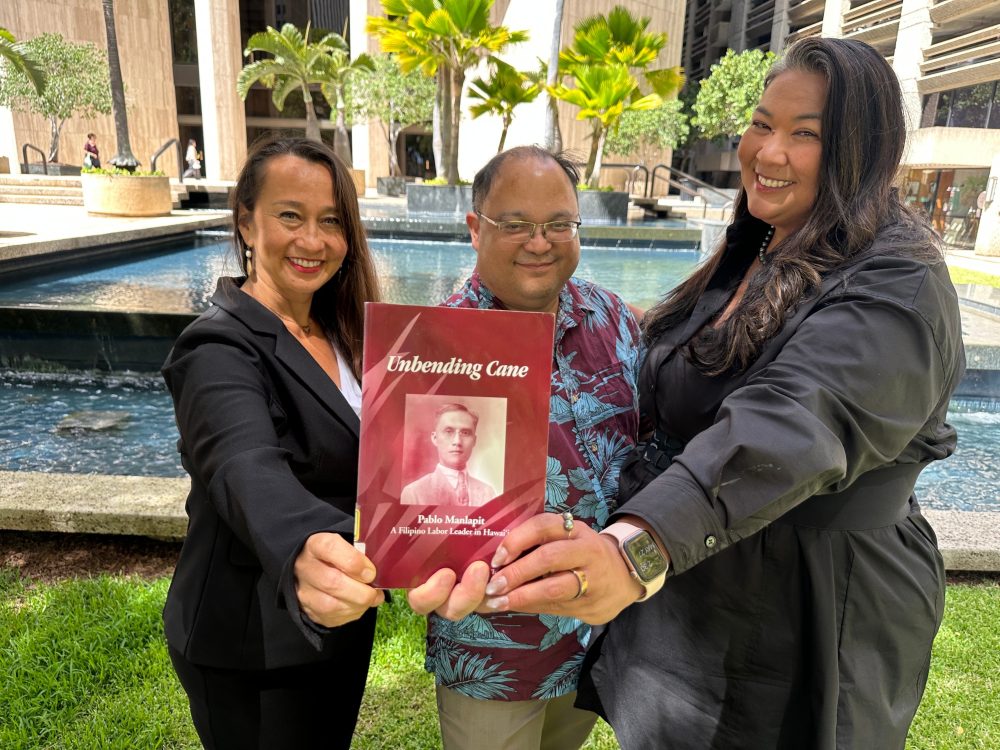

Long before Filipino American farm workers staged their famous California strike, Pablo Manlapit was building labor unions among Filipino plantation workers in Hawaii.
After arriving in Honolulu in 1910 to work sugar plantations, Manlapit witnessed the harsh treatment of fellow Philippine immigrants called “sakadas.” Ten years later, risking his career and family, he became Hawaii’s first Filipino attorney and established a Filipino workers’ union fighting for equal wages and eight-hour shifts.
He successfully convinced Japanese laborers, who earned higher wages, to join the movement. His organizing activities led to his involvement in the deadly 1924 Hanapepe Massacre on Kauai, where 16 workers and four officers died during labor violence.
The devastating incident destroyed the strike’s progress.
Manlapit faced imprisonment, exile to California, and eventual deportation. Though he continued advocating for workers’ rights throughout his life, he passed away in 1969 largely forgotten.
More than 100 years later, Manlapit has emerged as an inspiration for Filipino attorneys who never learned his story growing up. The Hawaii Filipino Lawyers Association is working to reverse his conspiracy conviction in a symbolic campaign aimed at securing Manlapit’s rightful place in labor history. The group argues that Manlapit’s achievements and broader Asian American and Pacific Islander history in Hawaii remain largely unknown on the mainland.
“It’s a story that needs to be told. A lot of us are second generation, so we don’t have knowledge of these stories,” said Daniel Padilla, the group’s president. “His story gets overshadowed … in the broader labor movement in California.”
New sexual abuse allegations against well-known Mexican American labor leader César Chavez have sparked discussions about Filipinos who played crucial roles in America’s farmworker movement.
This development motivated the Filipino attorney organization to pursue clearing Manlapit’s record. Their mission to reverse Manlapit’s conviction, the association states, focuses on “restoring what was taken from a movement that always belonged to many.”
Filipino Americans have traditionally been overlooked by historians, according to Kevin Nadal, president of the Filipino American National Historical Society. Hawaiian Filipino communities – separated by an ocean – received even less historical documentation over the years. Nadal, who teaches psychology at City University of New York, only discovered extensive information about Manlapit while researching a Filipino American Studies encyclopedia in 2020.
“It may have been documented through just like oral histories,” Nadal said. “We love oral histories but, if no one writes them down and then it doesn’t become published, then it just gets lost.”
Manlapit’s organizing efforts likely represent the first recorded instance of Filipino worker mobilization.
“It started with Hawaii,” Nadal said. “What was happening in Hawaii, it would have been really hard for people to know that it was happening in California.”
Recognition has increased in recent years. This past May during Asian American Pacific Islander Heritage Month, the Smithsonian Asian Pacific American Center collaborated with Hawaii U.S. Sen. Mazie Hirono on a poster display featuring sakadas.
Workers who traveled from the Philippines to Hawaii’s plantations helped make Filipinos one of the state’s largest ethnic populations today. They comprised more than half the workforce. Hawaii later became home to America’s first and only governor of Filipino heritage, Ben Cayetano.
Cayetano, 87, said he never felt compelled to explore his Filipino heritage while growing up in poverty in Honolulu.
“I was born and raised here so I was more influenced by the local culture, which is a mixture of the Hawaiian culture and all the other cultures,” said Cayetano, who completed college and law school in Los Angeles.
However, recognizing sakadas and leaders like Manlapit serves as a way to honor the sakada who raised Cayetano as a single parent, he explained.
Growing up mixed-race in rural upstate New York, Becky Gardner struggled to connect with her mother’s Filipino heritage but heard family stories about her great-grandfather and grandfather who labored on Kauai plantations. Seeking to embrace those roots, Gardner relocated to Honolulu for law school.
While serving as an attorney in the state Office of Language Access, she promoted “Sakada Day,” honoring the Dec. 20 arrival of the first contract workers who departed the Philippines for Hawaii’s sugar and pineapple plantations.
During this work, Gardner discovered her own sakada ancestry.
She entered her great-grandfather’s name, Francisco Alcano, into an online Filipino laborer database and located records showing his 1928 arrival in Honolulu on a steamship named for President Grover Cleveland.
“It made me feel like I was part of Hawaii’s history too,” Gardner said.
The Hawaii Filipino Lawyers Association is examining whether Manlapit’s 1924 conviction was unjust and exploring legal options to clear his name after death, said Padilla, who received his law degree from the University of Hawaii.
They’re also considering establishing a fellowship at University of Hawaii’s law school to fund a legal researcher who could investigate the case as part of efforts to formally exonerate Manlapit.
Kainani Collins Alvarez, who grew up on Oahu aware of her sakada grandfather’s history, previously worked as a public defender and now operates a family-law practice. She hopes to contribute her criminal defense experience to the association’s Manlapit initiative. Half-white, she connects to Hawaii Filipinos through her mother and childhood time spent in the Philippines.
“For me, it’s really important to go back and rectify the truth,” she said. “History is built on the facts that we knew at the time.”
Manlapit was not present on Kauai during the 1924 massacre when striking Filipino sugar workers and police engaged in deadly conflict.
Despite Manlapit eventually receiving a pardon, the association seeks to highlight evidence proving his innocence, Alvarez explained.
Based on a Manlapit biography, he declared in a 1927 “farewell statement” his intention to establish his innocence: “I was railroaded to prison because I tried to secure justice and a square deal for my oppressed countrymen who are lured to the plantations to work for a dollar a day.”
A conviction reversal would carry greater significance than a pardon in certain respects, Nadal noted.
“It would mean more of understanding justice and ensuring that people realize that we can fight for justice and that justice can prevail,” he said.
Manlapit’s experience motivated Khara Jabola-Carolus to pursue a legal career in Hawaii. Similar to him, she began as an organizer and activist. She was raised in California and graduated from Hawaii’s law school.
“There’s a long history of Filipino organizing,” she said. “That’s why I wanted to be a lawyer here.”
She hopes more people will learn about Manlapit’s life with the same familiarity they have for famous Filipino entertainers.
“We need representation and access to seeing ourselves as heroes and movement leaders and not just entertainers,” she said. “Like Filipino Americans need to know Pablo Manlapit as much as they know Bruno Mars or Olivia Rodrigo.”