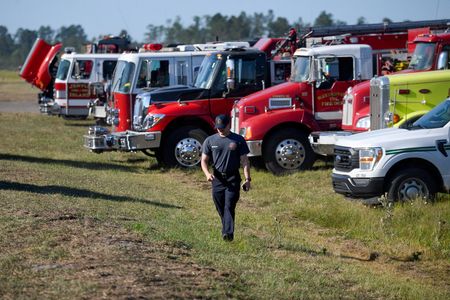

Georgia Governor Brian Kemp issued an emergency declaration Friday covering 91 counties as firefighters battle two devastating wildfires that have destroyed more than 120 homes and structures, setting a new record for property damage in the state’s history.
The two major blazes – known as the Highway 82 and Pineland Road fires – stand out among numerous wildfires currently burning across drought-affected areas of Georgia, Florida, South Carolina, and Alabama. One fire began when a party balloon made contact with power lines, while the other started from sparks created by welding equipment.
While Georgia has reported no deaths from the fires, a volunteer firefighter in northern Florida lost his life Thursday night after experiencing a medical emergency while battling a brush fire, according to media reports.
Officials say the widespread fires resulted from unusual weather patterns affecting the Southeast region.
The current fire season has been fueled by exceptionally dry conditions following last fall’s Hurricane Helene, which initially promoted heavy plant growth. The lack of spring rainfall has since turned that vegetation into tinder-dry fuel, creating fire risks more commonly seen in western states during summer months.
Georgia Forestry Commission Director Johnny Sabo explained the severity of conditions in an online video statement: “We are in extreme drought conditions, and wildfire activity has already surpassed our five-year average. Right now conditions are so dry that even one small spark can quickly turn into a dangerous wildfire.”
By Friday evening, the two primary fires had consumed more than 39,500 acres, destroying at least 122 homes and other buildings, according to state forestry officials. Governor Kemp confirmed during a news conference that this represents the largest property loss from wildfires in Georgia’s recorded history.
Close to 1,000 additional homes remain at risk, the governor noted.
The fires are spread throughout Georgia, with the two largest burning in the southeastern part of the state near the Florida border, approximately 250 miles southeast of Atlanta.
Television coverage has captured walls of pine trees consumed by flames, with Kemp describing “fire that is burning to the top of trees and burning from one treetop to another.”
Despite efforts by ground crews and water-dropping aircraft to stop the fires’ spread, firefighters are focusing on protecting homes still threatened by the blazes, Kemp said.
Emergency teams have succeeded in establishing containment barriers around 10% of each major fire’s perimeter, forestry officials reported.
Kemp’s emergency declaration for 91 of Georgia’s 159 counties is designed to speed up and coordinate the state’s disaster response efforts. Additionally, Sabo announced an unprecedented 30-day prohibition on outdoor burning of trash, farm waste, and campfires in those same counties – the first such ban in state history.
The causes of the two largest fires demonstrate how minor ignition sources can trigger massive blazes under current conditions.
Fire investigators found that the Highway 82 fire started Monday when an aluminum-coated balloon contacted a power transmission line, creating an electrical spark that ignited nearby vegetation.
The Pineland Road fire, which has been burning since April 18, began when a spark from welding work dropped onto the forest floor, officials determined.
Weather forecasters expect dangerous fire conditions to continue through the weekend, with strong winds predicted and minimal chances for rainfall.