
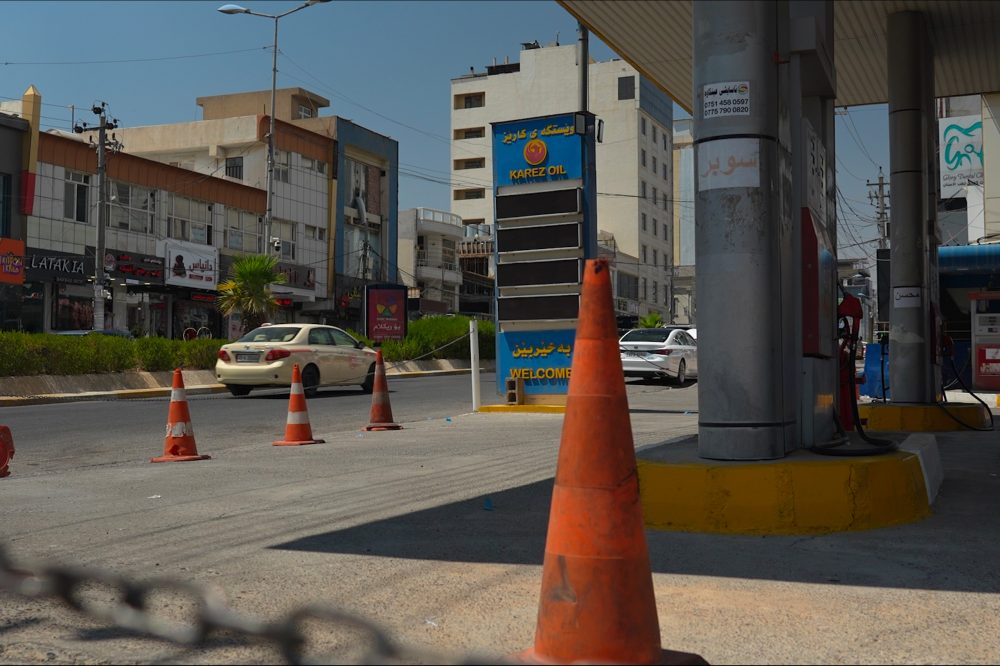

In the northern Kurdish region of Iraq, residents have been enduring agonizing waits at gas stations — some spending the entire night in line — as a serious fuel shortage took hold of the area’s main city, Irbil.
By Tuesday morning, the vast majority of privately owned gas stations had closed their doors, leaving only a small number of government-operated locations still dispensing fuel.
The crisis traces back to security threats connected to the war involving Iran, which led Dana Gas — the largest energy company in northern Iraq — to cut back operations at its Khor Mor gas field. Those threats have included drone attacks, according to Kurdish regional government Prime Minister Masrour Barzani, who addressed the situation at a press conference Monday.
Iran-backed militia groups operating in Iraq have launched several drone strikes aimed at American targets throughout the country. In response, U.S. forces have struck militia positions to protect American troops stationed in the region.
Several Kurdish opposition groups have also been in conflict with Iranian authorities for years, with some establishing bases inside neighboring Iraq — bases that have also come under attack.
Diplomatic efforts appear to be gaining traction in bringing the U.S. and Iran back to the negotiating table, following a mutual pause in strikes after a period of rapidly escalating tensions. However, sporadic attacks by armed factions have not fully stopped.
Officials in northern Iraq directly attributed the fuel shortages to the ongoing conflict.
At 6 a.m. Tuesday, only a few stations remained operational, and vehicle lines had already grown so long that many drivers couldn’t even see the pumps they were inching toward. With tanks nearly empty, drivers rolled their windows down just a crack to conserve every drop of gas — refusing to run air conditioning despite temperatures that soared above 45 degrees Celsius, or 113 degrees Fahrenheit, by mid-morning. Men stood outside their cars, their shirts soaked through with sweat.
Twana Mohammed, a 43-year-old biology teacher, described arriving at 11:30 the previous night, parking his car in line, going home to sleep, and returning before sunrise. He said he had already spent four days trying to find fuel.


