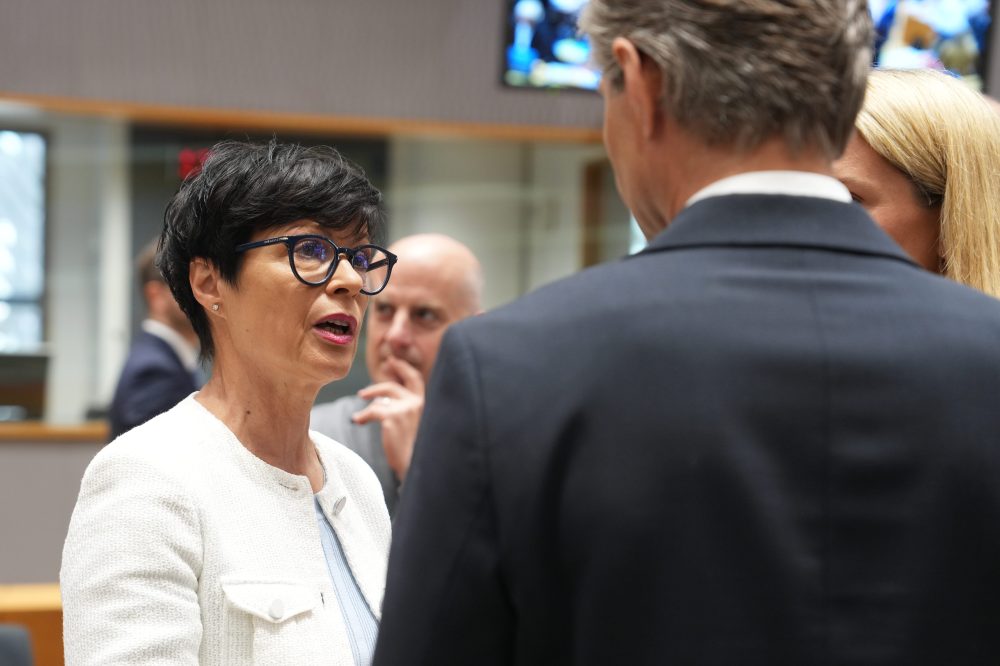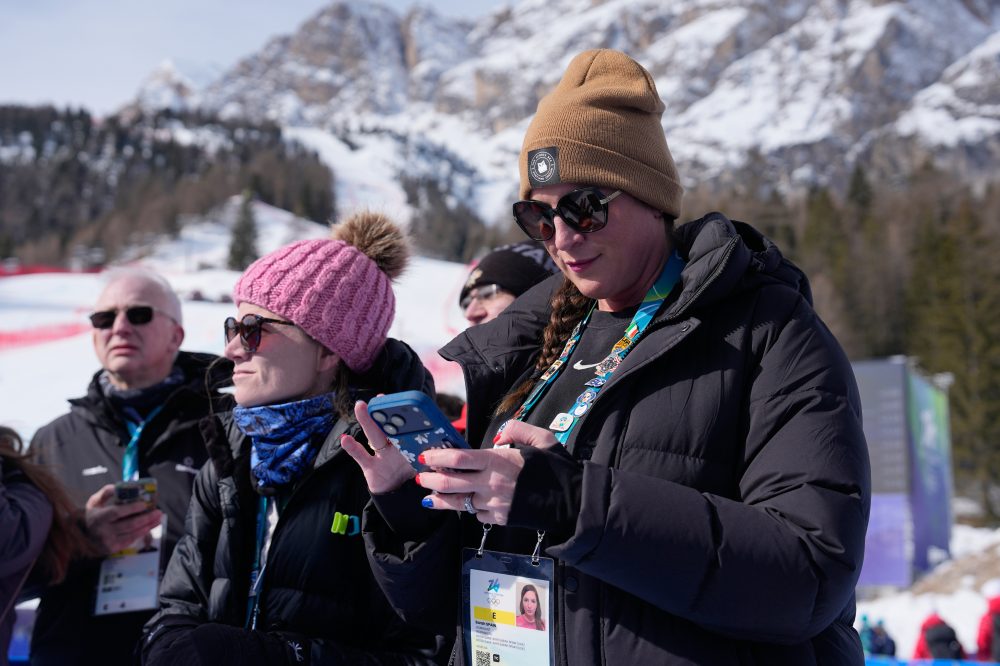

Sports journalist Christine Brennan recalls how her male peers would mock her dedication to covering women’s athletics during the 1990s.
“It was absolutely infuriating to me,” stated Brennan, a bestselling writer who became the inaugural president of the Association for Women in Sports Media.
Today, the landscape looks dramatically different. Specialized media companies focused exclusively on women’s athletics are emerging everywhere, experiencing rapid expansion and handling their own coverage, including upcoming events like the 2026 Milan Cortina Olympics.
As women’s sports experience unprecedented growth, the media ecosystem supporting them is similarly thriving. Organizations such as TOGETHXR, The GIST, Just Women’s Sports, The IX Sports, GOALS and Good Game with Sarah Spain are broadening their influence.
“The male-dominated mainstream sports media totally missed the boat on women’s sports,” commented Brennan, who writes for USA Today and is currently covering her 22nd Olympic Games. She expressed enthusiasm about these newer platforms “doing a job that should have been done by mainstream sports media.”
Although traditional sports media have improved by expanding their women’s sports coverage, University of Michigan sport management professor Ketra Armstrong describes the recent wave of women-led platforms as uniquely “liberating” since female athletes are “owning their stories and not waiting for it to be filtered through any traditional lens.”
This frustration drove the creation of Just Women’s Sports. After founder Haley Rosen concluded her professional soccer career, she struggled to find quality coverage of her sport.
“Everything I was seeing just felt nothing like the world I had known,” Rosen explained. “It felt very young, very pink and glitter, a lot of lifestyle content. And I was just like, where are the sports?”
Rosen launched Just Women’s Sports as an Instagram page in 2020, which has since evolved into a major industry platform with partnerships including Nike and Amazon Prime. She emphasizes covering women’s athletics with equal seriousness and intensity as men’s competitions.
“These women are the best athletes in the world, competing at the highest level. And I think we have to treat them as such,” Rosen stated.
The GIST, a Toronto-based “fan-first sports media brand,” emerged from similar frustrations.
Co-founder Ellen Hyslop calls herself “a super-massive avid sports fan.” Despite watching ESPN SportsCenter daily, “the default was always, ‘Oh, you’re a girl, so you’re not a sports fan,’ as opposed to just being welcomed into those communities,” she shared.
Launched with college friends Jacie deHoop and Roslyn McLarty, Hyslop said The GIST was created for audiences excluded from traditional sports media. The platform now boasts equal coverage of men’s and women’s athletics and reaches approximately 1 million newsletter subscribers — nearly 50% growth in two years — primarily Gen Z and millennial women.
“Sports are supposed to be for everyone. They really do have the ability to unite people,” Hyslop noted.
Sarah Spain, an ESPN veteran who hosts the daily women’s sports podcast Good Game, attributes the industry’s acceleration to social media, WNBA star Caitlin Clark, and the women’s national soccer team, citing “a very organic and natural push for more women’s sports coverage.”
Spain emphasized that media attention drives professional league success, and women’s sports have historically lacked this support.
“There was this blaming of the product of women’s sports, without understanding the incredible ecosystem and infrastructure that was lifting up and bringing fans back over and over again to men’s sports,” she explained. “Now we’re finally catching up in terms of investment.”
According to Spain, who has 16 years of sports journalism experience and is covering her first Olympics for Good Game in Italy, the Olympics have consistently demonstrated that meaningful media coverage of women’s sports attracts passionate audiences.
The Milan Cortina Games continue this trend, with skiing star Lindsey Vonn, downhill champion Breezy Johnson and snowboarding sensation Chloe Kim capturing major headlines.
“The Olympics are the shining star for women’s sports coverage that proves if you tell people that there’s value, and you give them the information, and the nuance, and the context to care, that they will be die hard for it,” Spain said.
However, Armstrong from the University of Michigan points out that women’s sports media still constitutes a “very small piece of the pie” compared to the broader sports media industry. Northwestern University Medill School of Journalism professor Craig LaMay warns that growth doesn’t guarantee long-term viability, noting that coverage decisions have historically been “relentlessly a business decision.”
“For all the changes, there’s a lot of things that haven’t changed,” he observed, highlighting that Forbes’ annual list of the world’s 100 highest-paid athletes contains no women.
Despite these challenges, TOGETHXR, a media and commerce company established in 2021 by four star athletes including Olympic halfpipe silver medalist Kim, promotes the motto “Everyone Watches Women’s Sports.” This slogan acknowledges the industry’s recent momentum while rejecting “very antiquated rhetoric in women’s sports that no one watches,” according to co-founder and chief brand officer Jessica Robertson, whose company has generated over $6 million in sales of T-shirts, tote bags and hoodies featuring this message.
Robertson believes the audience for women’s professional sports has always existed but was “starved and underserved.” She says enhanced accessibility has resulted in record engagement and viewership. TOGETHXR now reaches more than 4 million users across platforms, representing a 17% increase from 2024. The company produces newsletters, docuseries, and podcasts, including “A Touch More” featuring Olympic champion and co-founder Sue Bird alongside soccer star Megan Rapinoe.
Streaming services like Netflix, Amazon, and Apple are also expanding opportunities to consume women’s sports in an industry no longer dependent on traditional linear television networks, according to Danette Leighton, CEO of the Women’s Sports Foundation. However, she notes this growth began years ago.
“It takes generations to make generational change,” said Leighton, whose organization was established by Billie Jean King in 1974, two years following the enactment of landmark equality legislation Title IX. “This is really a tipping point.”