
A federal intelligence assessment has revealed that the ongoing U.S.-Israeli conflict with Iran may have influenced the suspect who allegedly tried to assassinate President Donald Trump at last month’s White House Correspondents’ Dinner.
According to a Department of Homeland Security intelligence report distributed to law enforcement agencies across the country, Cole Allen harbored “multiple social and political grievances” and the Iran conflict “may have contributed to his decision to conduct the attack.” The preliminary assessment, dated April 27, cited Allen’s social media posts that were critical of American involvement in the war.
This intelligence briefing provides the clearest insight yet into what may have driven the failed April 25 attack on the annual media event. While still preliminary, the findings represent the strongest indication to date that the Iran conflict, which has resulted in thousands of casualties across the Middle East and disrupted global markets, could have served as a catalyst.
The document, labeled a “Critical Incident Note,” was secured through public records requests by the transparency organization Property of the People and provided to Reuters.
Neither the Department of Homeland Security nor the Justice Department responded immediately to requests for comment. The FBI declined to provide a statement.
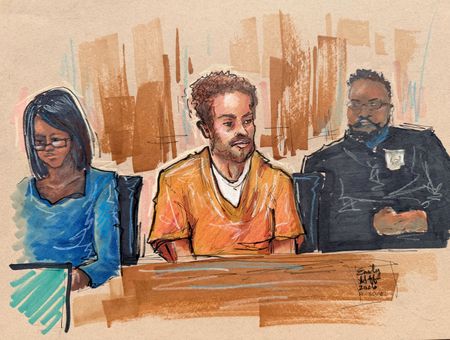
This week, federal prosecutors filed an additional charge against Allen for assaulting a federal officer, alleging he opened fire on a Secret Service agent at a security checkpoint. He already faced charges of attempted assassination, discharging a firearm during a violent crime, and illegally transporting weapons and ammunition across state boundaries. Allen has not yet entered a plea.
Federal authorities have released limited information about Allen’s suspected motives, referencing only an email he sent to family members on the evening of the attack. Officials have described the message as a manifesto expressing frustration with the current administration and mentioning his intent to target the “traitor” scheduled to speak, though Trump was not specifically named.
Court filings indicate prosecutors believe Allen “disagreed” with Trump’s policies and “wanted to ‘fight back’ against government policies and decisions that he found morally objectionable.”
Federal investigators are conducting an extensive analysis of Allen’s online presence and digital communications as they work to understand his motivations, according to a senior law enforcement source who requested anonymity.
“It’s being closely looked at,” the official said.
The investigation encompasses posts from a Bluesky social media profile connected to Allen that shared numerous anti-Trump messages in the weeks before the incident. These posts included condemnation of U.S. actions in Iran as well as criticism of the Trump administration’s immigration policies, Elon Musk, and Russia’s invasion of Ukraine.
The account promoted a post demanding Trump’s impeachment following his April 7 statement threatening to destroy Iranian civilization, made just hours before Trump agreed to a ceasefire. It also shared criticism targeting reporters planning to attend the correspondents’ dinner.
Investigators have also examined a 2024 post where an account linked to Allen appeared to refer to Trump as “the devil” while quoting scripture in response to a message from Trump’s daughter Tiffany.
The emphasis on Allen’s digital activity is partly intended to prevent conspiracy theories about the suspect’s motivations and online behavior, the official explained, noting that speculation surrounding the online activity of the individual who shot at Trump during a 2024 campaign event in Butler, Pennsylvania, had fueled widespread conspiracy theories.