
Federal officials have moved forward with President Donald Trump’s proposal for a massive commemorative arch in Washington, D.C., while requesting additional details about the ambitious project’s potential effects on aviation and local infrastructure.
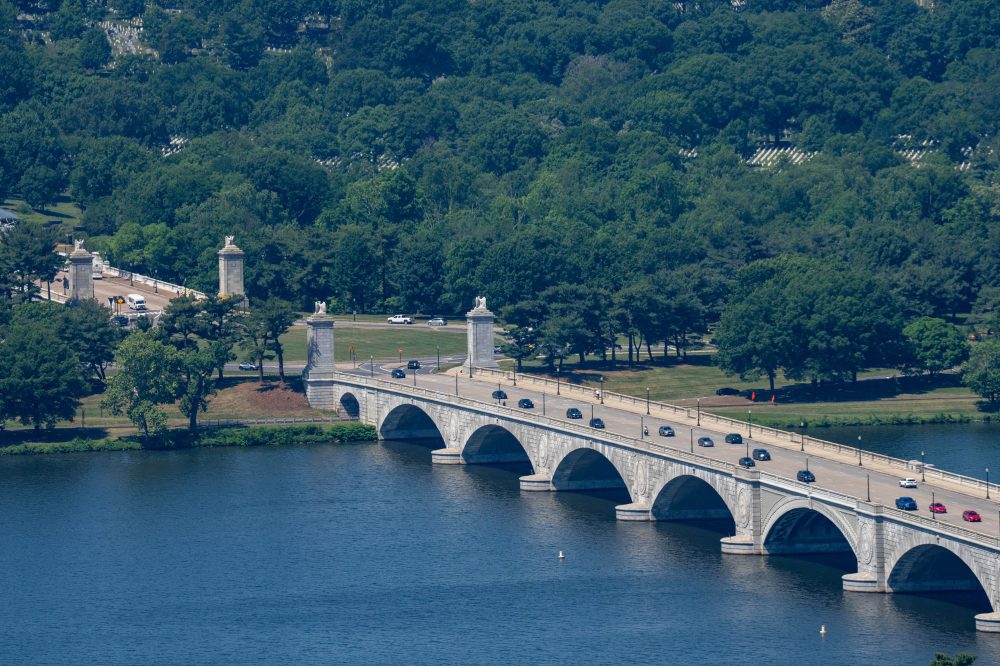
The National Capital Planning Commission voted Thursday to gather more information from the Department of the Interior regarding the proposed 250-foot structure planned for construction between the Lincoln Memorial and Arlington National Cemetery.
The decision followed nearly three hours of public testimony from approximately 20 speakers, including representatives from historical and architectural organizations, with the majority expressing opposition to the arch project that represents one of several initiatives the Republican president is advancing to establish his legacy in the nation’s capital.
Site preparation work including preliminary surveys and testing commenced last month, while additional approvals continue moving through the process. The U.S. Commission of Fine Arts has already given its approval to the arch’s design, marking an important milestone in the project’s development though not directly affecting construction scheduling.
Currently, the National Capital Planning Commission wants additional justification for the monument’s proposed towering height, along with comprehensive details regarding illumination plans, stormwater management systems, and visitor traffic and parking arrangements.
Will Scharf, who has served as Trump’s White House staff secretary, heads the commission and recognized the applicant “has some homework to do,” Scharf said, recommending more information on how it would appear from other monuments in the Washington area. But, Scharf said ultimately, this year’s 250th anniversary of the Declaration of Independence “is as good an opportunity as any to add something to Washington, D.C., that will hopefully stand the test of time.
Stuart Levenbach, Trump appointee and commission vice chairman, said the proposed site represented “one of the few locations” in the area where such an “iconic civic monument could be appropriate,” although he added that “it’s reasonable to consider whether a significant architectural statement belongs in such a location.”
Numerous individuals who contacted the commission prior to Thursday’s session expressed concerns about the structure’s enormous size, interference with the city’s skyline, and public safety in the busy area. Some comments characterized it as a “waste of taxpayer money,” while others labeled it Trump’s “vanity project” or a “disgusting and disrespectful move by a man who wants to be king.”
Dozens of speakers had registered for Thursday’s session, many having previously spoken against the proposal at earlier meetings, representing groups such as the National Parks Conservation Association, National Trust for Historic Preservation and the Society of Architectural Historians.
Multiple speakers, including Gary Langston, a military veteran, criticized the arch for being oversized, requiring congressional authorization, or disrupting the visual connection between the Lincoln Memorial and Arlington House at Arlington National Cemetery that was established to represent post-Civil War reunification.
“What’s required here, if anything, is a solemn memorial rather than a monument,” Langston said.
Trump has asserted that he doesn’t need congressional approval because he’s building it on federal land.
The monument would rise 250 feet tall (76 meters) from ground level to a torch carried by a Lady Liberty-style figure atop the structure, accompanied by two golden eagles. However, four lions originally planned to guard the base have been eliminated. The inscriptions “One Nation Under God” and “Liberty and Justice for All” would appear in golden letters on each side of the monument, with the Pledge of Allegiance text displayed on both eastern and western faces.
A visitor observation platform at the top would offer panoramic views of the surrounding area. The structure would feature a granite exterior.
Opponents have contended that the monument would overwhelm the skyline and interfere with intentionally designed sight lines between the Lincoln Memorial and Arlington National Cemetery. The structure would stand more than double the height of the Lincoln Memorial at 99 feet (30 meters), and approximately half the height of the Washington Monument at roughly 555 feet (169 meters).
One Thursday speaker offered alternative suggestions. Shady Migally, an architect in California, recommended that any arch project should demonstrate more creativity than simply reinterpreting Paris’ Arc de Triomphe, presenting an alternative design matching the administration’s proposed height but featuring less dense side columns and a taller inner archway that, based on digital renderings, would preserve more visibility between the Lincoln Memorial and Arlington National Cemetery.
Trump had said last year that the arch could be paid for with private donations left over from the ballroom project. A cost estimate for the arch is still being calculated, but a mix of taxpayer and private funds is expected to pay for it, according to a White House official, who spoke on condition of anonymity because the president has not publicly discussed the project’s cost.
A group of veterans and a historian have sued the Trump administration in federal court to block the arch construction over concerns about disruptions to the sightline.
In an Oval Office event on Thursday, Trump called the arch a tribute to military victories.
“Nobody’s had more military victories, including recently, than we have,” he said.
The president has announced that some of his additional projects, including applying a blue coating to the interior of the Lincoln Memorial Reflecting Pool, will enhance the city’s appearance for July 4 celebrations marking America’s 250th anniversary. His administration announced Thursday that the renovation work had been finished and the pool was prepared for water filling.
The White House East Wing was demolished to build a large ballroom.
Until a judge determined last week that it had been unlawfully installed and ordered its removal, Trump’s name had been placed on the Kennedy Center.
Opposition voices have argued that Trump, a Republican, is dedicating excessive time and focus to his personal projects rather than addressing concerns important to voters, such as living costs, as the November elections approach.
That project is also the subject of a court challenge brought by The Cultural Landscape Foundation, which said repainting the bottom of the Reflecting Pool blue without first undergoing relevant reviews runs afoul of federal preservation laws governing historic sites.
An order in the case hasn’t come yet, and on Wednesday, the Trump administration notified the court that the work was complete, with the basin set to be filled by Sunday.