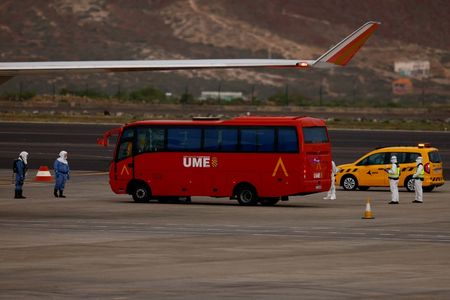

Federal health leadership is closely tracking a deadly hantavirus outbreak that claimed three lives on a luxury cruise vessel earlier this month, with daily briefings being provided to the White House and Health Secretary Robert F. Kennedy Jr., according to a senior health official.
U.S. Centers for Disease Control and Prevention Acting Director Jay Bhattacharya confirmed Friday that no infections have been detected within American borders, and the threat to the public continues to be minimal.
Currently, 41 Americans are under surveillance for potential infection. Among these individuals, 18 were cruise passengers who had already returned to U.S. soil before health officials identified the outbreak. These returnees are now isolated in facilities in Nebraska and Atlanta.
The federal response has faced scrutiny from some public health experts who characterized the initial reaction as too slow. Kennedy has previously faced similar criticism regarding his management of a measles outbreak.
“The Secretary is getting daily detailed updates, as is the White House, and I’ve participated in several of those. I can tell you firsthand, they’re both following this outbreak very, very closely,” Bhattacharya, who also serves as director of the National Institutes of Health, stated during a press briefing.
The CDC has released protocols for identifying and tracking individuals who may have been exposed, according to Dr. David Fitter, who manages the agency’s hantavirus response efforts.
According to Fitter, anyone aboard the vessel from April 6, when the initial case emerged, through May 10, when the final passengers departed, is classified as high-risk.
Additional high-risk individuals include those who had direct contact with infected persons or their bodily fluids, as well as passengers who sat near sick individuals during flights, Fitter explained.
“I want to reinforce that Andes virus does not transmit easily,” he emphasized, explaining that transmission requires close, extended contact.
Those considered high-risk should remain at home and minimize contact with others for six weeks, he advised. They must also coordinate any necessary travel through their state health departments and be prepared to immediately self-isolate if symptoms develop.