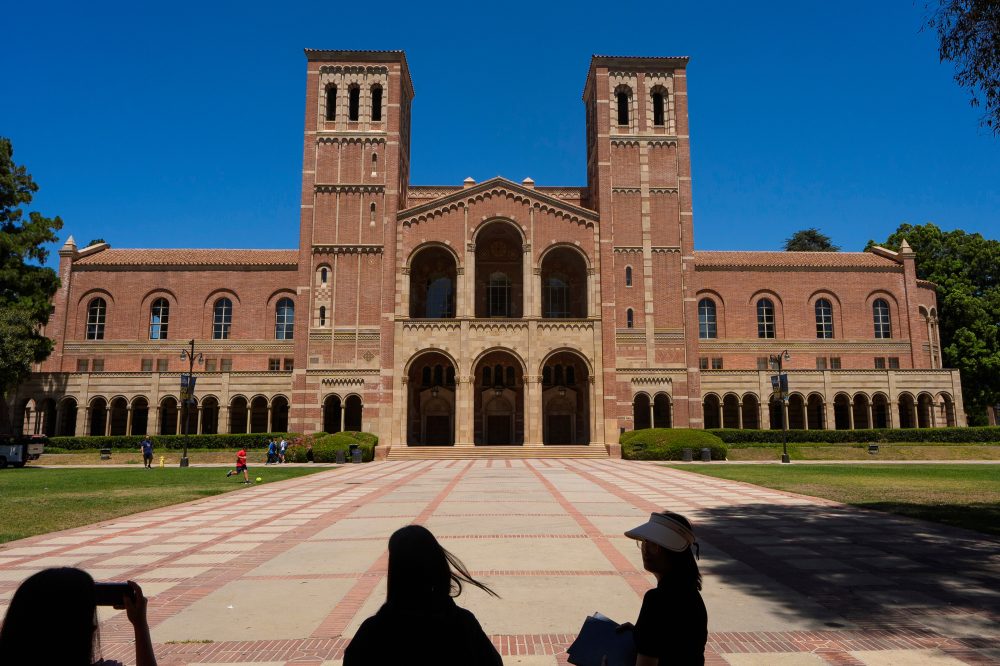

Federal investigators announced Wednesday they determined UCLA’s medical school violated federal law by factoring race into student admissions decisions, as the Trump administration increases oversight of how universities select their incoming classes.
This determination intensifies the ongoing conflict between the Trump administration and UCLA, which has primarily centered on how the main campus handled complaints about antisemitic harassment. The medical school at UCLA did not immediately provide a response when contacted for comment.
College admissions programs that consider race have been prohibited since the Supreme Court’s 2023 decision that banned such practices. While that ruling allowed schools to continue evaluating how students’ personal experiences might reflect broader qualities, Trump has alleged that universities are circumventing the law by using personal essays and other indirect methods to factor in race during admissions, which conservatives consider unlawful discrimination.
The Justice Department launched investigations in March into potential race-based discrimination at medical schools including Stanford, Ohio State, and UC San Diego. The current administration has also focused on undergraduate admissions at competitive universities, requiring them to provide documentation proving compliance with the Supreme Court’s decision.
Following a year-long investigation into UCLA, federal officials concluded the medical school engaged in discrimination against white and Asian American applicants while giving advantages to Black and Hispanic candidates.
The department pointed to statistics revealing that admitted Black and Hispanic students had lower average GPAs and test scores during 2023 and 2024. For instance, Black students admitted in 2024 had an average GPA of 3.72, while Asian Americans averaged 3.84 and white students averaged 3.83.
Federal officials argue this data demonstrates the medical school relied on non-academic criteria to meet diversity objectives.
“As a result of these practices, highly qualified White, Asian, and other students were denied admission on the basis of their race,” said Harmeet Dhillon, head of the department’s Civil Rights Division, in a letter of findings.
Investigators also criticized an application section that asked students to voluntarily identify if they belonged to a marginalized group and describe how that affected them. This question appeared on applications for 2024 and 2025, according to the department.
California voters prohibited affirmative action in college admissions through a 1997 ballot initiative. In court documents filed during the Supreme Court case, the UC system reported this change caused a dramatic decline in underrepresented minorities, particularly at the most competitive campuses.
The filing stated UC subsequently adopted “numerous and wideranging race-neutral measures designed to increase diversity of all sorts, including racial diversity.” Despite these efforts, the system acknowledged continued difficulties in boosting campus diversity.
The Trump administration’s findings create an opportunity for UCLA to voluntarily address the Justice Department’s concerns or potentially face legal consequences. Possible sanctions include the loss of federal funding.
In March, a group of 17 Democratic state attorneys general filed a lawsuit opposing a Trump administration requirement that higher education institutions provide data proving they don’t factor race into admissions decisions.