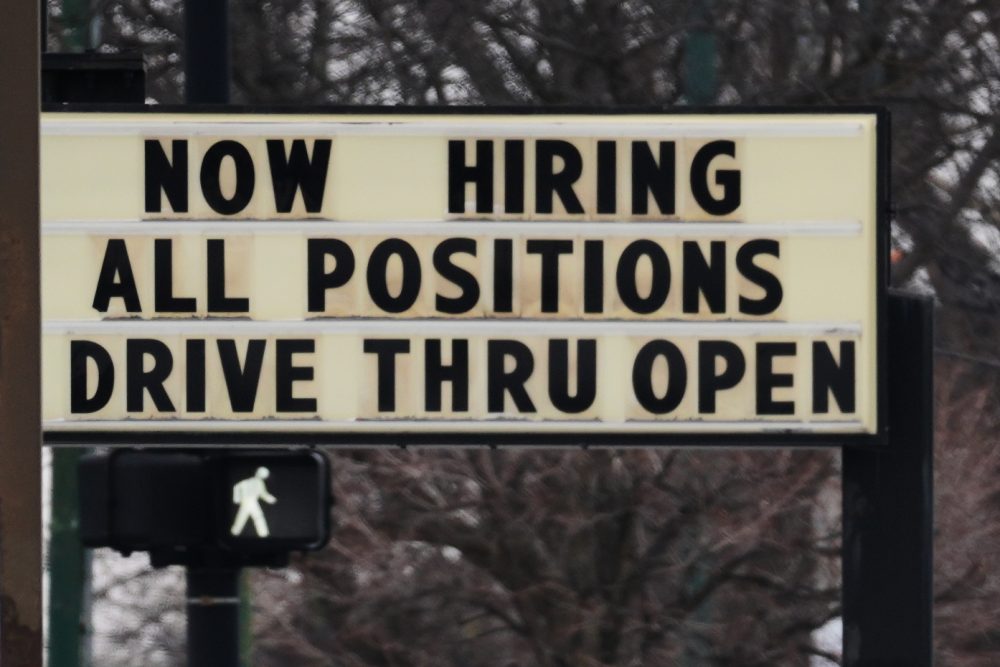

The nation’s employment landscape appears to be gaining strength this year following a disappointing 2025 hiring period.
Federal labor officials are anticipated to announce Friday that American employers across private companies, nonprofit organizations, and government entities created approximately 60,000 new positions in February. While this figure represents a decline from January’s surprisingly robust 130,000 job additions, it demonstrates significant progress compared to 2025’s dismal monthly average of merely 15,000 new positions – the poorest hiring performance since the pandemic-driven recession of 2020.
Economic analysts surveyed by FactSet predict the nation’s jobless rate remained steady at 4.3% during February.
Bank of America Institute revealed Wednesday that their customer account data indicates strong February hiring activity for the second consecutive month, showing 1.3% growth following January’s 0.8% increase. “Job market growth is gaining traction,” David Tinsley, a senior economist at the Bank of America Institute, told reporters Wednesday. “February’s numbers show real forward momentum.”
Similarly, payroll processing company ADP released private sector data Wednesday revealing businesses created 63,000 positions in February, marking the strongest performance since July.
The upcoming Labor Department announcement will likely indicate that February employment growth faced obstacles from harsh winter conditions and a month-long strike involving nurses and healthcare workers at Kaiser Permanente facilities across California and Hawaii, potentially reducing payroll numbers by over 30,000 positions. Several economists also believe January’s strong employment figures may have been inflated and could face downward revisions in Friday’s release.
The employment market’s future – along with broader economic prospects – remains uncertain due to ongoing conflict with Iran.
Companies showed hesitation in expanding their workforce during the previous year amid confusion surrounding President Donald Trump’s tariff policies and their unpredictable implementation.
Elevated borrowing costs, implemented by the Federal Reserve to address post-pandemic inflation surges, also created headwinds for employment growth throughout 2025.
Trump’s assertive trade strategy effects may diminish in 2025. His import duties became more moderate and consistent following trade agreements reached with China and key trading partners including Japan and the European Union. Many companies have also adapted to tariff expenses, frequently transferring costs to consumers through increased pricing.
Companies required “a year to bake some of those costs into their business model, and now it’s time to get back to growth mode,” said Andy Decker, CEO of Atlanta-based Goodwin Recruiting.
The Supreme Court has also overturned Trump’s most significant tariff measures, though replacement policies are in development.
Nevertheless, current hiring activity remains well below the employment surge of 2021-2023, when the economy recovered from pandemic restrictions and monthly job creation approached 400,000 positions. Many economic experts characterize today’s employment environment as “no-hire, no-fire”: businesses avoid workforce expansion while retaining existing employees.
Fortunately, achieving adequate job growth has become more manageable under current conditions.
Previously, employers needed to create over 100,000 monthly positions to prevent unemployment rate increases.
However, Baby Boomer workforce exits and Trump administration deportation policies have reduced job market competition. This has lowered the equilibrium point to between zero and 50,000 monthly positions, according to Joe Brusuelas, chief economist at tax and consulting firm RSM. “Under the current conditions, 70,000 should be considered solid,” he said.
Businesses may be delaying hiring decisions while investing in and learning to optimize new technologies, particularly artificial intelligence. AI capabilities potentially allow companies to “can do more with less” and reduce workforce needs, especially for entry-level roles, Brusuelas explained.
Companies are considering, he noted, “we’ve invested an awful lot of money in (capital expenditures), and we need to see how much we can produce with our current labor force… The last thing you want to do is hire a lot of young people and then let them go.”