
Family-owned food companies from around the world are on a buying spree, snapping up American snack brands at a rapid pace — and the companies being acquired are increasingly welcoming these private, often foreign, investors who can offer stability in a challenging marketplace.
Just last week, Hanover, Pennsylvania-based potato chip maker Utz agreed to go private in a deal with Germany’s Intersnack Group and Utz’s own founding families. The transaction is valued at nearly $3 billion and represents Intersnack’s first U.S. acquisition. Intersnack is a subsidiary of family-owned food conglomerate Pfeifer & Langen.
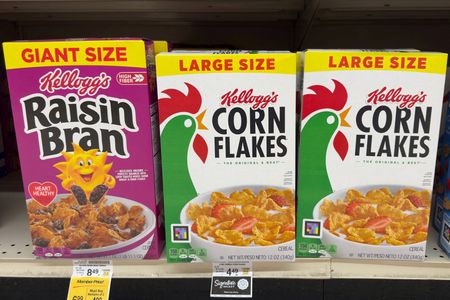
The Utz deal comes on the heels of several other major acquisitions. Italy’s family-owned Ferrero purchased both cereal maker WK Kellogg and U.S. protein snack brand Power Crunch. Meanwhile, Mars — the Virginia-based company behind M&M’s and Snickers, controlled by the Mars family — acquired Pringles and Cheez-It maker Kellanova in a massive $36 billion take-private deal last year.
What’s driving this wave of deals? Family businesses that have been in the snack industry for decades, some for over a century, see publicly traded snack companies as undervalued. Investor concerns over the rising popularity of weight-loss drugs, shifting consumer preferences, and persistent inflation have weighed on stock prices, creating what these buyers view as a prime opportunity.
“They want exposure to the U.S. market, and believe there’s some public market value dislocation, which in turn is being used as a buying opportunity,” said Adam Taetle, Lazard’s global head of consumer and retail investment banking.
The pressure on food stocks has been significant enough that companies like Campbell’s and Lamb Weston dropped out of the S&P 500 this year after their market values fell too low to remain in the index.
For snack companies that find themselves in the crosshairs of potential buyers, family-owned acquirers are seen as preferable to private equity firms. Sources say private equity finds these deals harder to justify, partly because there are limited ways to eventually exit the investment. Family companies, by contrast, tend to take a much longer view.
“These types of buyers are able to think generationally, which is a very different approach,” Taetle said.
Private equity firms and public companies are also wary of jumping into the salty snacks space because of the fierce competition it would create with Frito-Lay owner PepsiCo, according to sources. PepsiCo’s most recent food acquisition was a $1.2 billion purchase of tortilla chip brand Siete Foods in 2025.
Public companies face their own risks in making big snack acquisitions. J.M. Smucker paid $5.6 billion for Twinkies maker Hostess in 2023, and has since recorded $2.9 billion in impairment charges. Its shares have dropped 18% since the deal closed.
A TD Cowen report on the Utz transaction noted: “This is the fourth time in the past two years that a private company outside our radar has swooped in to acquire a public food company. Quite possibly, this could help the market set a valuation floor for other ‘fallen stars’ in SMID-cap food and beverage.”
The Utz deal was valued at roughly 12 times core earnings. TD Cowen pointed to BellRing Brands, trading below eight times next year’s EBITDA, and Simply Good Foods, trading below six times that figure, as possible future targets. PepsiCo itself trades at around 12 times EBITDA.
Cross-border deals have become a defining feature of this acquisition wave, as companies seek to expand their brands globally — a strategy that worked well for Kellanova with Pringles before Mars acquired it. That same global-growth thinking drove Maryland-based spice maker McCormick to purchase Unilever’s food unit earlier this year.
Intersnack, the German company behind snack brands including Tyrells, Pom-Bear, and Hula Hoops crisps, is not widely recognized in the United States, but is aiming to become a top global player in salty snacks and better challenge PepsiCo. Founded in Germany in 1968, the company now operates in 31 countries and generated $5 billion in sales in 2025. Combined with Utz, that figure could climb to $6.6 billion.
Sources with knowledge of the deal say Intersnack is expected to pursue additional U.S. acquisitions in the future. The company declined to comment for this story.
“We see a tremendous opportunity to partner and build on Utz’s strong foundation and help shape the future of snacking in North America,” said Intersnack executive chairman Johan van Winkel in the deal announcement.