
Congo’s Ministry of Health reported overnight that confirmed cases in the country’s current Ebola outbreak have climbed to 3,262 — nearly matching the total from the nation’s deadliest recorded outbreak, which stretched across 2018 to 2020.
Health ministry figures show that 1,437 of those 3,262 patients have died. Officials describe this as the fastest-moving Ebola outbreak ever documented, with cases concentrated in the eastern Ituri province.
By comparison, the 2018-2020 outbreak affecting Congo and neighboring Uganda unfolded over roughly two years, producing more than 3,400 cases and over 2,200 deaths, according to the U.S. Centers for Disease Control. Only the catastrophic 2014-2016 West Africa outbreak — the worst in history — surpassed those numbers, with approximately 28,000 cases and more than 11,000 deaths.
The alarming pace of the current outbreak has drawn urgent concern from aid workers on the ground. Onesphore Bangenza, who leads the Mercy Corps response team in Bunia, the capital of Ituri province, spoke out Tuesday about the gravity of the situation.
“The fact that, in just 10 weeks, we have reached nearly the same number of cases recorded over an almost two-year outbreak is alarming and should stop us in our tracks,” Bangenza said.
“There is no doubt that the virus is moving faster than we can contain it,” he added.
The outbreak was officially declared on May 15 and differs from most previous Ebola crises because it involves the Bundibugyo virus strain, for which no approved vaccines or treatments currently exist.
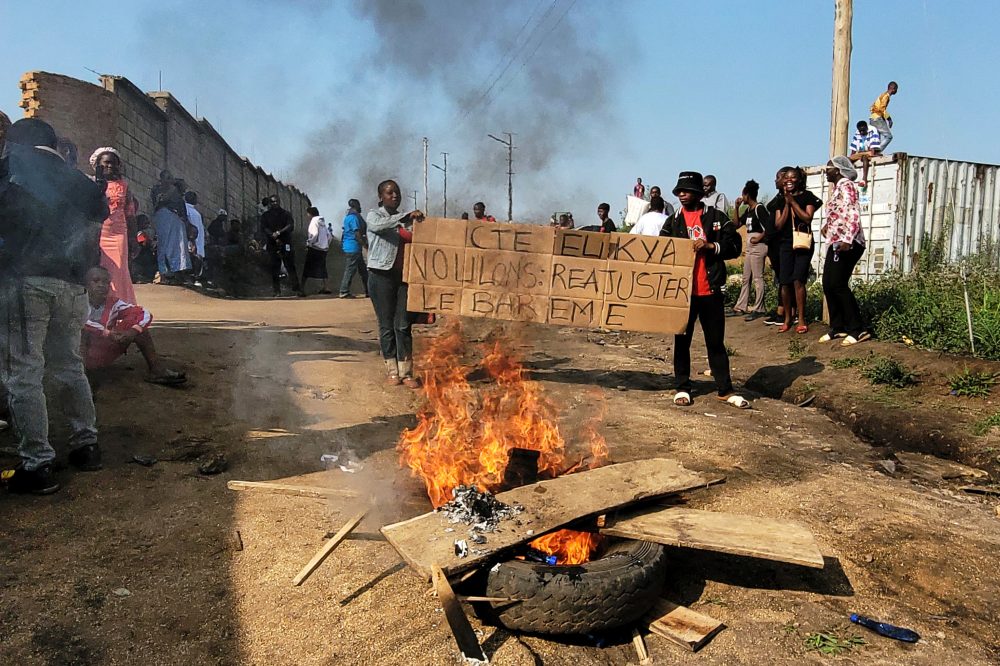
Containment efforts have been severely hampered by multiple obstacles, including armed rebel activity in eastern Congo and health workers walking off the job to demand unpaid wages. Residents in some affected communities have also attacked response teams, forcing some responders to withdraw from certain areas out of safety concerns.
Identifying the source of the outbreak has proven elusive — patient zero has still not been determined. Meanwhile, displacement caused by armed conflict and illegal mining operations in the region has made contact tracing extremely difficult, leaving thousands of potentially exposed individuals unaccounted for.
Despite early tensions between communities and health workers — which in some cases led to the burning of treatment centers — there are now signs that attitudes are shifting. Fabrice Mumbesa, a resident of Mongbwalu, a mining town at the center of the outbreak, reflected on the community’s change in perspective.
“We can never again wage war against the Ebola teams. We have lost members of our families. As a community, we have a vested interest in fighting Ebola to return to normal life,” Mumbesa said.