
VANCOUVER, British Columbia — A U.S. threat to impose 50% tariffs on a wide array of Canadian products is expected to send economic shockwaves through Canada, though some analysts believe the move may simply be a pressure tactic by the Trump administration rather than a firm policy decision.
President Donald Trump announced the new tariffs on Monday, with an effective date of August 19. The list of affected goods is extensive, covering items such as honey, liquor, cement, dairy products, certain wood products, hockey sticks, essential oils, perfumes, candles, dog leashes, and wigs. Energy products, potash, fish, and critical minerals are excluded from the tariffs.
Notably, the tariffs would apply to goods that had previously been shielded from U.S. import taxes under the United States-Mexico-Canada Agreement, known as the USMCA. That trade deal, established in 2020, was not renewed by the U.S., setting off a new round of negotiations that could stretch all the way to 2036.
Prince Edward Island Premier Rob Lantz described the situation as deeply unsettling. “We’re living in a time when uncertainty is the new norm,” Lantz said Wednesday, speaking after a gathering of Canada’s premiers and territorial leaders in Charlottetown, the province’s capital.
Randall Bartlett, deputy chief economist at Desjardins — one of Canada’s largest financial institutions — estimated the tariffs would affect roughly $28 billion Canadian (approximately $19.8 billion U.S.) in annual Canadian exports to the United States, representing about 5% of what the U.S. buys from Canada each year.
Bartlett projected the tariffs could trim two to three tenths of a percentage point from Canada’s economic growth in both 2026 and 2027, though he stopped short of predicting a recession. “We’re expecting it to keep more investment on the sidelines (and) probably suppress hiring. That weighs on consumer activity and residential investment as well,” he said.
Fen Osler Hampson, a professor of international affairs at Carleton University in Ottawa and co-chair of the Expert Group on Canada-U.S. Relations, pointed out that the tariffed products are largely discretionary — things American consumers could choose to stop buying if prices climb. That could spell trouble for small and mid-sized Canadian businesses, the kind that employ anywhere from 10 to 200 workers and form the “backbone of the Canadian economy.”
“That does have ripple effects in an economy because if people are out of a job, they’re not going to be spending,” Hampson said.
Dennis Barby, president and CEO of Canadian Manufacturers and Exporters, said the tariffs would deal a serious blow to manufacturers, workers, and consumers on both sides of the border. “These tariffs will raise costs, disrupt production, and make North America less competitive at a time when we should be strengthening our shared industrial base,” Barby said in a statement.
British Columbia Premier David Eby called it contradictory for the U.S. to slap tariffs on Canadian goods while simultaneously seeking access to Canadian mines for metals and minerals. “You can’t have a country on one hand attacking one group of families and workers while hoping to have access to the resources in Canada that the rest of the world wants,” Eby said, adding that Canada should consider limiting U.S. access to those resources if the current stance continues.
Both Bartlett and Hampson acknowledged the tariffs may never actually go into effect, viewing them as a possible bargaining tool. Even so, they urged Canadian trade negotiators to proceed carefully. Hampson specifically warned against retaliatory tariffs or cutting off oil and electricity supplies to the U.S.
“You don’t want to poke the bear,” Hampson said. “You get into that kind of war, we’re going to lose. We’re the smaller economy. They can absorb a hit much more than we can.”
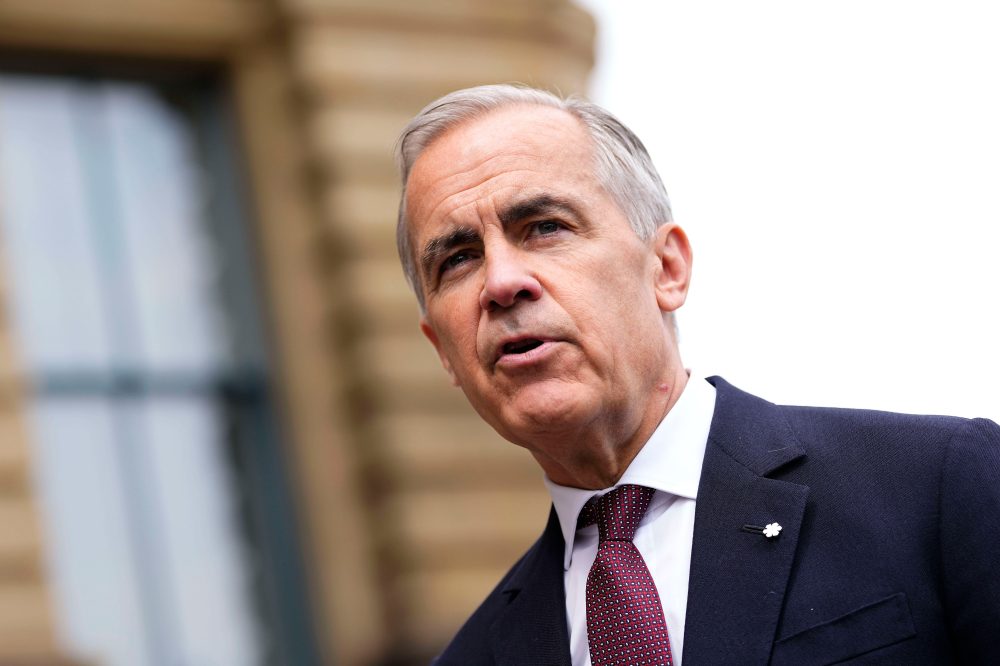
Hampson also suggested the tariffs may reflect strained personal relations between Trump and Canadian Prime Minister Mark Carney, a dynamic that has reportedly worsened since Carney publicly criticized Trump at the World Economic Forum in Davos. On Tuesday, Carney indicated that he and Trump have agreed to step up trade negotiations between the two countries.