
NEW YORK (AP) — The rats weren’t the problem. Neither were the odors or the germs.
According to former urban explorer Steve Duncan, the worst aspect of venturing into New York City’s extensive underground sewer network was actually the cockroaches.
“They’re everywhere, climbing the walls, falling on top of you,” Duncan remembered this week. “They were the worst.”
The 48-year-old, who currently resides in Maryland, shared memories of his time documenting the filthy tunnels beneath New York following recent surveillance footage showing small groups mysteriously entering and leaving sewer systems in Brooklyn and Queens.
Authorities report they continue investigating the three occurrences but don’t consider them a public safety threat. City officials emphasize that accessing the municipality’s 7,400 miles (12,000 kilometers) of sewer infrastructure is both unlawful and hazardous.
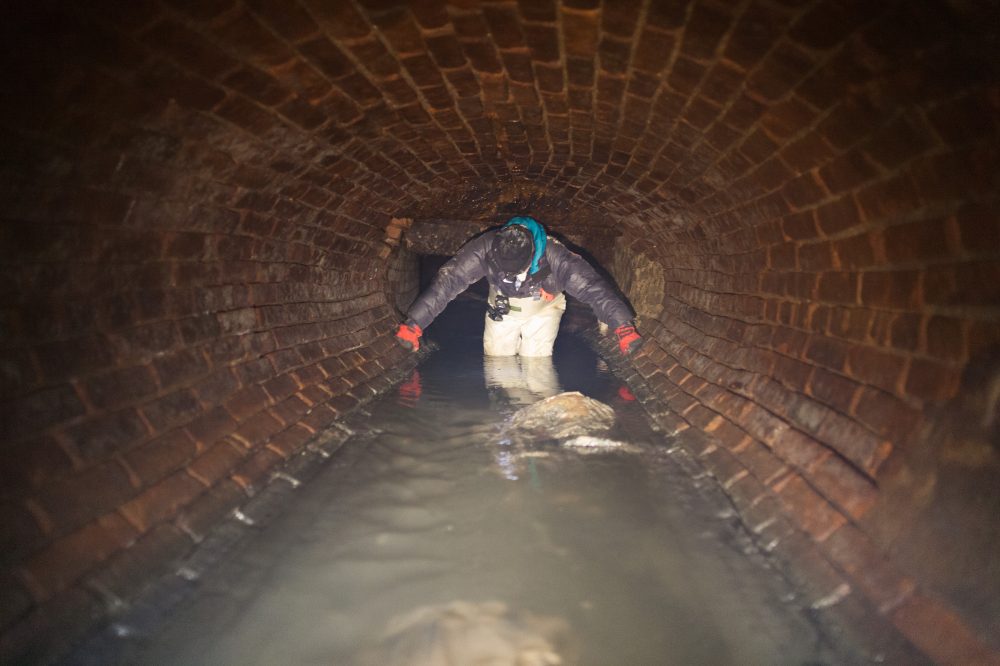
Duncan suspects the groups were probably explorers similar to himself, navigating the massive 19th-century sewer channels running beneath city sections.
These comparatively spacious areas can surpass 6 feet (1.8 meters) across — providing enough height for most individuals to walk normally — and may display handcrafted brickwork and graceful archways, he noted.
Several, including one close to where a group was observed, follow routes of natural waterways that previously supported New York, before industrial pollution contaminated them and compelled city planners to transform them into sewers, Duncan explained.
“These ancient streams get buried as cities develop around them,” he described. “It’s incredible how much this old natural landscape remains part of the city now.”
The footage indicates some groups remained underground for up to three hours, a duration that might seem unthinkable, but Duncan said time moves fast as sewer expeditions involve navigating slick, humid conditions and flowing water that could reach a foot (30 centimeters) or more in depth.
Duncan praised the groups for selecting an ideal time for their adventures.
Recent heavy rains would have largely flushed the system, and entering the tunnels during early morning would mean waste flow would be significantly lighter than during busy daytime periods.
“They conducted their homework,” Duncan stated.
However, unseen hazards exist in these germ-filled environments, he warned, describing how he ended up hospitalized with severely infected limbs on two different occasions, which ultimately led him to stop exploring.
Experienced explorers typically carry gas detectors to monitor dangerous fume levels, including potentially explosive hydrogen sulfide, which forms from decay, Duncan mentioned.
Regarding the odor of all that sewage, it’s not as overwhelming as one might expect, Duncan said.
“When it’s a properly working sewer, it resembles more of a farm or compost smell,” he noted. “But when conditions are poor, it can smell like death.”
Some community members have expressed concern that the mysterious explorers in the videos had criminal intentions. Many wore waterproof waders and carried headlamps and what looked like shovels and other equipment.
“Sewers can function as access or escape routes to buildings, and we’ve all watched films where criminals flee prison through sewers,” suggested Magued Iskander, an engineering professor at New York University. “There must be motivation beyond simple excitement to enter such a filthy location.”
Others have pointed out that police have occasionally caught underground treasure hunters.
Just last year, three men faced burglary and additional charges after searching for gold, jewelry and other valuables in a Brooklyn sewer. Ten years before, police apprehended three others as they surfaced from a maintenance opening, including an employee with the city Department of Environmental Protection, which oversees the sewer network.
If nothing else, the popular videos highlight how exposed some of the city’s essential infrastructure remains, said David Sarni, a former New York Police Department detective and professor at the John Jay College of Criminal Justice in Manhattan.
“Is this something that could be used by individuals who want to cause damage?” he questioned. “You must truly take nothing for granted and always consider, sadly, that worst-case scenario.”
Duncan, who currently works in real estate, said neither wealth nor harmful intent drove him and many others from his era of urban exploration.
During his journeys into underground systems in New York, London, Paris and other cities throughout the early 2000s, he seldom discovered anything valuable, except for the occasional credit card or damaged wallet.
“These are frightening locations that require extensive planning and commitment to explore safely,” Duncan said. “You don’t undertake all these preparations for the slim possibility of discovering a diamond earring.”
“The true motivation is witnessing something new, or experiencing the city differently,” he added. “That’s the genuine attraction.”