
ORSAY, France (AP) — When emergency doctors at a Paris-region hospital desperately needed ice to cool down heat-stricken patients, they had nowhere to turn — the facility had no ice-making machine of its own.
With patients’ lives on the line, staff turned to an unlikely source: a nearby fast-food restaurant agreed to hand over its supply. Workers also made runs to local supermarkets to buy more. The Paris-Saclay Hospital has since placed an order for its own ice machine, which the emergency department is eagerly waiting to receive before the next wave of extreme heat arrives.
France’s weather service has warned that another heat event could strike as soon as next week, and medical professionals are well aware that climate change means these crises will keep coming. Just as hospitals brace each year for flu season, fighting extreme heat is quickly becoming a permanent part of their mission.
The director of the public hospital described last week as “horrible” — but even as staff catch their breath, they’re already working to be better prepared.
“We thought we were ready. We were not actually,” said the director, Cédric Lussiez.
“The hospital was working on a 24-hours-a-day basis because we had to find new solutions in a very short delay,” he said. “We already learned some lessons.”
The heat wave that hammered France, the United Kingdom, and other countries before shifting eastward across Europe has prompted urgent action at the national level as well. French Prime Minister Sébastien Lecornu announced a 100-million euro ($114-million) investment this summer in cooling systems for hospitals and other measures to keep medical wards functioning during extreme heat.
At the most recent in a series of emergency heat-crisis meetings, held Monday, the prime minister said the government is purchasing 30,000 air-conditioning units for health facilities, with the first deliveries expected “at the end of the week, beginning of next week.”
“It’s an absolute priority for us that, if the heat wave returns, the hospital situation be a lot less strained,” he said.
The World Health Organization weighed in on Tuesday, calling the heat wave “a dress rehearsal” for summers that “will be harder.”
“Europe is warming at more than twice the global average. Heat waves are no longer one-off freak events,” the WHO stated. “Every summer we fail to prepare for them is a summer we pay for in lives.”
At Paris-Saclay Hospital, the surge of heat-related patients began arriving on June 20, according to Dr. Nicolas Gonzales, who leads the emergency department.
“It was like a big mountain,” he said. “It was like that for seven days. So it was very intense.”
“In winter, we know we’ll have influenza epidemics and probably COVID as well. And now, in the summer, we’re going to have the climate crisis,” he added.
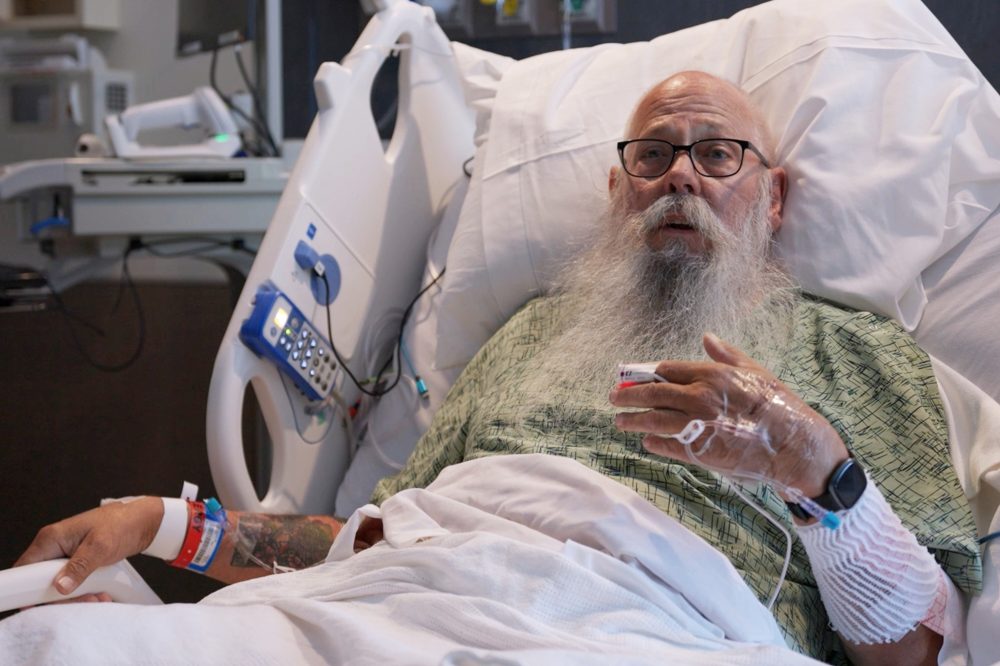
The first patient Gonzales treated during this heat wave was a 50-year-old man found unconscious at home with a body temperature of roughly 40 degrees Celsius (104 Fahrenheit). His family told doctors the man had seemed perfectly fine moments before suddenly losing consciousness. He was rushed in for critical care.
After that came a flood of cases — heart attacks, severe dehydration, kidney problems, and other heat-related conditions affecting patients of all ages, from children to elderly people living alone.
“Heat is a physical assault. It is a physical assault on the body,” Gonzales said. “And when the body can no longer adapt — or, unfortunately, is no longer able to fight off that assault — you don’t feel it coming, and the heart can stop beating.”
While Paris-Saclay Hospital itself is a newer facility with air-conditioning, three older hospitals under the same group — led by Lussiez — were far less equipped to handle the heat. To prevent medications from spoiling, staff had to use a makeshift solution of electric fans and blocks of ice. Student nurses were brought in to help keep patients hydrated. On the top floor of one psychiatric unit — the most exposed part of the building — temperatures climbed to 33 degrees Celsius (91 Fahrenheit), Lussiez said.
He is now moving quickly to install a dedicated cool room on each floor of that unit, carry out other renovation work, and relocate a department serving elderly patients to the newer hospital building.
“We’ll be in a better situation next week than we were last week,” he said.