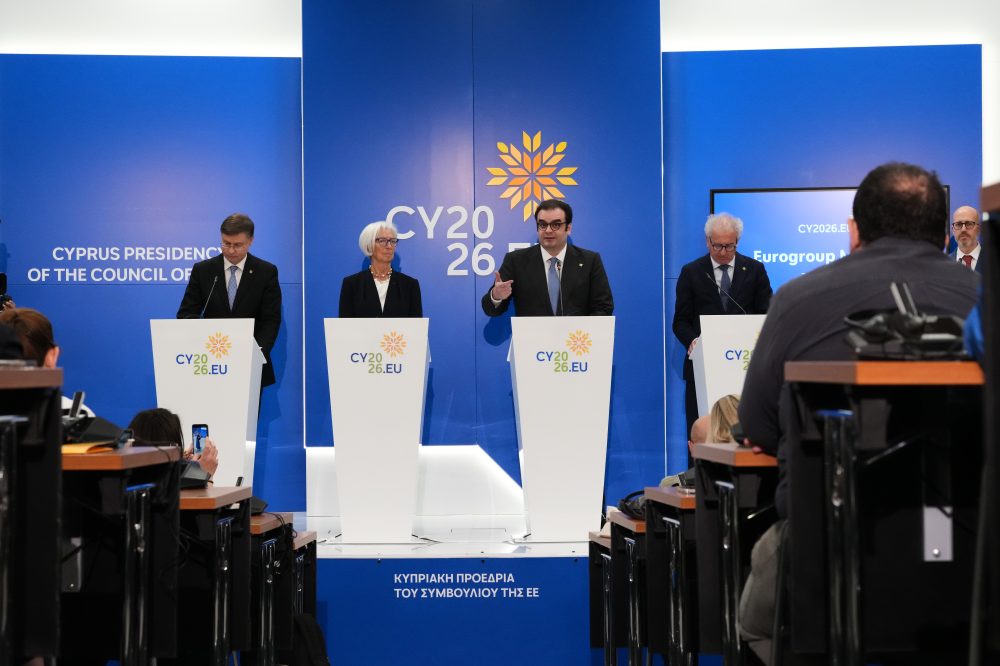

NICOSIA, Cyprus (AP) — European Union leaders announced Friday that citizens across Europe should prepare for energy costs to stay well above pre-Iran war levels through at least the end of 2027, with additional goods expected to see price increases as well.
According to EU Economy Commissioner Valdis Dombrovskis, elevated energy costs are the main driver behind inflation projections of 3.1% for this year and 2.4% for 2027. These figures represent a substantial increase from the previous 1.9% projection for this year.
“We expect that this energy inflation will gradually also trickle down to different sectors of the economy,” Dombrovskis said after a meeting of the 21-member eurozone’s finance ministers, who make up the Eurogroup.
Christine Lagarde, President of the European Central Bank, warned that even if Middle Eastern conflicts were to cease immediately, “lagging effects” would continue to drive up commodity prices.
“And it’s probably a fact that price levels will be higher at the end of this crisis, when we see the end of the crisis,” Lagarde said.
Lagarde indicated the ECB would implement “all the necessary measures” to maintain price stability at 2% by closely monitoring the ongoing economic impacts from the energy price surge. She also referenced the EU’s oil reserves as a factor in meeting potential demand.
Eurogroup President Kyriakos Pierrakakis explained that crisis resolution for the EU would require restored free passage without tolls through the Strait of Hormuz, a waterway that handles approximately one-fifth of global oil and gas shipments.
Pierrakakis confirmed that eurozone economic expansion would hit 0.9% this year and 1.2% in 2027, representing a downward revision from earlier projections, “but clearly far from a recession scenario.”
While increased inflation forecasts have sparked speculation about potential ECB interest rate increases to counter rising prices, Lagarde provided no specific guidance on future bank actions.
“We will continue to follow a data-dependent and meeting-by-meeting approach in order to determine the most appropriate monetary policy stance in order to deliver on our 2% medium-term target,” Lagarde said.