
When officials at the Hampton Roads Planning District Commission headquarters in Virginia faced a deteriorating asphalt parking area needing repairs, they decided against simply installing more traditional dark pavement.
Their replacement lot, finished last year, features porous concrete sections and zones with native vegetation and recycled components designed to reduce temperatures and flooding risks.
With these new sections, “the rain infiltrates faster than it can puddle and stop on the surface,” explained Jill Sunderland, the commission’s senior water resources planner.
“You notice too, that it’s cooler,” Sunderland continued. “You really can tell a difference out there … not to mention it’s just more inviting.”
This initiative represents one of many examples where communities and organizations nationwide are implementing alternatives to conventional asphalt surfaces to combat excessive heat and manage water drainage — particularly as climate impacts intensify.
New Orleans has mandated its Department of Public Works utilize permeable surfacing in appropriate lots and spaces. In Indianapolis, the Newfields art museum redesigned one parking area to incorporate bioretention rain gardens and converted another using a permeable grid system rather than standard blacktop. Denver’s dePaving a Greener Denver program aims to reduce the city’s coverage of parking areas and other impervious surfaces.
Communities are also reducing pavement by eliminating regulations requiring minimum parking space quotas for new residential or commercial construction. Buffalo, New York; Austin, Texas; and Minneapolis have modified these requirements recently.
Representatives from the asphalt industry highlight improvements in their materials while advising parking lot operators to carefully evaluate the longevity of non-asphalt options.
Here’s an examination of various alternatives to conventional lots.
In certain downtown areas, parking occupies 25% or more of available land, with research indicating over one-third of parking spots remain unused at any moment, according to Adam Millard-Ball, a professor of urban planning at UCLA. Many areas see limited usage at sports venues, shopping centers, or office buildings. Various organizations provide funding for municipalities and businesses to replace or modify these hardscape parking zones traditionally constructed with asphalt.
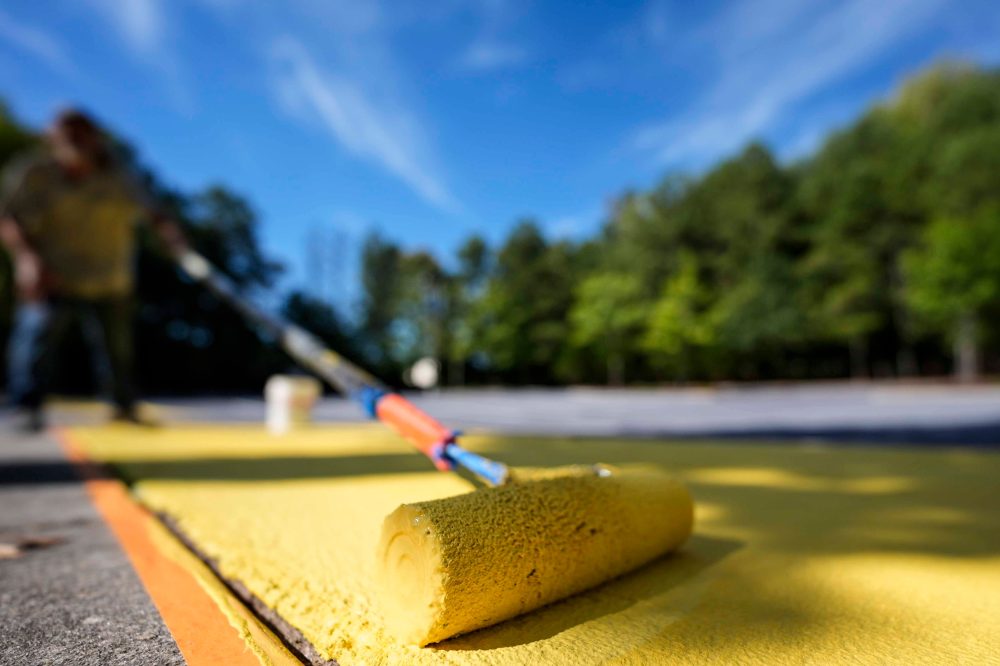
Reflective surface treatments or coatings, implemented in Los Angeles’ Pacoima neighborhood, work similarly to paint to prevent surfaces from absorbing excessive heat.
Adding plant life also helps control temperatures by absorbing energy and releasing moisture.
Sacramento, California, mandates parking lot developers plant sufficient trees to shade 50% of the area within 15 years of construction. Washington, D.C., and Seattle maintain green space requirements for landscaping, especially for new developments. Some municipalities utilize solar panel installations as shading structures.
Without these solutions, dark paved areas can capture heat and increase temperatures by up to 20 degrees. This heat generally accumulates throughout daytime hours.
The warmth spreads, contributing to the urban heat island effect, explained Vincent Cotrone, extension educator of urban forestry at Pennsylvania State University. Hotter neighborhoods often result in increased energy consumption as residents depend more heavily on air conditioning for comfort. These cooling units discharge hot air back outdoors.
Other alternatives target issues arising when impervious pavement blocks rainwater from penetrating soil. When water flows off paved areas, it can transport pollutants including oil and heavy metals into neighboring waterways, Cotrone noted.
More sophisticated than gravel, lattice pavers permit grass growth. These, along with interlocking pavers creating gaps between individual pieces, enable rainwater filtration. Additional permeable materials for runoff management include stone beds, brick pavers, or honeycomb-style frameworks.
The Hampton Roads Planning District Commission employs stamped, grooved concrete edging so when stormwater flows from regular concrete to porous concrete, sediment becomes trapped rather than creating clogs requiring maintenance.
Extended plant channels called bioswales and sunken areas known as rain gardens both utilize sand, soil, and vegetation to filter contaminants before stormwater reaches streams or sewage systems.
At Indianapolis’ Newfields museum, one parking area includes rain gardens while the overflow lot consists of recycled plastic grid pavers.
“It has worked really well for us because we don’t park on that lot every single day,” stated Jonathan Wright, director of the garden. “Why should it be asphalt and not breathing and not permeable when you only need to use it 10% of the time?”
Alternative materials may require higher initial investments, so experts recommend owners conduct cost analyses considering additional benefits throughout a parking lot’s lifespan.
“If we were going to just repave it with asphalt, we could have done it significantly cheaper,” noted Sunderland regarding the Virginia project. “It’s more expensive initially, but you get so much more life out of it.”
Buzz Powell, technical director at the Asphalt Pavement Alliance, a coalition of national industry groups, stated asphalt offers greater versatility and handles heavy traffic better than some newer alternatives, noting any new pavement may eventually require repairs.
“I just think we need to be really, really careful when we put alternative systems in to make sure that we have a good understanding of what the life cycle impact is gonna be,” Powell commented. “Some things can be really sexy on the front end and look good on paper, but then when you run a trash truck over it, it can’t handle the stresses and strains.”
Asphalt can be applied at varying thicknesses for different requirements, and porous asphalt is gaining popularity. He indicated it may repair more easily — and all choices involve tradeoffs regarding environmental impact, durability, and maintenance based on usage.
“My focus is 100% to make asphalt better,” he added. “If we do better asphalt, that means better mixing materials, better structural pavement design, and better pavement preservation.”
Some experts supporting alternatives also express concern that budget-limited cities interested in renovating parking lots may struggle to secure necessary funding.
“We are headed in the right direction, but at the same time, we’ve got acres and acres of nothing but blacktop parking lots that sit there and age and again, heat up,” said Cotrone. “And we just don’t have the dollars to go retrofit those.”
However, enhancing parking lot construction methods or reducing their overall footprint can simultaneously address multiple challenges, from heat to water quality to related inequality concerns.
“The reality is, one city changing their surfaces is just not by itself not going to have a big impact,” explained Greg Kats, founder of the Smart Surfaces Coalition. “But once cities are able to understand in a rigorous way the scale of the benefits… it’s kind of intuitive.”