
BRUSSELS (AP) — The European Union announced two significant trade measures Wednesday aimed at protecting its steel sector and cracking down on a flood of cheap online packages, as the 27-member bloc struggles with a massive and growing trade imbalance with China.
European Commission President Ursula von der Leyen applauded the introduction of a new 3 euro ($3.42) fee on small imported packages, writing online: “Today’s change is about restoring fairness for European businesses and better protecting our consumers. The surge in low-value online imports has put our retailers at an unfair disadvantage. Too many of these products also fail to meet EU safety standards, putting consumers at risk.”
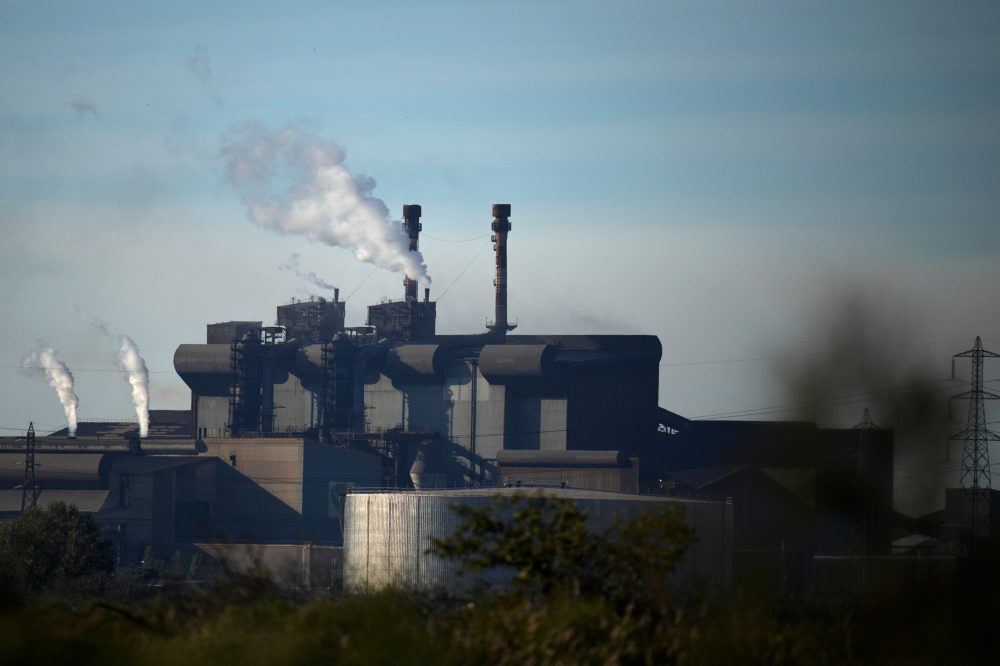
On the steel side, the Commission said its new import rules are intended to shield European factories and workers from what it called “the damaging impacts of global overcapacity” in “a strategically crucial European industry.” China’s government subsidies for steel manufacturing have drawn sharp criticism from officials in Brussels and elsewhere, who argue the policy hurts steel producers from Germany’s Ruhr valley to Japan’s Kyushu Island.
The EU’s trade shortfall with China grew in 2025 to approximately 360 billion euros — equivalent to roughly $410 billion, or about 1 billion euros every single day — and continues to climb into 2026.
China’s overall global trade surplus hit a near-record $1.2 trillion last year, even after the Trump administration imposed higher tariffs. Despite China’s reliance on Persian Gulf energy, the war in Iran has not significantly disrupted its export-driven economy, with sales of high-tech goods and vehicles abroad continuing to surge.
Starting Wednesday, the EU eliminated a customs exemption — known as “de minimis” — that previously allowed packages worth less than 150 euros to enter duty-free. Chinese e-commerce giants Temu and Shein account for roughly 90% of that type of trade, the Commission noted. The United States made a comparable policy change last year.
The Commission reported that 5.9 billion small packages entered the EU in 2025, a dramatic rise from about 1.4 billion in 2022. At approximately 16 million packages per day, these shipments make up 97% of all import traffic by volume, though they represent only 2% of total import value. A majority of those packages reportedly failed safety inspections and raised environmental concerns due to excessive plastic use.
Bernd Lange, who chairs the European Parliament’s trade committee, celebrated the move online, writing: “Europe finally shows teeth against flood of cheap package deals.”
However, Gary Ng, a research fellow at the Central European Institute of Asian Studies, cautioned that the 3 euro tax might “not affect the big picture” given how small it is compared to the price difference between European and Chinese goods in the e-commerce space. He added that while the fee may discourage small individual orders and impulse buying, shoppers and online platforms could still work around it through group purchases.
The new steel regulations establish tariff-free import quotas at 18.3 million metric tons per year and impose a 50% duty on quantities exceeding that threshold across 26 categories of steel products. The rules also demand greater transparency from importers to track where the “melt and pour” phase of production occurs — a measure designed to prevent countries like China from bypassing protections by routing products through third countries. The EU had already introduced new steel tariffs in October to guard against a wave of diverted steel imports triggered by U.S. trade policy changes under the Trump administration.
Europe’s steel sector is in deep trouble, with crude steel production falling to a “historic low” in 2026, according to the European Steel Association.
“Europe’s steel production is shrinking while imports as a share of the EU market are rising,” the trade group’s director-general Axel Eggert said in March. “EU policymakers must therefore agree the new steel trade measure quickly without it being weakened otherwise Europe risks losing more industrial capacity.”
Although China produces more than half of the world’s steel, the EU actually imports most of its steel from partners including the U.K., Ukraine, India, Taiwan, Turkey, Japan, and South Korea. The new tariff rules could create friction with free trade agreements involving countries like Japan, though some exceptions have been carved out for Ukraine given its ongoing war with Russia.
A Commission official who was authorized to discuss policy but not to be identified said the EU is looking to build coalitions with like-minded partners: “We will remain open to engage — call it a club, call it an alliance, call it whatever you like — but the idea that we come together with like-minded partners on this global challenge of overcapacity in the market. In an ideal world there is fair competition and level playing fields. Unfortunately, we don’t seem to live in an ideal world.”
Alicia García-Herrero, chief economist for Asia Pacific and Middle East at the French bank Natixis, predicted that Beijing will push back against the new rules even though they don’t specifically name China as a target. “The Chinese do not want this instrument to work. This could be a springboard for more,” she said. “It opens the door to the overall overcapacity instruments to see how it works.”
China’s Ministry of Commerce had already warned the EU in May against adopting new steel import regulations, saying Beijing would firmly respond to what it called “discriminatory measures” against its companies and products.
Some voices within China have also raised concerns about the international backlash to its massive export push. A recent report from the Center for International Security and Strategy at Tsinghua University in Beijing identified what it called “China Shock 2.0” — a massive surge of heavily subsidized, advanced Chinese manufactured goods flooding global markets — as one of the top 10 security risks facing China. The report warned that the EU would likely pile on additional tariffs, which combined with protectionist sentiment in the U.S., could inspire other nations to follow with “steep tariff hikes and investment screening” against Chinese companies.
“What makes this risk distinctive is that it does not originate from a single adversary. It is the ‘wolf pack effect’ of multiple countries acting in concert, inflicting not only direct economic losses on China but, more profoundly, degrading its strategic environment and international business reputation,” the report stated.
Beijing has rejected the “China Shock 2.0” framing, calling it an “opportunity” that spreads the benefits of China’s technological innovations to the rest of the world.
While the EU has not taken as aggressive a stance toward China as the Trump administration has, economists Frederic Neumann and Justin Feng of HSBC wrote in a research note Tuesday that “the direction of travel is clearly shifting in Brussels.”
In June, leaders from the Group of Seven nations jointly called for building independent supply chains for critical minerals essential to defense and high-tech industries.
Guo Jiakun, a spokesperson for China’s Ministry of Foreign Affairs, pushed back Tuesday, saying: “China and the EU are partners, not rivals. The root cause of the EU’s problems does not lie with China.”
Neumann and Feng noted that China’s success in weathering the Trump administration’s escalating tariff threats last year — partly by using its control over rare earth supply chains to negotiate a truce with Washington — suggests Beijing “can withstand external pressure” and “may show less inclination to make concessions to the EU.” The economists concluded: “The near-term outlook points to limited progress towards a comprehensive China-EU settlement.”
García-Herrero pointed out that despite the EU’s common market being critically important to China — with 90% of its battery exports and 60% of its electric vehicle exports heading there — Beijing believes it can prevent unified EU action by lobbying individual member state governments. “China thinks Europe has no leverage,” she said. “They do think they have the upper hand, by all means.”
China’s Minister of Commerce Wang Wentao met with the EU’s trade representative Maroš Šefčovič in Brussels on Monday. Following those talks, Šefčovič said: “The EU remains open for business but we need to defend our industrial base and keep pushing for a level playing field globally, so our industries get a fair shot at competing. That is why today’s talks – and the ones to follow – matter.”
Šefčovič has set an October deadline for meaningful progress in rebalancing trade, established during a visit to Beijing, adding: “The status quo is not an option.”