
The Iran-backed militant organization Hezbollah has sent its most skilled fighters back to Lebanon’s southern border area to engage Israeli military units, according to three Lebanese sources with knowledge of the military movements.
The elite Radwan unit members have been ordered to enter combat and prevent Israeli armored vehicles from advancing further, with the sources pointing to Khiyam as one location where Israeli forces reportedly moved forward on Wednesday.
The Lebanese Shi’ite Muslim organization, which Iran’s Revolutionary Guards founded in 1982, joined the conflict on Monday by launching attacks in retaliation for Iran’s supreme leader’s death in a joint U.S.-Israeli strike on Tehran.
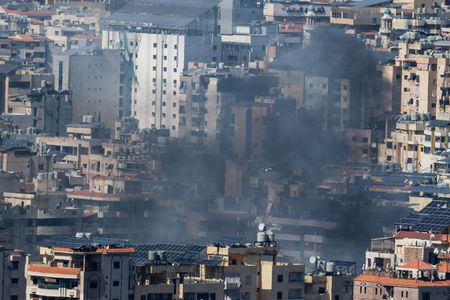
Since that time, Israel has conducted intensive bombardments across southern Lebanon and beyond, deploying additional ground forces across the border while directing Lebanese civilians to evacuate large portions of the frontier zone where Israeli military personnel have maintained positions since the 2024 conflict.
In a Wednesday television address, Hezbollah leader Naim Qassem declared the organization would resist what he characterized as Israel’s “occupation and expansion” strategy.
“For us, this is an existential defence,” he stated.
The specialized fighters moved south after Hezbollah initiated rocket and drone attacks on Monday, the sources revealed while requesting anonymity due to the matter’s sensitive nature.
These forces had previously departed the region between the Litani River and Israel’s border following a U.S.-mediated ceasefire that ended the 2024 war, relocating north of the river, according to the sources.
The exact number of elite troops deployed was not disclosed by the sources.
Lebanese President Joseph Aoun confirmed that Hezbollah’s initial Monday barrage originated from positions north of the Litani River.
Israeli military representatives said they were reviewing the information but did not immediately offer commentary on the sources’ claims. Lebanon’s army refused to provide statements, and Prime Minister Nawaf Salam’s office did not respond to requests for comment.
The Israeli military reported Wednesday that two soldiers sustained injuries from anti-tank weapons fire in southern Lebanon, marking the first documented casualties among Israeli forces since the regional conflict began.
Hezbollah has claimed responsibility for multiple tank attacks this week, alongside numerous rocket and drone strikes against Israeli targets.
An Israeli military spokesman said Wednesday that forces were “positioning troops a little farther” into Lebanese territory than previously “to prevent any attacks against the northern communities” within Israel.
Before the October 7, 2023 Hamas assault on Israel sparked widespread regional fighting, Hezbollah had showcased Radwan fighters practicing simulated Israeli invasion scenarios for journalists in May 2023.
Approximately 5,000 Hezbollah militants died during the 2024 Israeli war, with many casualties coming from Radwan unit ranks. The conflict significantly diminished Hezbollah’s capabilities.
Israel has maintained almost daily attacks against Hezbollah positions since that war ended, including a December strike on what Israeli officials described as a Radwan training facility in the south.
Under the 2024 ceasefire terms, which required Lebanon’s army to confiscate unauthorized weapons starting in areas south of the Litani, Lebanese military forces captured numerous Hezbollah arms stockpiles. While Hezbollah stated it honored the ceasefire south of the Litani, the group maintained the agreement did not cover other Lebanese territories.