
WASHINGTON — The Department of Homeland Security funding crisis appears destined to continue into next week as House lawmakers consider adopting a Senate proposal they had earlier turned down, which would provide money for most agency operations while excluding immigration enforcement divisions.
The standoff entered its 48th day Thursday without any breakthrough, as both congressional chambers held brief procedural meetings lasting only minutes. However, Republican leaders and President Donald Trump have now united behind a strategy to provide complete DHS funding through a two-phase approach. This alignment represents a shift from the separate strategies that led Congress to depart for spring break last week without resolving the crisis.
During Thursday’s short sessions, Senate Majority Leader John Thune of South Dakota set aside the House proposal for a 60-day funding extension covering the entire department. The House then convened briefly without addressing the bipartisan Senate measure negotiated with Democrats, though Thune expressed optimism about future passage.
“I don’t know the particulars around what the House will do with it,” Thune told reporters. “My assumption is, at some point, hopefully, they’ll move it.”
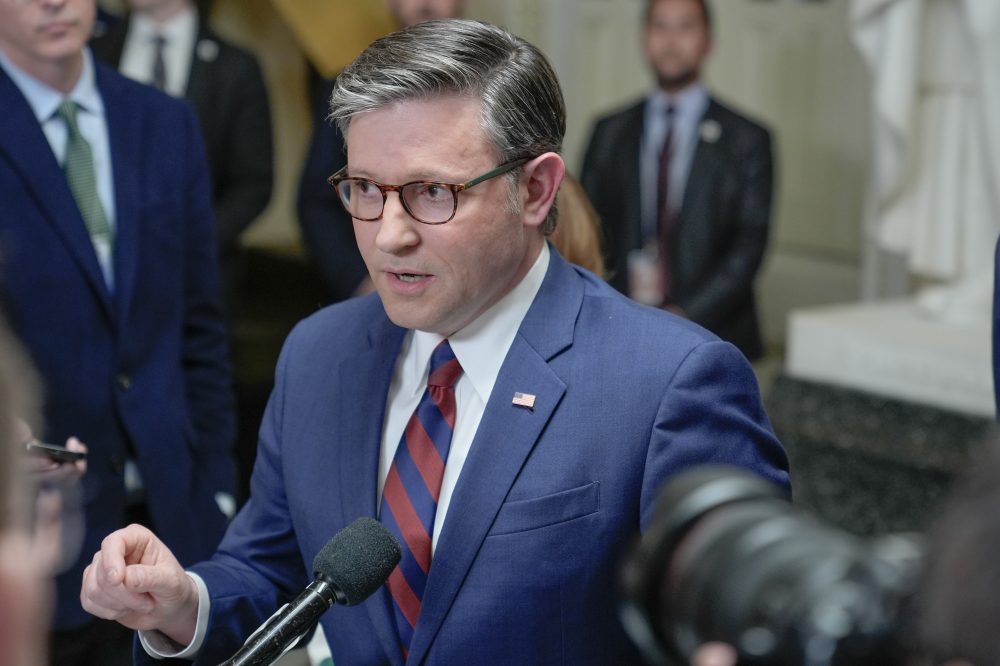
House Speaker Mike Johnson of Louisiana and Thune announced Wednesday their decision to revisit the Senate bill, which provides funding for most DHS operations while excluding U.S. Immigration and Customs Enforcement and U.S. Border Patrol. Republicans plan to pursue funding for those agencies later through partisan spending measures that could require months to complete.
Success for either approach remains uncertain, and the strategy may still encounter resistance from within GOP ranks despite Trump’s endorsement.
Johnson’s acceptance of the dual-track approach represents a dramatic shift from his position less than a week ago, when he dismissed it as a “joke” and stated he was “quite convinced that it can’t be that every Senate Republican read the language of this bill.”
While Johnson now appears supportive, winning over his own caucus may prove challenging after a significant number of House Republicans criticized the Senate-passed legislation last week.
House Republicans planned to conduct a conference call Thursday evening to discuss their next moves.
When asked about how Republican leadership and Trump came together after their apparent disagreements a week earlier, Thune referenced “a number of conversations.”
“The thing that some people want to do, we can’t do,” Thune explained. “And so you have to figure out what’s in the realm of the possible. And you have to just continue to define reality for people.”
Democrats in both chambers supported last week’s Senate funding plan, which passed with bipartisan backing. Senate Democratic leader Chuck Schumer of New York criticized Republicans Wednesday for their delayed response.
“Republican divisions derailed a bipartisan agreement, making American families pay the price for their dysfunction,” Schumer said.
Despite the recent progress, the most conservative members are likely to demand complete funding for all of Trump’s immigration and deportation programs.
“Let’s make this simple: caving to Democrats and not paying CBP and ICE is agreeing to defund Law Enforcement and leaving our borders wide open again,” Rep. Scott Perry of Pennsylvania wrote on X. “If that’s the vote, I’m a NO.”
The budget package Trump wants prepared for later this year is anticipated to fund ICE and Border Patrol through the rest of his presidency, aiming to protect those agencies from future Democratic opposition to his immigration enforcement policies. Trump has requested this legislation reach his desk by June 1.
Thune recognized potential obstacles to this path, including attempts to broaden the bill’s scope. He emphasized keeping it “as narrow and focused as possible” to accelerate passage.
“We need to kind of move with haste,” he stated. “It’s probably not a likely magnet for all these other issues.”
Most DHS workers have continued reporting for duty during the shutdown, though thousands have worked without compensation. As more Transportation Security Administration officers called in sick, air travelers faced growing frustration with extended wait times at certain airport security checkpoints. These delays appeared to diminish this week as agents began receiving back pay following Trump’s executive order.