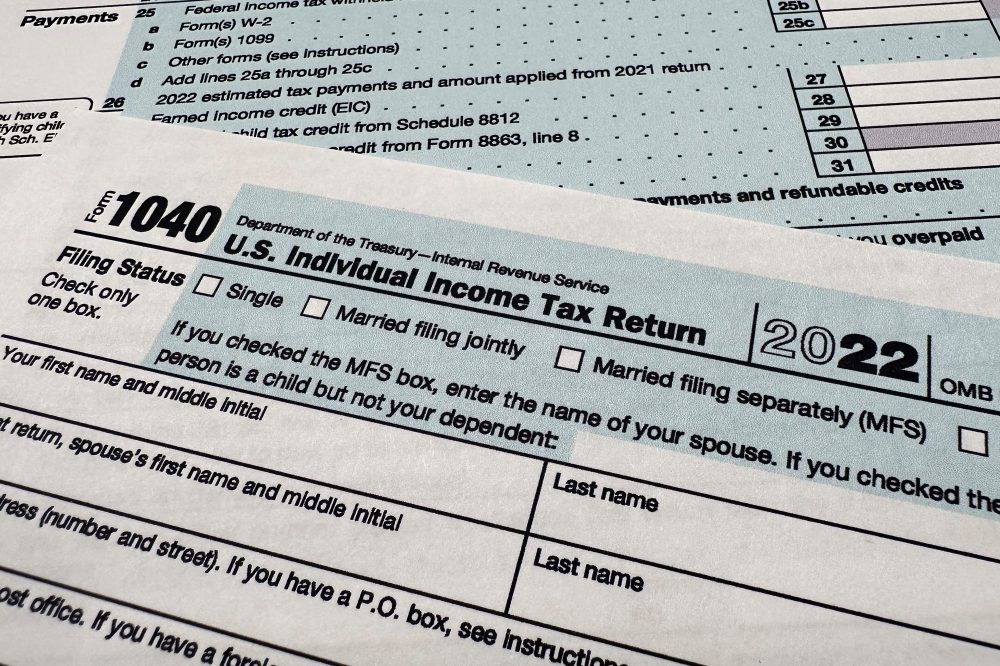

Delaware taxpayers now have the opportunity to file their 2025 tax returns, with the April 15 deadline giving residents just over three months to complete the process. Financial experts are encouraging early preparation to minimize last-minute stress.
Tom O’Saben, who serves as director of tax content and government relations at the National Association of Tax Professionals, advises a balanced approach to filing. “Don’t wait until the last minute but also don’t rush,” O’Saben said.
This filing season brings significant changes due to recent tax legislation that President Donald Trump signed during the summer months. The Republican-backed tax and spending measure introduces several new deductions that could benefit Delaware families and workers.
Miguel Burgos, a certified public accountant and TurboTax expert, highlights the key new benefits: exemptions on tip income, overtime pay exclusions, car loan interest write-offs, and special deductions for individuals who reached age 65 by December 31st.
Financial analysts predict Delaware taxpayers could see substantially larger refunds this year. While 2024’s average refund reached $3,167, projections suggest this year’s average could climb by $1,000 due to the tax law modifications. The IRS handled more than 165 million individual returns last year, with electronic filing accounting for 94% of submissions.
For Delaware residents feeling overwhelmed by the filing process, numerous free assistance programs are available throughout the state.
Essential documents vary by individual circumstances, but most Delaware taxpayers will need their Social Security number, W-2 forms from employers, 1099-G forms for unemployment benefits, 1099 forms for self-employment income, savings and investment records, qualifying deductions including educational costs and medical expenses, and applicable tax credits such as child tax credits.
The IRS website provides comprehensive document checklists for specific situations. O’Saben suggests organizing all paperwork in one location before beginning the filing process and keeping previous year’s returns accessible. Delaware taxpayers can also establish an identity protection PIN through the IRS to prevent fraudulent filings.
Several major changes affect this year’s filings. The standard deduction has increased to $15,750 for single filers, $31,500 for married couples filing jointly, and $23,625 for heads of household.
A significant change involves the state and local tax (SALT) deduction cap, which has risen from $10,000 to $40,000 under the Working Families Tax Cut enacted in July 2025. Keith Hall, president and CEO of the National Association for the Self-Employed and certified CPA, notes this particularly benefits residents of high-tax states.
“This is a big benefit, especially for states like California, New York, and New Jersey, that have a higher state income tax,” Hall said.
The SALT deduction allows federal tax deductions for certain state and local taxes paid during the year. Since 2018, this deduction had been limited to $10,000 annually.
Delaware residents who previously didn’t itemize their SALT deductions might want to reconsider this year. O’Saben recommends evaluating whether you paid state taxes, property taxes, mortgage interest, or made charitable contributions to determine if itemizing makes sense.
The new tip deduction has specific limitations despite being called “no tax on tips.” This benefit applies only to qualified tips and includes income restrictions.
“It can be cash, it can be electronic as well. But the main thing is, hey, it has to be voluntary (tips),” Burgos said.
The annual deduction caps at $2,500 and phases out for taxpayers with modified adjusted gross income exceeding $150,000 individually or $300,000 for joint filers. Only certain tipping industries qualify, including bartenders, food servers, musicians, and housekeeping cleaners. Claiming this deduction requires completing the new Schedule 1-A form.
Schedule 1-A serves as the IRS form for calculating four deductions from the recent tax legislation: modified state and local tax deductions, qualified tip deductions, car loan deductions, and senior deductions.
Delaware taxpayers have multiple filing options this year. While IRS Direct File won’t be available, those earning $89,000 or less can access IRS Free File, which offers guided preparation through eight partner companies including TaxAct and FreeTaxUSA.
Beyond commercial services like TurboTax and H&R Block, Delaware residents can hire licensed professionals such as certified public accountants. The IRS maintains a national directory of qualified tax preparers.
Two IRS-funded programs provide free assistance to eligible Delaware residents. The Volunteer Income Tax Assistance (VITA) program serves people earning $69,000 or less annually, those with disabilities, or limited English speakers. Tax Counseling for the Elderly (TCE) assists individuals aged 60 and older. The IRS website helps locate VITA and TCE locations throughout Delaware.
Common filing mistakes can be avoided with careful attention to detail. O’Saben emphasizes verifying your Social Security card information, particularly your legal name, which may change after marriage.
“If you got married last year and you now want to use your married name, that married name doesn’t exist if you haven’t filed it with Social Security,” O’Saben said.
Many Delaware taxpayers who choose paperless communications may miss important tax documents that are only available online. O’Saben warns that opting out of physical mail can include tax paperwork.
“These documents may actually be available online because you may have chosen to have paperless contact. And because of that, you may need to go get those documents yourself,” O’Saben said.
Reporting all income sources is crucial. Delaware residents with multiple jobs need W-2 or 1099 forms from each employer. Missing information or errors typically trigger IRS audits, which require additional documentation.
The current child tax credit provides $2,200 per qualifying child, with $1,700 being refundable as the Additional Child Tax Credit. Parents must have at least $2,500 in annual income to claim the Additional Child Tax Credit.
Full credit eligibility requires meeting all criteria and having annual income below $200,000 for individual filers or $400,000 for joint filers. Higher-income Delaware families may qualify for partial credits.
Since September, the IRS has been eliminating paper refund checks. Delaware taxpayers expecting refunds should sign up for direct deposit to receive their money faster and more securely.
Tax season brings increased scam activity, O’Saben warns. Fraudulent communications arrive through phone calls, texts, emails, and social media. The IRS never initiates contact through these methods.
Even tax preparers can operate scams, making it important to ask detailed questions. If a preparer promises unusually large refunds compared to previous years, this may indicate fraudulent activity, O’Saben said.
Always request copies of completed tax returns and ask about each entry if you can’t observe the preparation process.
Delaware taxpayers should maintain tax return copies for five to seven years, as the IRS can audit items from previous filing years, O’Saben recommends.
Source: https://srnnews.com/tax-season-is-here-heres-what-you-need-to-know-for-stress-free-filing/