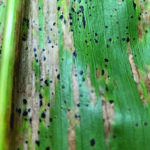

HARRINGTON, Del. — Local corn producers are being advised to step up their field monitoring efforts this season to watch for tar spot disease, according to a University of Delaware agriculture expert.
Although this fungal infection hasn’t led to major harvest losses in the Delmarva region like those experienced across Midwest farming areas, farmers need to be more vigilant than in previous years, according to Alyssa Betts, a plant pathologist with University of Delaware Extension.
“Just because it’s here doesn’t mean this year is going to be awful,” Betts explained to agricultural producers during Delaware Agriculture Week in January. “It does mean you’re going to have to look a little more than we have in the past.”
The disease stems from a fungus called Phyllachora maydis and was initially identified in the United States in 2015. What began as isolated cases in a few Indiana counties had expanded throughout much of America’s Corn Belt by 2018, resulting in significant financial losses for farmers.
The disease reached Pennsylvania’s Lancaster County in 2020, then moved into northern Maryland and continued spreading southward in following years. However, in Maryland and Delaware, the infection has typically appeared when corn plants were approaching or reaching full maturity, resulting in minimal yield damage.
According to Betts, last year’s cooler late-summer temperatures provided better conditions for tar spot development, leading to its appearance in additional fields. The disease was observed near the university’s Carvel Research and Education Center in Georgetown.
Due to the relatively recent arrival and limited impact of tar spot in the local area, regional data on fungicide effectiveness remains scarce. However, Indiana research indicates that fungicide treatments work best when applied between the VT and R3 plant development phases, Betts noted.
“The good news is the fungicides we’re already using are also working against tar spot,” she stated. However, thorough application coverage is crucial for success.
“This one will tell on you if you have a pass that you miss or somewhere where you skip if it does turn into a high disease pressure year,” Betts warned.
When tar spot appears before the R1 stage, farmers might need to consider a second fungicide treatment specifically targeting the disease, she explained. While severe outbreaks at the R4 stage may still benefit from treatment, research suggests applications at R5 and later stages are typically too late to provide meaningful results.
“If this isn’t showing up until we’re in R2, R3, R4, kind of like we saw this year, it shouldn’t, in most years, be too much of a worry. It’s just going to be something else we have to deal with,” Betts said. “On most years I think we’re still going to be OK with that one fungicide pass in irrigated corn.”
Farmers should look for small black specks on plant surfaces, particularly leaves, as the first indication of tar spot. Betts cautioned that several other conditions, including sooty molds and insect waste, can appear similar and cause misidentification.
She suggested testing suspicious spots by scratching the leaf surface – if the marks smear or can be wiped away, it’s likely not tar spot.
Since the fungus spores can travel through the air, Betts recommended that monitoring efforts include examining the upper portions of the crop canopy. The disease-causing organism survives winter in leftover corn plant material, making field history an important consideration when scouting.
Farmers should pay particular attention to irrigated areas, fields that grew corn during the previous season, and any locations where tar spot has been detected before, according to Betts.