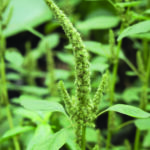

ANNAPOLIS, Md. — Maryland lawmakers are pushing for tougher action against property owners who fail to control Palmer amaranth, an aggressive invasive weed that’s becoming increasingly problematic across the Eastern Shore region.
Legislators from Talbot County have introduced legislation that would mandate the Maryland Department of Agriculture to issue elimination orders whenever Palmer amaranth is discovered on any property throughout the state. Property owners would have just 14 days to remove the weed, followed by mandatory reinspections every two weeks until complete removal is achieved. Those who don’t comply would face financial penalties starting at $500 for initial violations, escalating to $1,000 for second offenses, and reaching $2,000 for additional violations.
While Maryland has classified Palmer amaranth as a noxious weed since 2020, requiring property owners to manage or eliminate it, the proposed legislation would dramatically accelerate enforcement procedures once the plant is identified.
Republican State Senator Johnny Mautz from Talbot County explained that current enforcement practices typically involve multiple warnings before any penalties are applied. “By the time you get to a fine, it’s too late,” Mautz stated.
The new legislation would allow immediate fining of property owners who receive elimination orders but take no remedial steps, representing a significant change designed to encourage prompt action and prevent further spread.
Agricultural experts consider Palmer amaranth among the most damaging weeds impacting row crops throughout the Mid-Atlantic region. This rapidly developing pigweed variety can grow beyond 6 feet tall, aggressively competes for essential resources like water, nutrients and sunlight, and is capable of generating hundreds of thousands or even more than one million seeds from a single plant. Multiple herbicide-resistant populations have emerged, making quick identification and immediate control essential.
According to Lauren Moses, a spokesperson for the agriculture department, current enforcement happens on a “case-by-case basis,” with fines rarely imposed on farmers due to the challenging nature of managing this weed. She noted that existing regulations already mandate noxious weed control or elimination, and the department offers technical support and guidance on herbicide application and mowing practices.
Mautz indicated the legislation emerged from issues identified by Talbot County’s weed management program, which documented instances where property owners failed to address infestations. “It’s a super-difficult weed,” he acknowledged.
Although the bill maintains existing penalty amounts under state law, it would establish more definitive enforcement through mandatory elimination orders, specific timeframes, and required follow-up inspections. Local farmers in Talbot County report that Palmer amaranth expanded rapidly in certain areas during the previous year.
John Swaine, who serves as president of the Maryland Association of Soil Conservation Districts and vice president of the Talbot County Farm Bureau, described last year’s situation: “We had last year several locations in the county where (it) has gotten out of control in some farm fields. Some neighbors complained about it.”
Swaine, who cultivates corn and soybeans near Royal Oak, explained that Palmer amaranth spreads rapidly through seeds and can dominate fields without early intervention. He noted that management strategies differ significantly depending on the crop type. Herbicide treatments work most effectively with corn and soybeans containing specific genetic traits, while other crops provide fewer chemical control methods. Vegetable producers particularly face restricted options and may need to rely heavily on manual removal.
Eddie Boyle, president of the Talbot County Farm Bureau, observed increased visibility of the weed throughout the county, including roadside areas and public properties where budget-related reductions in mowing have allowed plants to reach maturity. “If something is not done sooner or later, it’s going to be a really big issue,” Boyle warned.
Moses confirmed that the Maryland Department of Agriculture did not participate in creating the legislation and is unlikely to advocate for or against it. She added that implementing the bill as currently written would necessitate additional department personnel.
Both Mautz and Swaine indicated farmer support for the proposal. However, Mautz suggested that opposition might come from absentee property owners who would prefer not to monitor their land more closely.
The Senate Education, Energy and the Environment Committee has set a hearing for the bill on March 3 at 1 p.m. The companion House version will be heard by the House Environment and Transportation Committee on February 27 at 1 p.m. If approved, the legislation would become effective October 1.