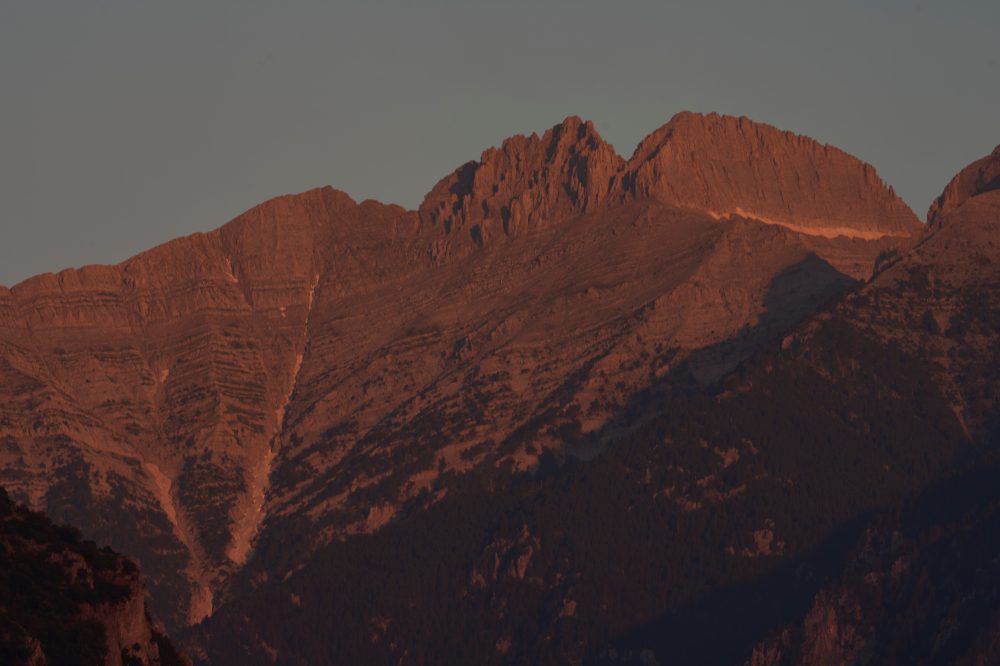

A United Nations heritage committee meeting in Busan, South Korea, added several significant global sites to its prestigious World Heritage List on Sunday, including the World War II D-Day landing beaches in northern France and Greece’s iconic Mount Olympus.
The UNESCO committee, which continues its sessions in Busan through Wednesday, also granted heritage status to the ancient Japanese capitals of Asuka and Fujiwara, as well as the Boma-Badingilo Migratory Landscape in South Sudan — a region home to one of the planet’s largest land mammal migrations and the African nation’s very first entry on the World Heritage List.
The French designation encompasses all five of the famous Normandy beaches — Omaha, Utah, Sword, Gold, and Juno — where Allied forces landed more than 150,000 troops on June 6, 1944. The Pointe du Hoc assault site is also included. Together, these locations were central to the effort to drive Nazi forces from Western Europe during World War II.
The International Council on Monuments and Sites, which reviews nominations submitted to the heritage committee, noted that the sites contain extensive physical remnants of the battle, ranging from German fortifications and bomb-damaged terrain to Allied harbor structures and sunken ships. The organization described the D-Day landings as an “event widely perceived as having enabled the return of freedom and heralded a lasting peace on the European continent.”
The same body called for stronger monitoring and preservation measures at the beaches, pointing to concerns over heavy tourism, climate change, rising sea levels, and the development of wind farms in the surrounding area.
Historian David Edgerton spoke about the significance of the Normandy landings in a recent interview, saying, “It’s probably the greatest amphibious landing there’s ever been. It ought to be remembered for that alone.”
The addition of Mount Olympus to the World Heritage List capped a 12-year campaign by Greece to earn recognition for its tallest mountain as a site of both cultural and natural importance. The mountain, steeped in ancient mythology as the home of the 12 Olympian gods and the throne of Zeus, rises 2,918 meters — about 9,573 feet — from near sea level and is also known for its remarkable biodiversity.
Evangelos Geroliolios, the mayor of Dion-Olympus, a municipality located at the base of the mountain, said in a recent interview that the World Heritage designation “places greater obligations on our part to protect this environment,” particularly given the likelihood of increased tourism.
Greece’s delegate to UNESCO, Georgios Koumoutsakos, offered his own take on the achievement: “We reaffirm our unwavering commitment to safeguarding Mount Olympus for the benefit of present and future generations. As Greek mythology wisely reminds us, it is always best to remain on good terms with gods.”
The newly designated Japanese sites are located in the western prefecture of Nara and include 19 archaeological locations tied to the ancient capitals of Asuka and Fujiwara, which date from the 6th to the 8th centuries. These were the seats of Japan’s first centralized government, built along the model of Chinese political systems. Buried beneath the landscape are the remains of royal palaces, government buildings, Buddhist temples, and royal tombs that influenced the later development of the capitals of Nara and Kyoto.
Japanese Culture Minister Kobayashi Shigeki expressed gratitude to the committee for the inscription, pledging that Japan remains committed to “transmitting this valuable property to the future generations.” Japanese Prime Minister Sanae Takaichi, who is originally from Nara, wrote on social media that she hopes the heritage designation will draw more visitors to the area.
Yoshiyuki Aihara, an archaeology professor at Nara University, explained to reporters that the sites are historically important because they illustrate how Japan’s early state was shaped by cultural and political influences from China and the Korean Peninsula. “If you dig underneath these rice paddies about 1 meter, you start finding a stretch of ruins in this area, though that’s not easy for ordinary visitors to understand,” said Aihara, who is actively continuing excavation work at the location.
South Sudan’s newly inscribed Boma-Badingilo site spans a wide stretch of wetlands, flood plains, and savannas whose character is shaped by seasonal rainfall and flooding. An estimated 6 million white-eared kob, tiang, and Mongalla gazelles move through the landscape as environmental conditions shift throughout the year. The site also provides habitat for elephants, lions, cheetahs, and other wildlife, while supporting the livelihoods of various ethnic communities who have relied on herding, farming, and fishing there for centuries, according to UNESCO.