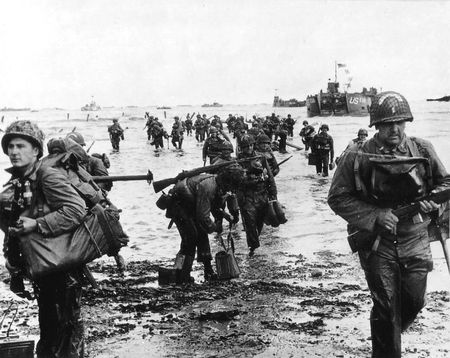

PARIS — The beaches along the Normandy coast of France, where Allied troops launched their historic invasion on June 6, 1944, have officially been designated a UNESCO World Heritage Site, the United Nations cultural organization announced on Sunday.
In a statement posted to its website, UNESCO described the beaches as an “exceptional cultural landscape shaped both by the events of 1944 and by their enduring remembrance,” citing that distinction as the basis for awarding the protected heritage designation.
The Normandy landing sites have long served as a gathering place for major commemorations, drawing world leaders from the United States, Britain, Canada, and France to honor those who fought and died there.
The soldiers who carried out the Normandy landings represented a broad coalition of nations, including the United States, Britain, Canada, Belgium, Norway, Poland, Luxembourg, Greece, Czechoslovakia, New Zealand, and Australia. Approximately 177 French commandos also participated in the assault.
The operation proved to be a turning point in the effort to free Europe from the grip of Nazi Germany during World War Two.
In all, 156,115 Allied troops were involved in the assault — either arriving by sea onto beaches known by the code names Utah, Omaha, Gold, Juno, and Sword, or being dropped by air behind the German coastal defenses.