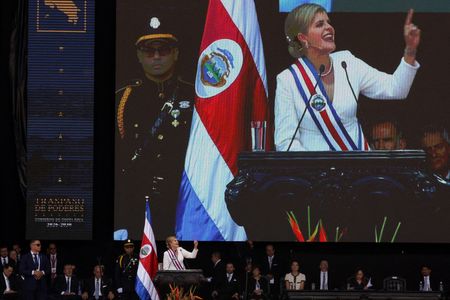

SAN JOSE — Just two months into her presidency, Costa Rica’s Laura Fernandez finds herself in a deep and damaging conflict with the nation’s court system — a battle that experts say is getting in the way of any serious effort to combat a surge in drug-related violence.
The dispute is part of a wider pattern of instability across Central America, a key route for cocaine moving toward the United States, where criminal organizations have exploited weak institutions to fuel corruption and bloodshed.
The friction between Fernandez’s administration and the judiciary has focused on two main flashpoints: steep budget cuts being imposed on the court system, and a legislative push to allow Congress — rather than the Supreme Court — to choose who serves as attorney general.
Matters came to a head last week when Fernandez publicly accused the judiciary of being infiltrated by organized crime “to the core.” She also criticized the courts for blocking the tough “iron fist” security approach her government has been pushing, a strategy modeled after policies used by Salvadoran President Nayib Bukele, whose mass incarceration campaign — roughly 90,000 people jailed — has dramatically reduced crime in El Salvador.
Judicial officials have pushed back hard, denying any corruption and demanding that Fernandez back up her claims with evidence. They warn that the planned budget reductions for 2026 and 2027 would undermine democratic oversight and actually make it harder to fight crime.
Fernandez ran for office on a tough-on-crime message, promising to bring order back to a country of 5.2 million people where approximately two people are killed every day. The murder rate has held stubbornly high since reaching a record 17.2 homicides per 100,000 residents in 2023 — twice the rate seen a decade earlier.
Security Minister Gerald Campos told Reuters the conviction rate for murders is alarmingly low. “The problem here is not a lack of an army… the problem is a lack of convictions in the courts,” he said, noting that only 38% of homicides lead to a conviction.
Both government officials and experts point to drug trafficking networks exploiting Costa Rica’s geography as a key driver of the violence, using the country as a staging point to move narcotics to markets further north.
Evelyn Villarreal, coordinator of the State of Justice report — a research initiative that monitors Costa Rica’s justice system — warned that internal fighting is making an already difficult situation worse. “Facing an enemy with infinite resources… fighting among ourselves makes it very difficult to be prepared,” she said.
Shortly after taking office, Fernandez called on Attorney General Carlo Diaz and senior Supreme Court justices to resign, saying they had failed to address the security emergency. None have done so.
Patricia Solano, who leads the country’s top criminal court, rejected the notion that the judiciary bears responsibility for the rise in crime. She argued the government’s true goal is to weaken an essential democratic institution. “Since 2022, we have seen a systematic attack against the judiciary,” Solano said, pointing to actions that began under former President Rodrigo Chaves, who belongs to the same political party as Fernandez.
Solano also noted that the prison population has grown by 36% since 2020, with Costa Rica’s incarceration rate now at 366 per 100,000 people — ranking 22nd highest in the world in 2024, according to the World Prison Brief.
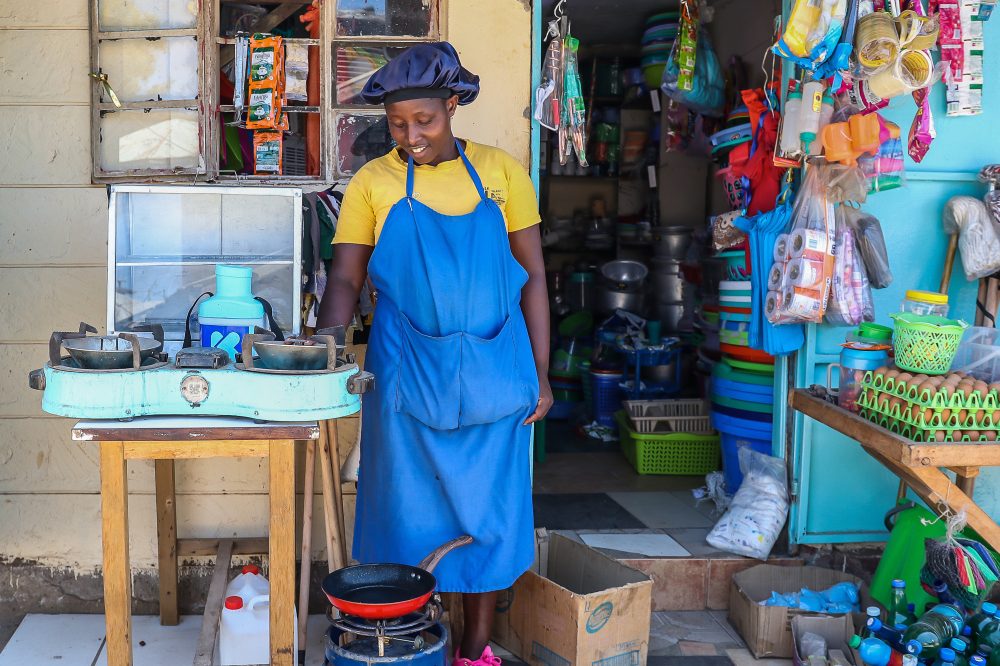
On the streets, everyday residents expressed exhaustion and frustration with the political conflict. “We are still in bad shape, even if they say they are doing things and fighting each other,” said Karina Bolaños, a 39-year-old shopkeeper in Goicoechea, north of the capital. “The country has changed for the worse.”